How to Make Colorful Dyes from Your Own Garden
You can create some colorful crafts with plant-based dyes; we’ll show you how.
Hannah Ray Taylor
Erin Berkowitz is a Los Angeles–based artist and certified California Naturalist known for her dye hikes in Southern California. A master at botanical dyes, she hosts workshops in which she shares the plants and techniques to produce seasonally inspired color crafts from the natural world around us. For a calendar of events and to sign up for her newsletter, go to berbostudio.com.
Harvesting How-Tos
When collecting dyeing materials, Berkowitz suggests looking for trees or plants with deeply colored bark, cones, or stems with strong “medicinal” smells. These characteristics can all be signs of latent natural color. If you’re dyeing with native plants gathered from the wild, it’s essential to follow the forager’s rule of thumb: Never take more than 10 percent of any available plant material in the immediate area, leaving the bulk for the wildlife that needs it most. Berkowitz seeks out areas with dozens of examples of the same plant, gathering material from the ground first, noting that some of the best finds are wind-fallen, like pinecones, oak galls, chipped bark, and downed branches.
Pattern Play

Sadie Spezzano
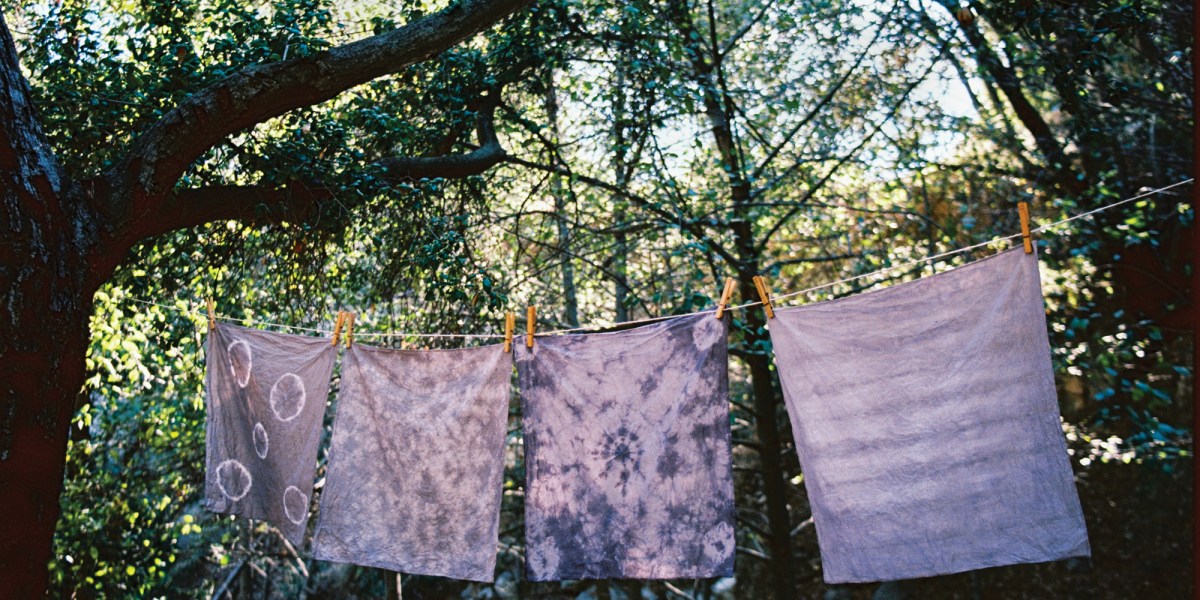
While the natural dye process can create gorgeous texture and color shifts without any additional technique, Berkowitz shares two easy ways to implement patterns into your dying process. To create a marbled pattern using a simple “scrunch” technique, gather edges of fabric into random pleats, folds, and scrunches. Use rubber bands or twine to hold the bundled fabric in place. For checker-like squares, pinch wooden clothespins onto fabric to create a pattern of negative space. Try accordion-folding your fabric, placing evenly spaced clothespins along the folds for a geometric grid pattern.