
Inside the Stealth Security Move the Best Hotels Are Doing
Check in to a property without checking out of your comfort zone.

Twenty47studio/Getty Images
For some people, checking into a hotel is a dream come true. Gone is the never-ending to-do list of chores—well, at least for a few days. Instead, you have full license to kick back, relax, and take advantage of daily housekeeping and turn-down service. But for others? It can feel unsettling. After all, you’re staying in a new and unfamiliar place where you’re essentially surrounded by strangers.
In fact, a study from Mews found that 70 percent of participants would rather skip the front desk check-in process altogether. “Asking for guest’s private information the moment they arrive, from their address to their phone number, isn’t a great way to make a guest feel safe and secure in our hotels,” says Ryan Krukar, vice president of sales and marketing for Gravity Haus, which has locations in Jackson Hole and Moab. “No one wants to feel as though their personal details are being shared far and wide.”

Carneros Resort and Spa
Don’t worry: If you take your personal safety seriously, many properties are already a step ahead of you. While it’s not exactly a hotel red flag, loudly announcing a room number in a busy lobby might make privacy-seekers quiver. Fortunately, top-tier hotels are finding more discreet ways to share your room number.
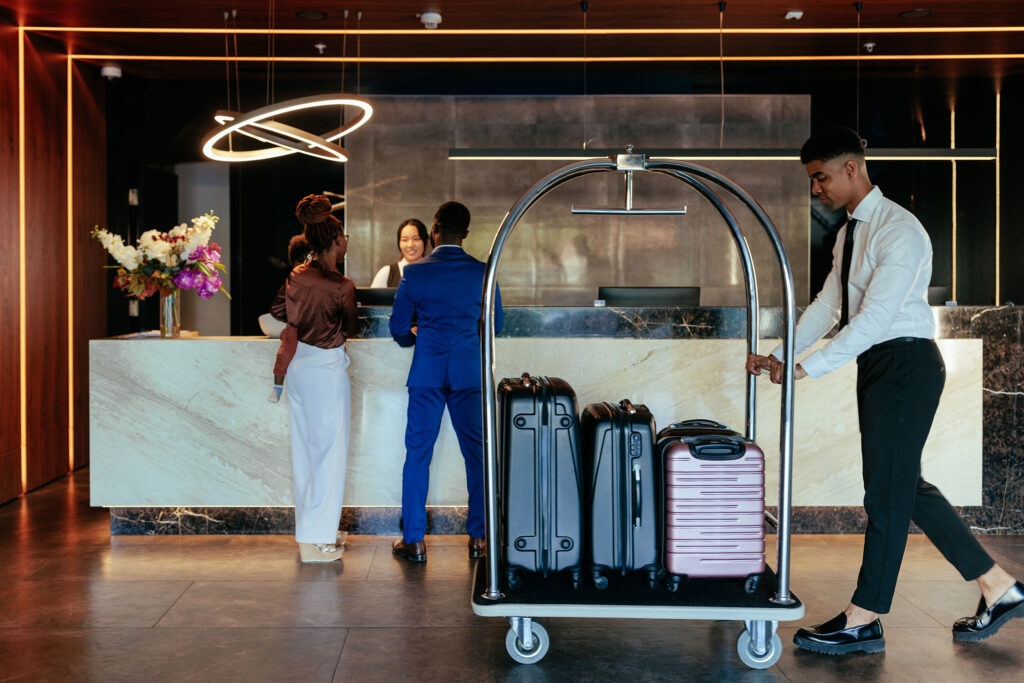
Take Carneros Resort & Spa, for example. The Napa, California-based hotel reveals they never tell guests their room assignment. Rather, they create a guided check-in process that blends safety and hospitality. “We write the room number on the key packet and then hand that to the bellman, who then leads the guest to the cottage and hands the key packet back to the guest to ensure the door opens properly,” explains Ed Costa, managing director of Carneros Resort & Spa.
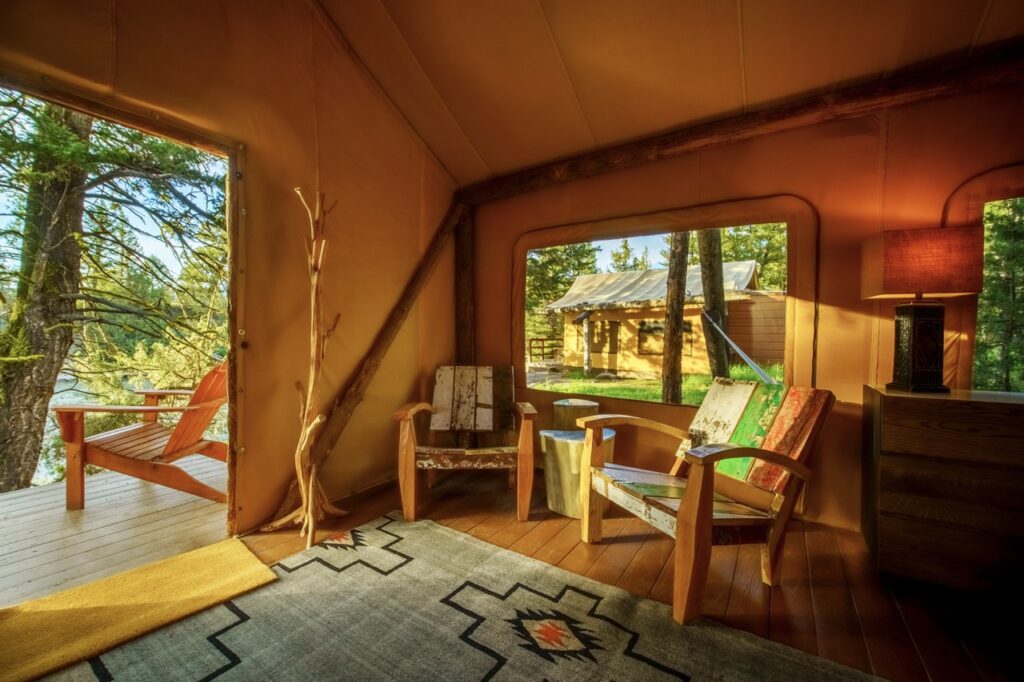
Over at Paws Up Montana, the check-in process starts the moment you deplane your flight. The five-star property has a private hospitality suite and lounge in the Missoula International Airport, where guests can check into the resort and enjoy complimentary snacks. Paws Up also offers airport transportation, where the staff will take you to the property and escort you directly to your accommodation. “There are no front desk stops here,” says Steve Hurst, the property’s managing director. “You are our guest, and we want you to relax and get settled as soon as possible!”
Paws Up Montana
For many luxury properties, which tend to have high-profile guests, a subtle process is paramount. Claremont Resort & Club in Berkeley, California, offers sports teams and public figures access to its VIP group entrance or its historic Carriage Entrance, which bypasses the main lobby. “We truly understand every guest’s arrival experience is unique,” says Edward Roe, the property’s managing director. “And, sometimes, privacy is paramount.”
Of course, guests who aren’t exactly staying at a swanky, five-star hotel still deserve some privacy. Gravity Haus’s various locations use Mews’offerings for a digitized check-in. But just because the company has a low-contact setup doesn’t mean they don’t take hospitality seriously. “It frees up our staff to instead serve real guest needs,” Krukar says. “From making sure that special occasion is recognized to figuring out how to extend that late check out, it gives our staff more flexibility to make someone feel at home and taken care of.”

Inn the Ground
Meanwhile, Inn The Ground in Carlton, Oregon, sends guests a text message on the day of arrival that provides information to access their individual room. The virtual check-in also comes with a digital welcome guide as well as the opportunity to contact the staff with any questions or requests. For Heather Miller, the property’s accommodations general manager this virtual process allows visitors to kick off their trip on their own terms. “Travelers are anxious to get started with their vacation or leisure time,” she says. “A low touch system removes the ‘business or transactional’ component for those looking to dive right into relaxation.”
Staying somewhere that doesn’t offer a virtual check-in process? You can always ask the front desk to simply write down your room’s number and slide that packet over.
Because that’s the thing: While plenty of hotels are adopting discreet check-in processes, there are still a few things you can do to keep your privacy intact. For starters, if you want to keep your room number under wraps, mum’s the word. Whether you want to charge something to your room or need an extra key, always write down your room number instead of shouting it to a hotel employee.
Dimensions/Getty Images
Speaking of your keys, many seasoned travelers prefer to separate their room key from the packet it comes in—and for good reason. It might be no big deal if you leave your room key or key packet by the pool or at the gym, but both? Not only will a stranger know your room number, but they have access to get inside. Once you’ve memorized your room number, discard the packet in your room and keep your key in your purse or wallet.
If you’re traveling alone, it’s also worth telling your hotel’s concierge that you’re not expecting any guests during your stay. By doing so, you’ll inform the hotel staff that nobody else needs to know your hotel room number. While you’re at it, you may want to clue them in on your itinerary. “I like the added safety of a hotel concierge,” adds Kiersten Rich, founder of The Blonde Abroad, a travel blog that chronicles her solo travels. “I can let them know when I’m heading out and when I expect to return, which adds a layer of accountability and peace of mind.”
Make no mistake, a hotel’s concierge staff doesn’t double as security; however, they’re here to make sure your stay goes off without a hitch. And if that means giving you some extra peace of mind? So be it.