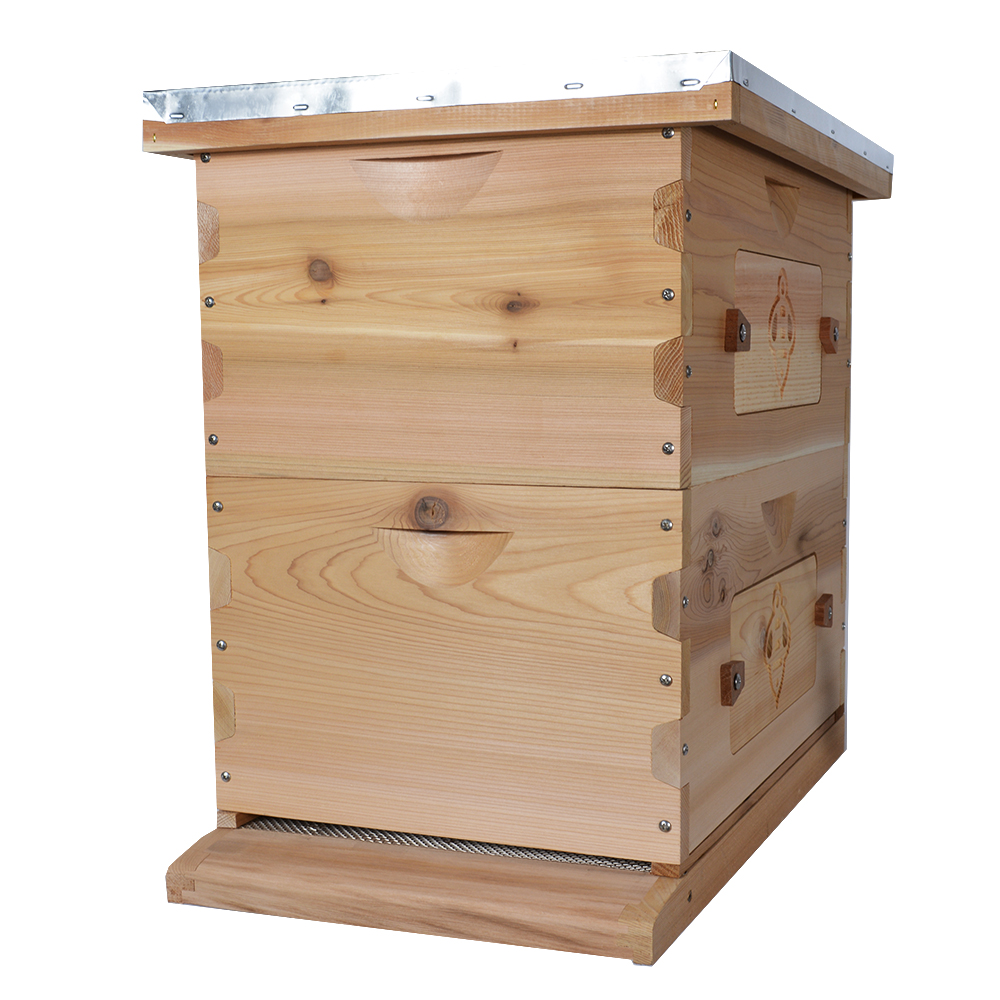
Langstroth hive
When it comes to beekeeping in America, langstroth hives are pretty standard. These consist of wooden rectangles with vertical frames that slide in. Inside the frame is a thin layer of wax foundation that bees use to draw out their comb. To expand the colony add a super onto the top of the hive body.
Some beekeepers love them, others opt for top-bars or Warres. The key pros to Langstroths revolve around honey extraction. When harvesting honey from these hives, you scrape the tops of the honeycomb and spin the honey out of the cells. Then, the frames go back into the hive, which means they don’t have to start from scratch, making it easier on the bees. Harvesting honey is also generally easier, because extractors are very compatible with langstroth frames.
On the flipside, bees naturally want to move down versus up when forming a hive. Some beekeepers note this can become a problem during the winter, becaues bees don’t have honey stores at the bottom of the hive. You also don’t know where the frames’ wax foundation derives from and if it’s been exposed to chemicals. Ultimately, it’s a matter of personal preference. $185. Beekthinking.com
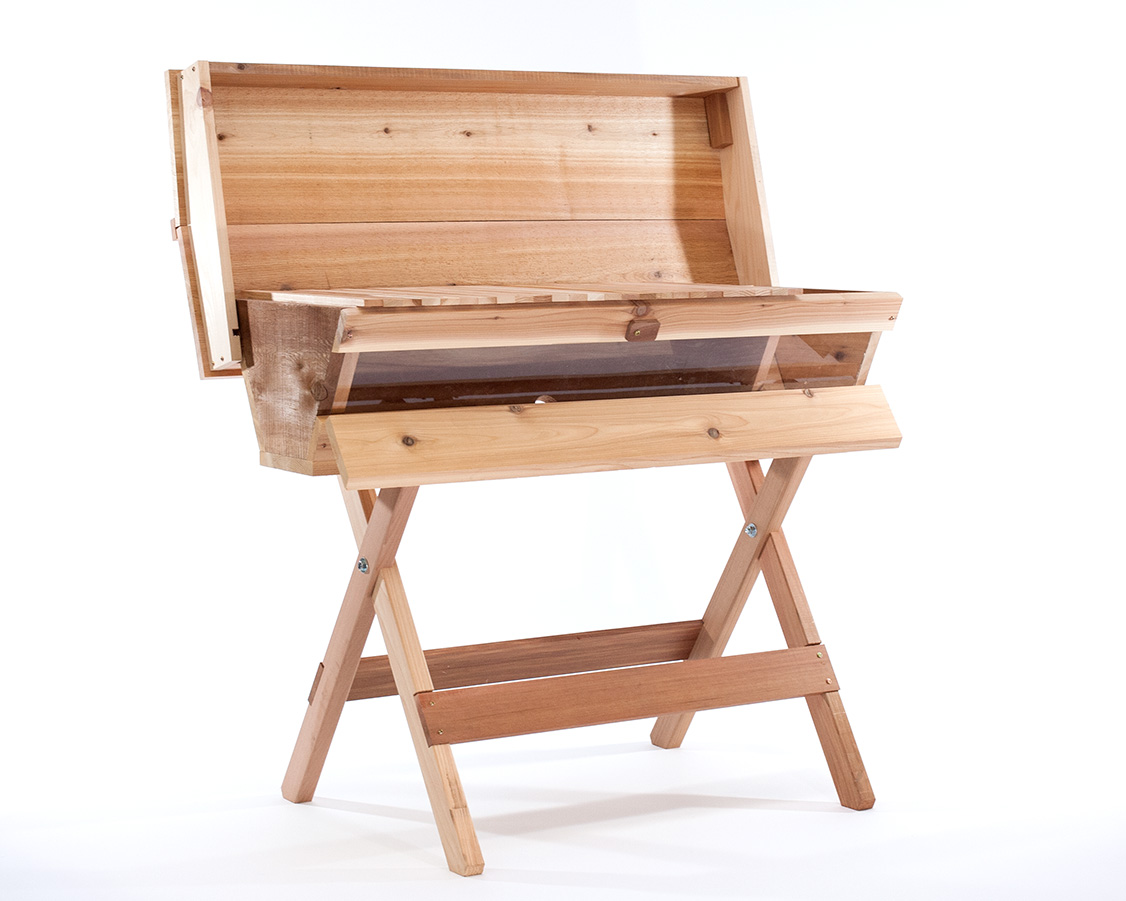
Top-bar hive
Unlike langstroths, top-bar hives are long and slender with a roof on top. They don’t have any frames or foundation, so bees build their own comb, which hangs from a wooden bar. Beekeepers using beeswax for cosmetics, or are concerned about chemicals prefer top-bars hives, because the comb solely derives from the colony itself. Top-bar lovers often tout their bees as docile, and have easy hive inspections that don’t require heavy lifting.
On the other hand, top-bar hives require more frequent inspections than langstroths-twice a week during the spring-to ensure bees aren’t attaching comb to more than one bar. Honey harvests will also be significantly less than langstroths, and require a bit more manual labor, being that there aren’t any honey extractors for top-bar hives. $399. Beethinking.com
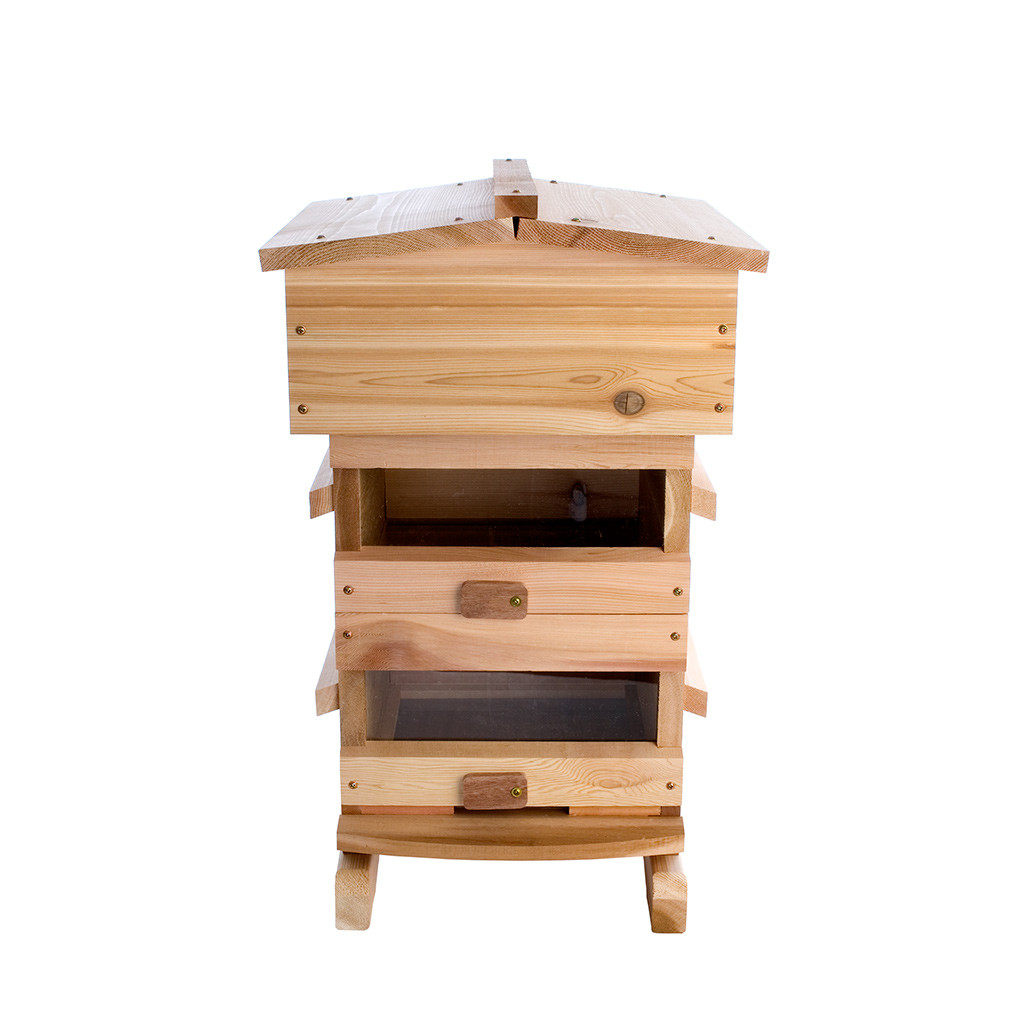
Warre hive
A Warre hive is a vertical top-bar hive intended to mirror the hollow portion of a tree. Like a standard top-bar, bees build their own comb onto wooden bars instead of frames. Similar to langstroth hives, Warres expand via supers, but are added onto the bottom instead of the top. This causes the comb to be regularly harvested, which prevents the re-use of old wax.
Beekeepers seeking a low-maintance, self-regulating hive may prefer Warres. On the ‘con’ side, adding supers to the bottom can be a tricky when working solo. The tiny entrance also poses a problem for feeding, so beekeepers often place the feeder in an empty super or use a top feeder. $219. Beekthinking.com
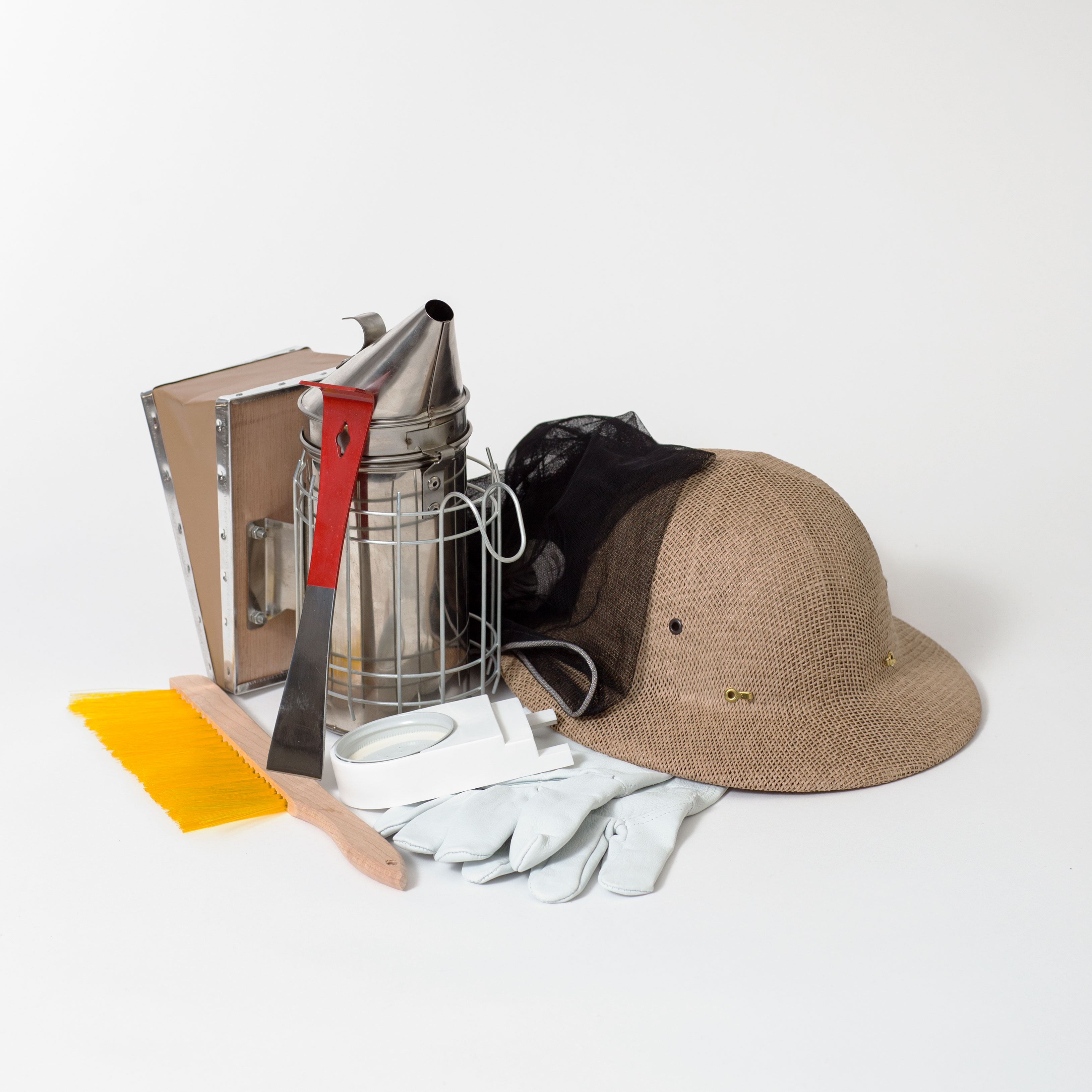
Beekeeping starter kit
- $229.95; williams-sonoma.com
This kit includes all the beekeeping basics minus the hive. You’ll receive a veiled helmet, gloves, hive tool, bee brush, smoker, and feeder.
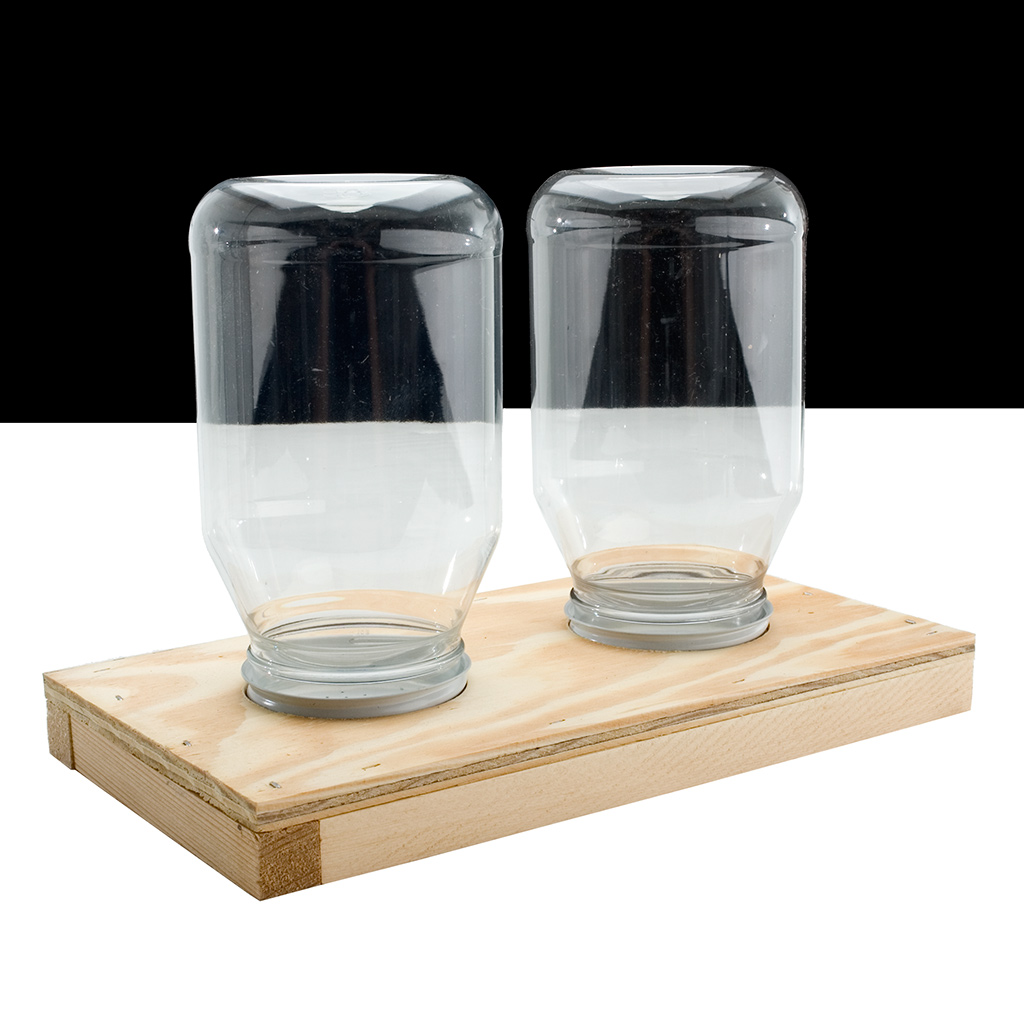
Double jar feeder
Fitting for Warre, langstroth or top bar hives, this double jar feeder is a favorite for generous storage capacity. Unlike other feeders, this one doesn’t leak.
To use in top bar hives: Place feeder in the bottom of your hive on the side of the follower board with bees. The feeder sits in such a way that the bees can still access liquid by going under. Regularly monitor through the window to ensure the bees don’t build comb around the feeder, or drill a small hole in one of your dividers, placing the feeder on the other side. This way the bees can’t build comb around it.
To use in Warre hives: Add feeder above the populated boxes in an empty Warre box. Cut a flap in the center of your burlap/screen and place the feeder directly on top. This way the bees can move up into the feeder but not past it. $29. Beekthinking.com
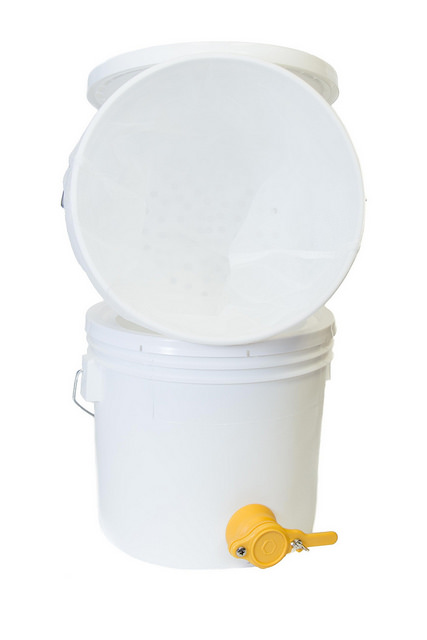
Bucket strainer
Beekeepers can use this strainer system by placing honeycombs into the top bucket. After smashing the combs, place the lid on top and wait for your honey to drain into the bucket below. Seal the lid tight to avoid winged invaders and place the buckets in the sun, or in a heated room. Use with horizontal top-bar hives, Warre hives and foundationless Langstroth hives. $65. Beethinking.com
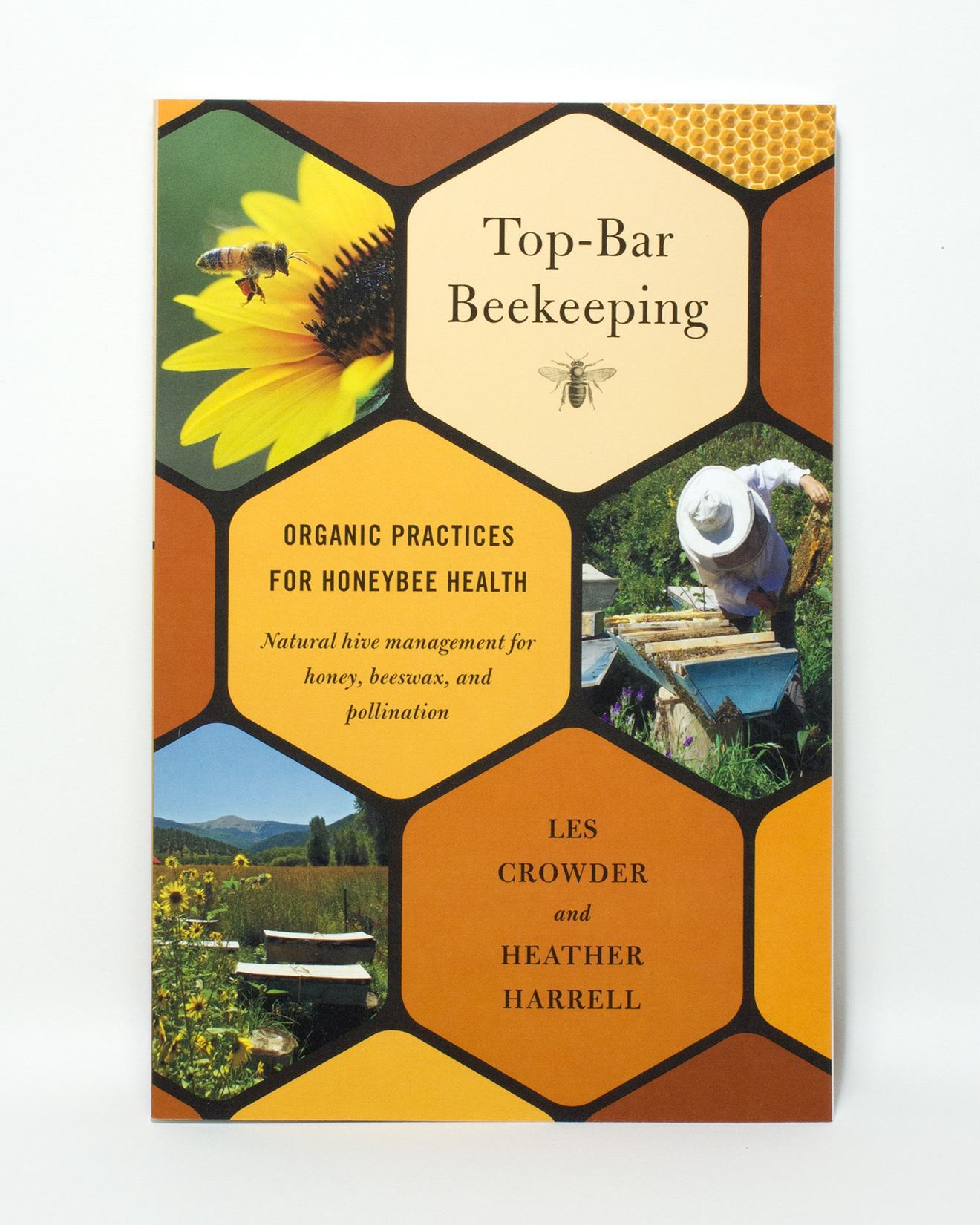
Top-bar beekeeping book
Check out Les Crowder’s comprehensive guide to organic top-bar beekeeping practices. This makes a great read for top-bar beekeepers interested in taking their knowledge to the next level with tips from experts around the world. Top-Bar Beekeeping: Organic Practices for Honeybee Health. $24. Beethinking.com