How the Coolest West Coast Restaurants Got Their Names
What’s in a name? A lot, according to these eateries.
Erin Ng
First impressions matter, but when it comes to sussing out a new restaurant, it often hangs on the eatery’s name. After all, whatever a restaurant is called can tell you so much about the place before you pore over a menu or scan reviews. Is it casual or high-end? What kind of cuisine does it serve? And, of course, what’s the origin story?
Curious to learn more about some of our favorites, we asked a few West Coast chefs and restauranteurs to give us a behind-the-scenes look at naming some of their most popular dining spots. Their stories range from pet names to inherited monikers, but one thing’s for sure: These names leave a lasting impression.
Café Vivant
Vivian Johnson
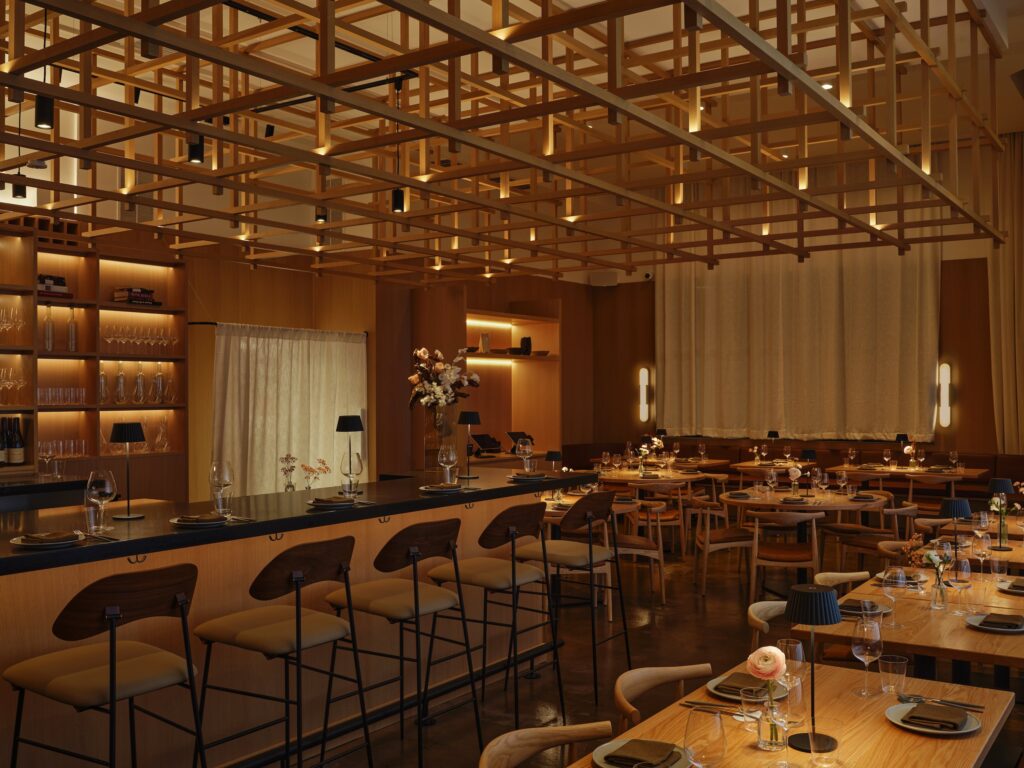
For Jason Jacobeit, co-founder of Café Vivant, the name of his Menlo Park eatery is a love letter to his wine trips through France’s Burgundy region. Sure, the wines are noteworthy, but Jacobeit says it’s the poultry that really sparked inspiration. “It’s where we tasted Heritage chickens raised slowly and traditionally—birds with the kind of depth and distinctiveness America once had before fast-growing hybrids took over,” he explains.
Jacobeit’s experience prompted him to learn more about poultry traditions from all corners of the world—and pay homage to those influences in the Bay Area. “Vivant—‘alive’—felt like the perfect expression of that revival,” he adds.
Redbird
Laure Joilet
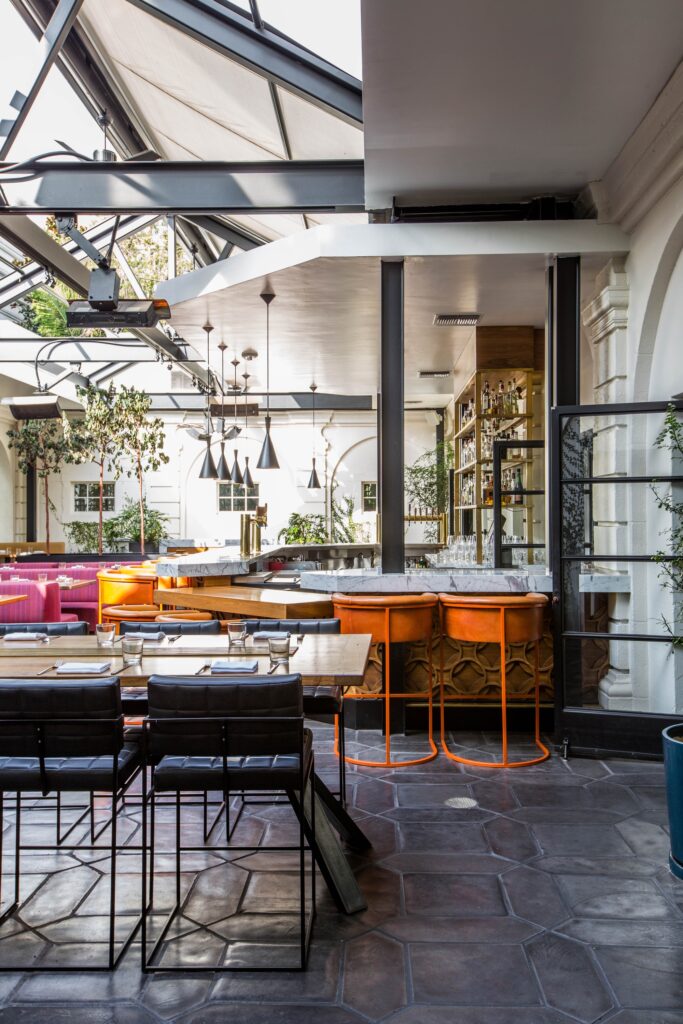
Initially, Chef Neal Fraser was set on naming his downtown Los Angeles eatery after his Michelin-minted restaurant, Grace. However, upon further reflection, he wanted to give this new location a sense of place. “We decided to come up with a name that had a nod to the fact that we were in the rectory of a Catholic cathedral,” Fraser explains. “Originally we thought of The Rectory at Vibiana, which did not have the right ring to it. So we wanted to play on the cardinal who was the head of the cathedral.” And so, Redbird was born.
Lazy Bear
Gamma Nine Photography
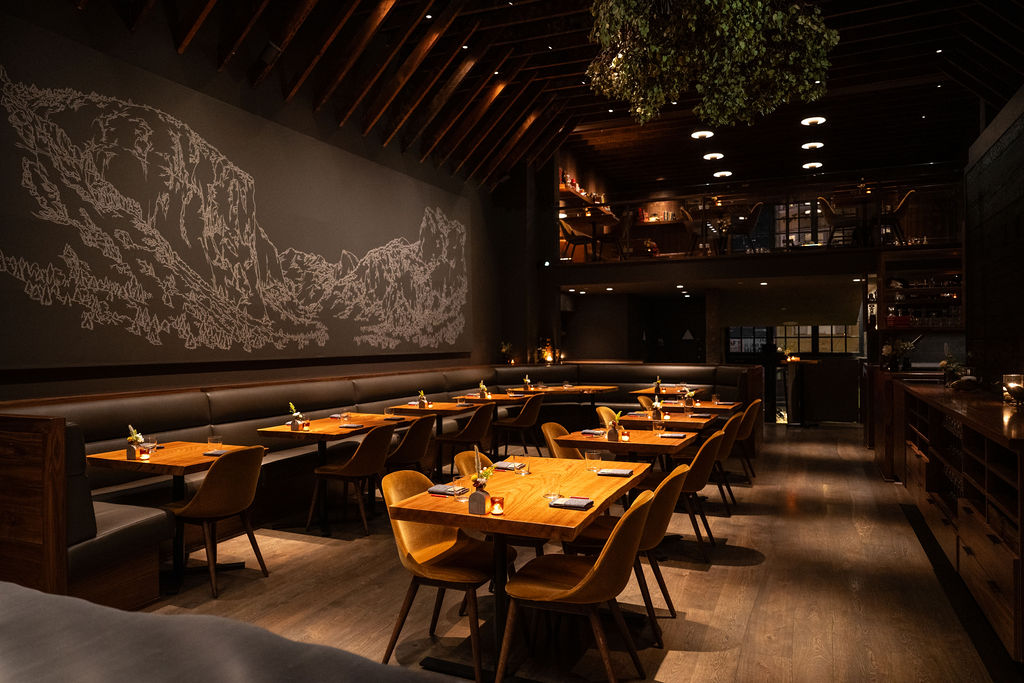
David Barzelay, founder and executive chef of Lazy Bear, never anticipated his side project would become a San Francisco darling. When Barzelay was laid off from his job as a lawyer in 2009, he and his wife Jeanette started an underground restaurant in their one-bedroom home in Duboce Triangle.
“She came up with the name as an anagram of our last name, a fitting description for a project undertaken at least in part to avoid having to get another law job,” he explains. “The name stuck because it’s personal, memorable, and a bit weird for a fine dining restaurant—as Lazy Bear has always been.”
Though his one-time hobby has grown much, much bigger, Barzelay says a passion for cooking and hospitality remains at the restaurant’s core. “We celebrate the simple act of bringing people together around a table,” he says.
Little Saint
Emma K Creative
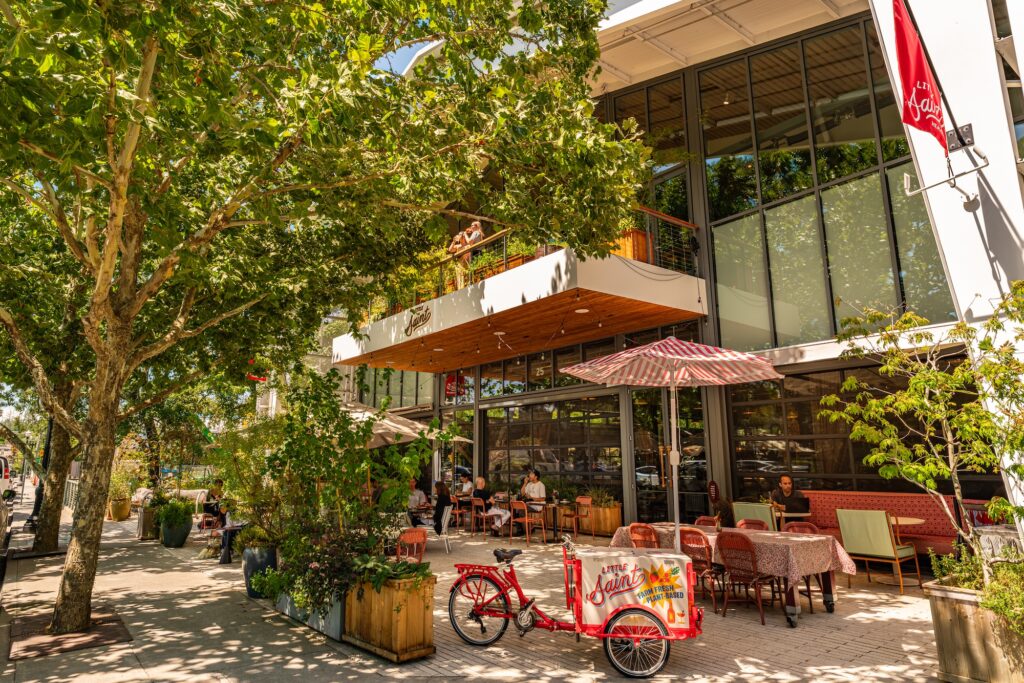
Founded by Laurie and Jeff Ubben, the vegan eatery and music venue in Healdsburg, California was a concept dreamt up with longtime friend and designer Ken Fulk. As the story goes, the Ubbens are founding supporters of Saint Joseph’s Arts Society, Fulk’s San Francisco-based cultural organization that shares a creative foundation in art, music, design, and performance. The name reflects Little Saint’s support of the nonprofit Saint Joseph’s Arts Foundation through a portion of profits and select curated collaborations, all aligned with a shared mission to foster culture, creativity, and community.
Hell’s Backbone Grill & Farm
Kayla Bertagnolli
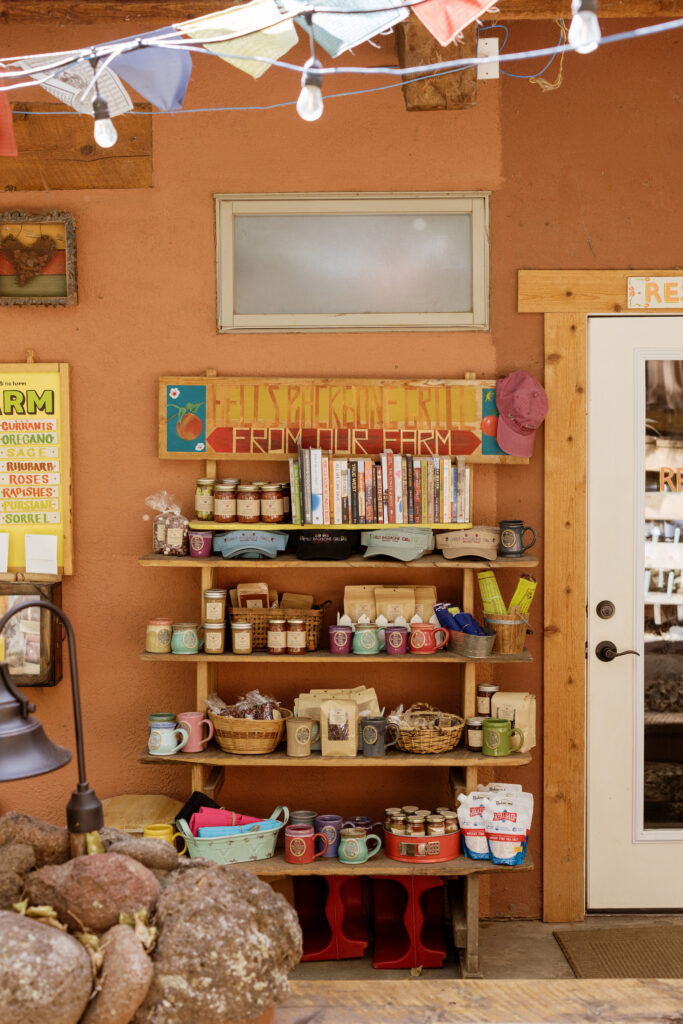
Blake Spalding signed a lease to open her Boulder, Utah restaurant in 1999 with one stipulation: She had to keep the name Hell’s Backbone Grill. “The restaurant’s namesake is the Hell’s Backbone Road & Bridge, which crosses a dramatic crevasse with sheer drop-offs and expansive canyon views,” Spalding shares. “It was originally built in the 1930s by the Civilian Conservation Corps to connect Boulder to the nearest town of Escalante.”
So, she embraced it: Spalding traded in the former restaurant’s cauldron-clad logo in favor of one with flowers and the slogan, “Where the food is heavenly.” “The name became even more our own when we officially changed it to ‘Hell’s Backbone Grill & Farm’ to highlight our 6.5-acre farm, where we grow much of the produce, herbs, flowers, and eggs for the restaurant,” she adds.
Shuggie’s

Erin Ng
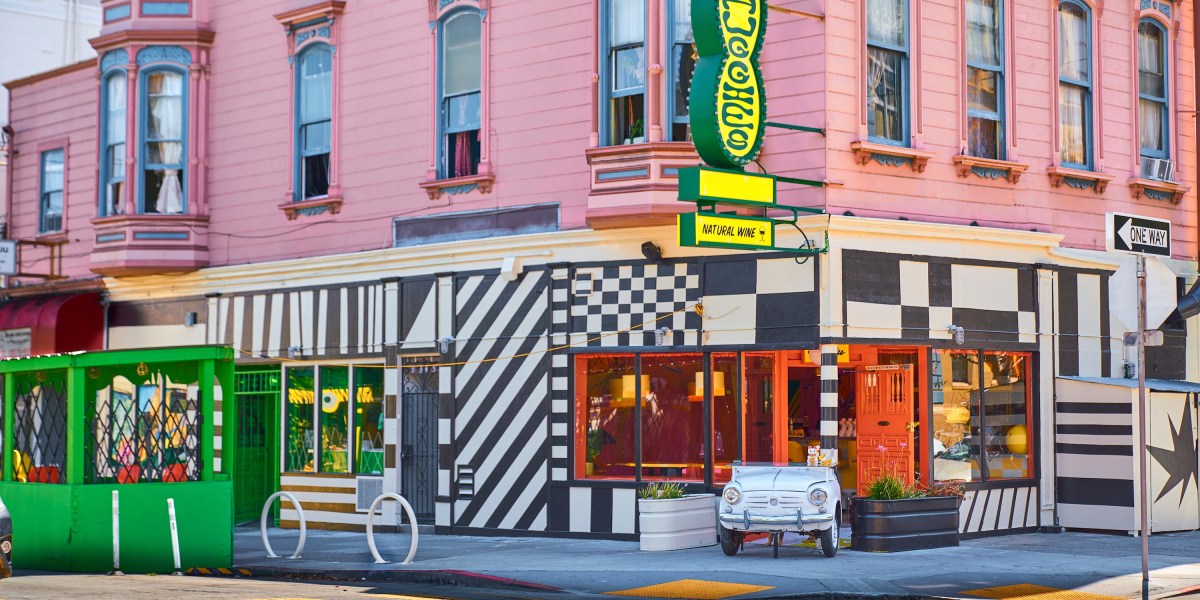
Shuggie’s might be known as the brightly-colored, climate-positive eatery in San Francisco’s Mission District, but the name is a term of endearment for co-owners Kayla Abe and David Murphy. “Shuggie is one of the many names David and I call each other,” she explains. “You can hear us yelling it all night to one another.” Abe says their mom and pop restaurant is an extension of themselves, so the name was always going to be Shuggie’s.
7 Adams
Tara Rudolph
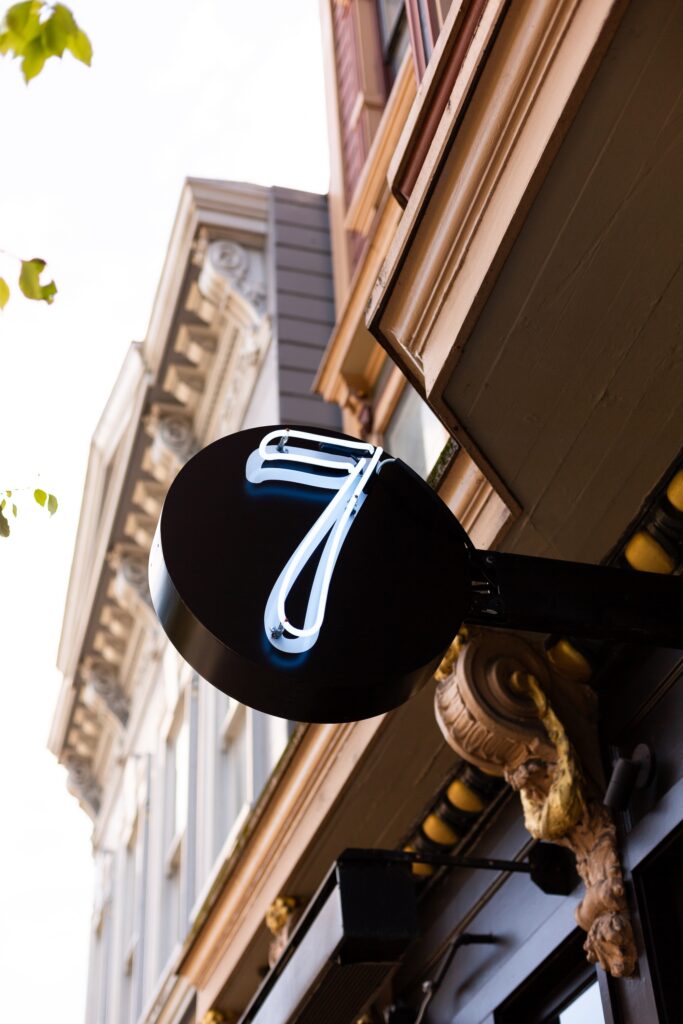
“Our restaurant’s name is a tribute to my past and to the people who helped and supported me along the way,” explains David Fisher, executive chef and partner of 7 Adams in San Francisco. “Especially my mother, who passed away suddenly in 2014.” In fact, 7 Adams is the address of the Jamestown, New York home where he was raised by two restaurant owners.
“When I was seven years old, my parents bought a diner, which they called Fisher’s Family Restaurant,” Fisher recalls. “My dad did most of the cooking, while my mom took care of the front and cooked a couple times per week on slower nights. I loved spending time at the diner, and it was where I first fell in love with cooking.”
La Patroncita
Carter Hiyama
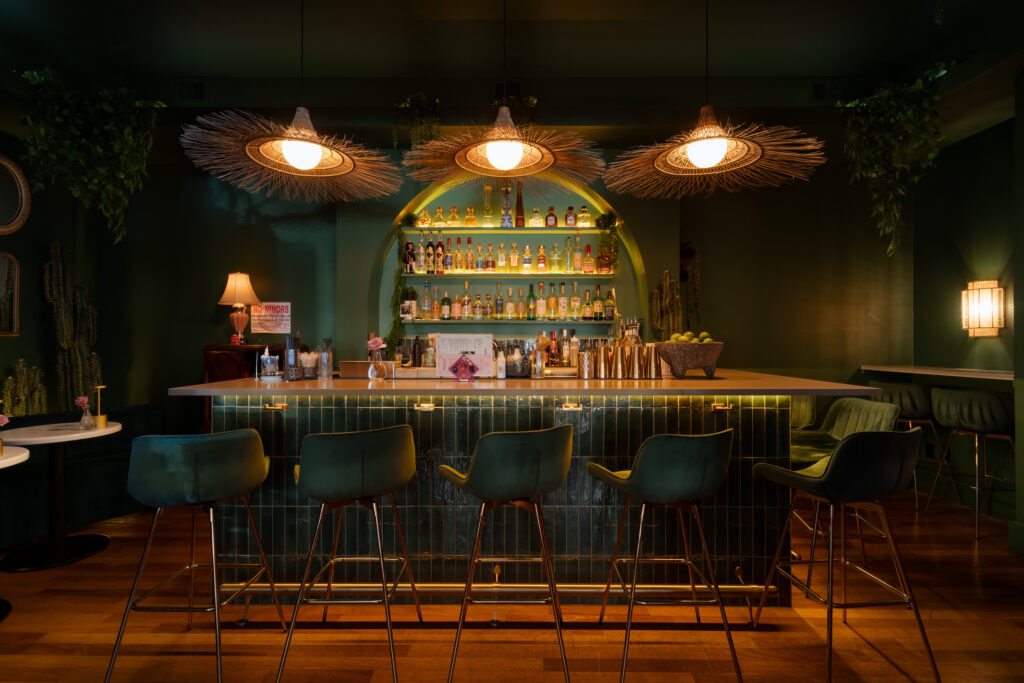
Lucy De Leon also paid homage to her mother with La Patroncita in Portland, Oregon. De Leon shares her family was full of agricultural workers who traveled all over the United States before settling in Oregon. “Every day, my mother, Francisca, would wake up early to prepare meals to sell to our fellow workers,” she adds. “This taught me that food was connection, nourishment, and opportunity.”
De Leon’s mom was nicknamed “La Patrona,” or “The Boss,” and she was dubbed “La Patroncita.” So, when it was time for her to think of a name for her Mexican restaurant, La Patroncita was the obvious choice. “In everything I do, I want to empower women,” De Leon explains. “There are so many important women in my life, women who model how to be strong, generous, loving, and entrepreneurial.”