
Bee safe!
I am a beekeeper and I am allergic to bees (full story here). The other week my rightfully-concerned boyfriend sent me an article about ...
I am a beekeeper and I am allergic to bees (full story here). The other week my rightfully-concerned boyfriend sent me an article about a beekeeper in El Cajon, CA who had died from an allergic reaction to a bee sting (read full article here). Michael Christopher Hendricks was a well-regarded youth pastor, husband, father of a two-month old beautiful girl, and he had a heart for bees. Unfortunately, he and I both discovered our allergies the hard way, but I was quite a bit more fortunate and able to walk away.With the ever-growing popularity of beekeeping, I fear cases like this will become more and more common. While some beekeepers recommend being stung a certain number of times in a year, they fail to realize there is a group of people (I’m in this group) who will build up a sensitivity rather than a tolerance to the bee venom. To avoid cases like that of Hendrick’s, I present to you a list of safe beekeeping practices.
- Get testedfor bee venom allergies
- They will perform a blood test in addition to a skin test (see skin test below)
- Even if you don’t think you’re allergic, your level of sensitivity to the venom may be good for you to know
- Get a prescription for an EpiPen
- Even if you don’t think you’re allergic, it is smart to have one around in case you or someone around you develops an allergic reaction
- The shelf life is very short, so be sure to replace yours every 6 months
- Take an antihistamineBEFORE visiting your beehives in case you get stung
- This will help your body to fight off the venom better than taking the antihistamine after the sting has already occurred
- Make sure your bee suit is baggy and not close to the skin
- NEVER beekeep alone
- A lone beekeeper in San Francisco died last year and would have likely lived if someone else had been with him at the time of the sting
- Have your beekeeping partner double-check all potential points of entry for places where bees could sneak in to your suit
- Make sure the ankles of your pants or bee suit are sealed so no bees can crawl up your legs
- Make sure gloves are well-secured and regularly check for holes in the mesh around the wrists and repair if needed
- Veil is completely zipped or tied tight against your body leaving no room for a bee to crawl through
- Check each other for lingering bees before you remove your gear
- Keep calm and carry on
- Bees can sense uncertainty from your pheromones and can be more likely to sting
- Breath deeply and work slowly
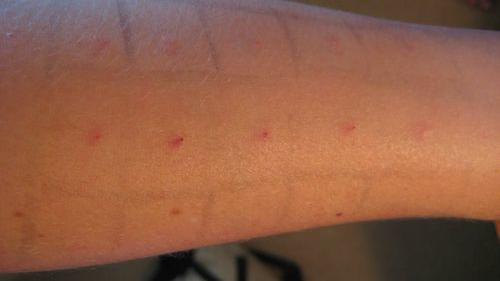
My arm after the skin test for insect venom allergies