A River Revived
Beyond Portland Harbor, the Willamette River feels remote and refreshing
John Clark
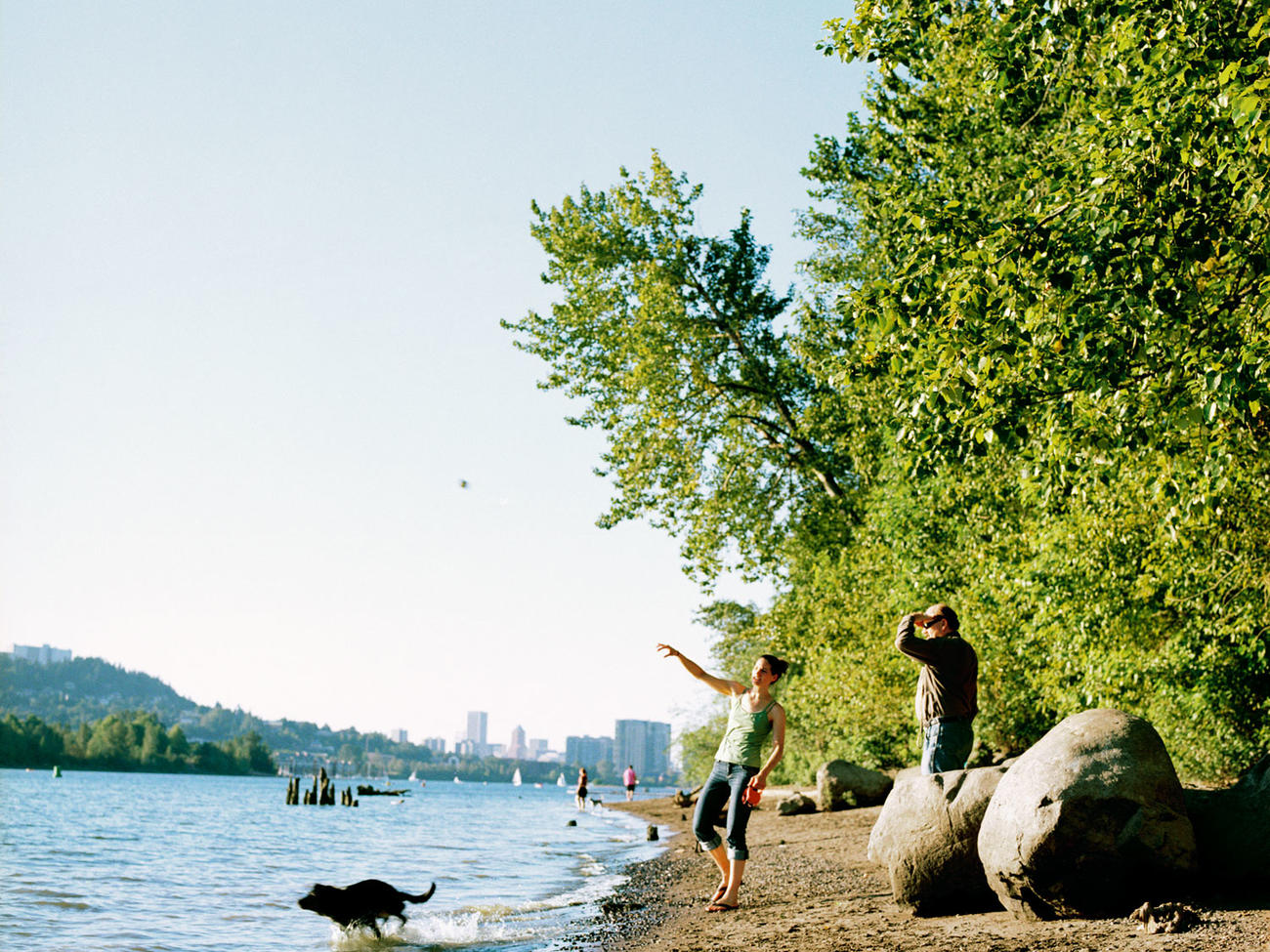
It’s hard to believe that nearly three of four Oregonians live within 20 miles of the Willamette River’s banks―here on the water, we feel as if we’re miles from civilization. We’re on day four of a five-day guided trip with Paddle Oregon. The journey covers 26 miles on the largest river that’s entirely within Oregon, and other than one small town and the 4 or 5 miles it has taken to approach and paddle past Salem, we’ve seen only farms, water, and woods, smelled only the perfume of cottonwoods, heard only our own voices and the calls of birds.
At daybreak we carry the canoe down a short dirt road at Wigrich Farm, just downstream from the Buena Vista Ferry, and put in among the Willamette River’s reeds, rocks, and cottonwood trees, their green scent like the river’s breath. We drift past tangles of trees and shrubs that obscure the farms beyond, spotting a kingfisher from its rattling call. The century-old stone storefronts of Independence, Oregon, come into view and just as quickly fall away. A long sandbar appears; a creek tumbles in. Soon we’re paralleling a noisy highway, heading straight toward the center of Oregon’s second-largest city, Salem. Scattered homes appear on the right bank. Then they recede, and we’re back to wild river.
“If you’re a person who likes solitude, don’t go to the Deschutes River in the summer, don’t go to the Rogue,” says Rick Bastasch, director of the Willamette Restoration Initiative, a group seeking to help coordinate efforts to protect and restore the health of the Willamette watershed. “Go to the Willamette.” With warm air and refreshing water beckoning, there’s no time like August to do just that.