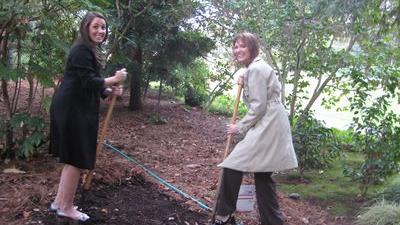
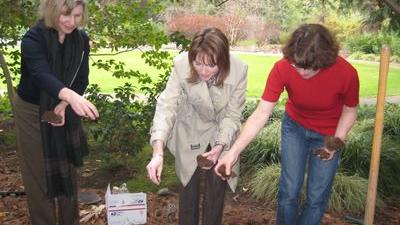
Just another day at the Sunset headquarters. We took a quick break from our jobs to plant morel spawn in our garden. Paying homage to ...
Written bySunset
September 26, 2017
Share this story
Just another day at the Sunset headquarters.We took a quick break from our jobs to plant morel spawn in our garden.Paying homage to the small delicacies we hope will grow here, we opted to wear nice shoes and clothes to dig and turn the soil (or perhaps the attire was an accident).
Katie Tamony, Editor-in-Chief, and me turning the soil.
The directions included with our spawn weren’t very clear, but apparently we can expect varying results—different sizes and shapes of morels. And we’re not quite sure when they’ll bloom.
Here is my best attempt at simplifying the process for growing morels.The earliest we can expect them is later this spring, but there is a very good chance that we may not see them for a couple of years.We will let you know when/if we find them.If we don’t have any within the next two years, I would recommend disregarding our method (the uncertainty of mushroom growing drives me nuts).
Weekly: turn in compostable materials8 cups of biodegradable materials for a 16 square foot space (less if the weather is warm)
Add remnants of burned wood to create a more natural habitat for morels since they commonly spring up in areas where forest fires have occurred
Stop adding biodegradable materials 30-40 days before estimated “morel spring” (see below for “morel spring” seasons)Allow weeds and grasses to grow and fallen leaves to stay will provide protection for the young morels
Lightly water the area if the ground feels dry
Fend off tourists that may find our morel patch
Other information you should know
When should you plant? If you live in an area with a mild climate, you may plant any time of year; Otherwise, it is optimal to plant when the daytime highs are in the 60s and 70s
When will you find morels?–If you live in a mild climate “morel spring” may occur January through April.–If you live in an area with brutal winters, “morel spring” is likely to occur in May or June
A couple of weeks after a heavy rain, inspect your habitat for toothpick-like sticks: morels! The morels will take a couple more weeks to fully mature