Step Inside the ‘Earthy Modern’ Home of Winery Owner and Interior Designer Jill Shadek
A winemaking couple with a penchant for warm modernism create a dream home, and a transportive tasting room, in the rolling hills of Healdsburg.
Thomas J. Story
Pouring over wine labels for clues about the liquid inside is a favorite pastime of aesthetic oenophiles. The font and the graphics have the potential to reveal the vintner’s taste and priorities in a way that a price point or a grape variety doesn’t. What’s even more revealing about their values is to see how a winemaker lives. Catch a glimpse of their turf, their tasting room, and (if you’re lucky) their home, and their point of view is as clear as a Sonoma sky.
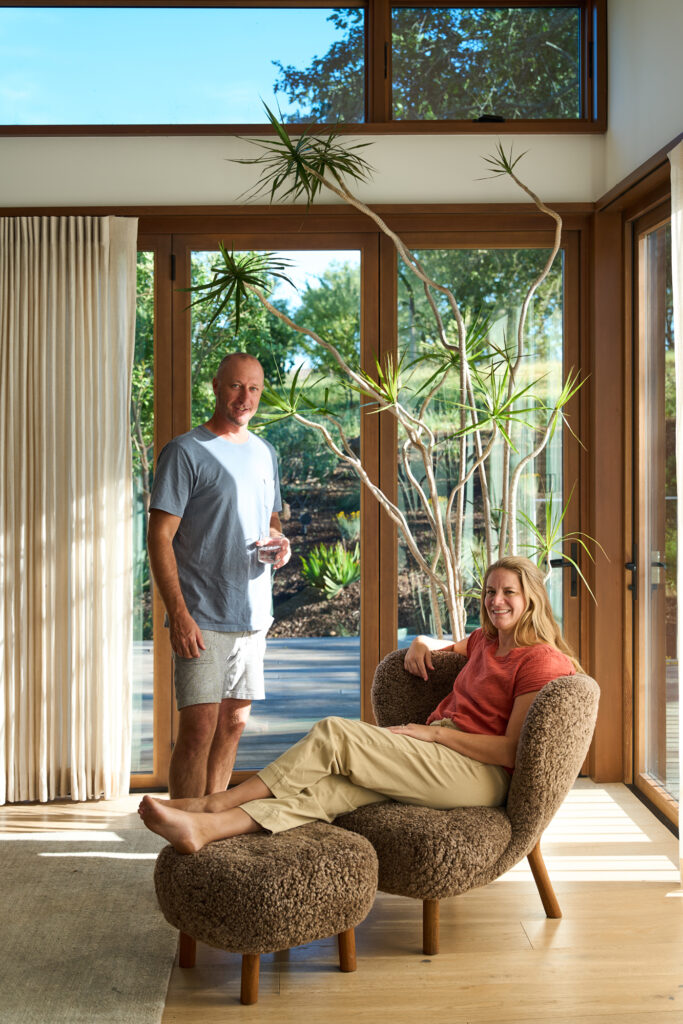
Winery owner and interior designer Jill Shadek and her husband and business partner Mike Lucia went all-in when they designed their Healdsburg home with an attached tasting room. The couple owns Cole Ranch and Rootdown, based in Mendocino and Healdsburg, and produce innovative, organic wines from dry-farmed vines with minimal intervention. When Shadek and Lucia hired Bay Area architectural designer Erik Kramer of the design/build firm Social Studio, they contracted Matthew Bowles of TenBooks Studio to join the team and contribute to the design of their dream house. The goal was to create a property that embodies their commitment to sustainable practices, and their embrace of minimalism both in winemaking and design.
Thomas J. Story
“That’s an interesting design challenge with a single-family home. We had to figure out how to let the public in and also maintain privacy in the home,” says Bowles. The upper two levels are the family living areas, and they’re more playful, with angular volumetric forms that create dramatic interior spaces.”
Initially, Kramer, Bowles, and Shadek intended to modernize an existing 1960s house on the property, which had been trucked in from another location and nestled in the hillside. For better or worse, the team determined that a fresh start was in order.
Thomas J. Story
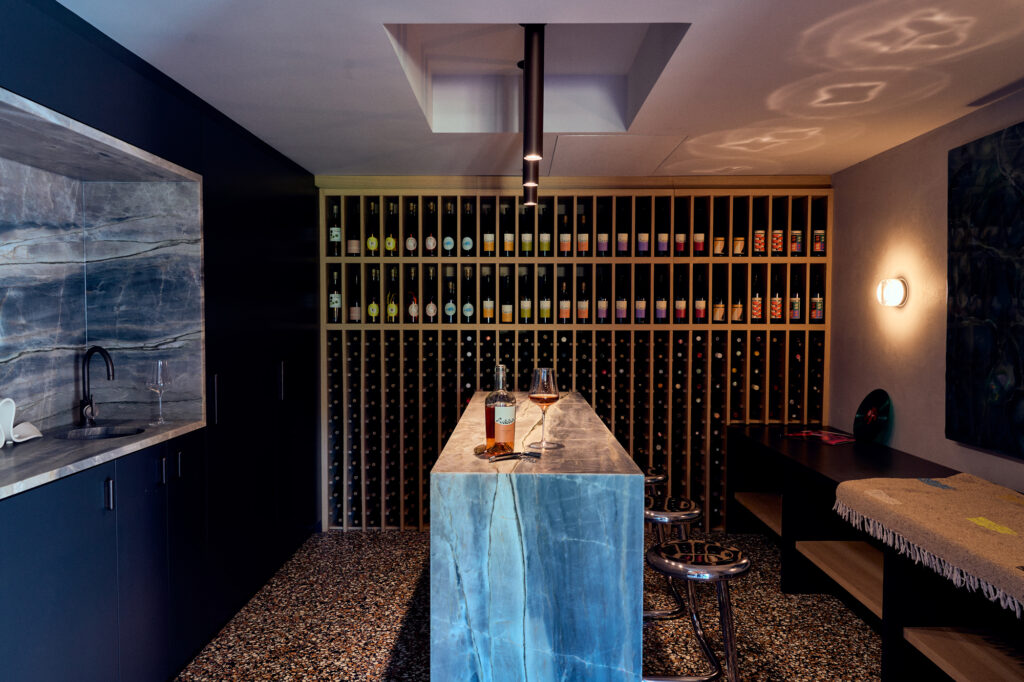
storage is by Ogee Millwork.
Thomas J. Story
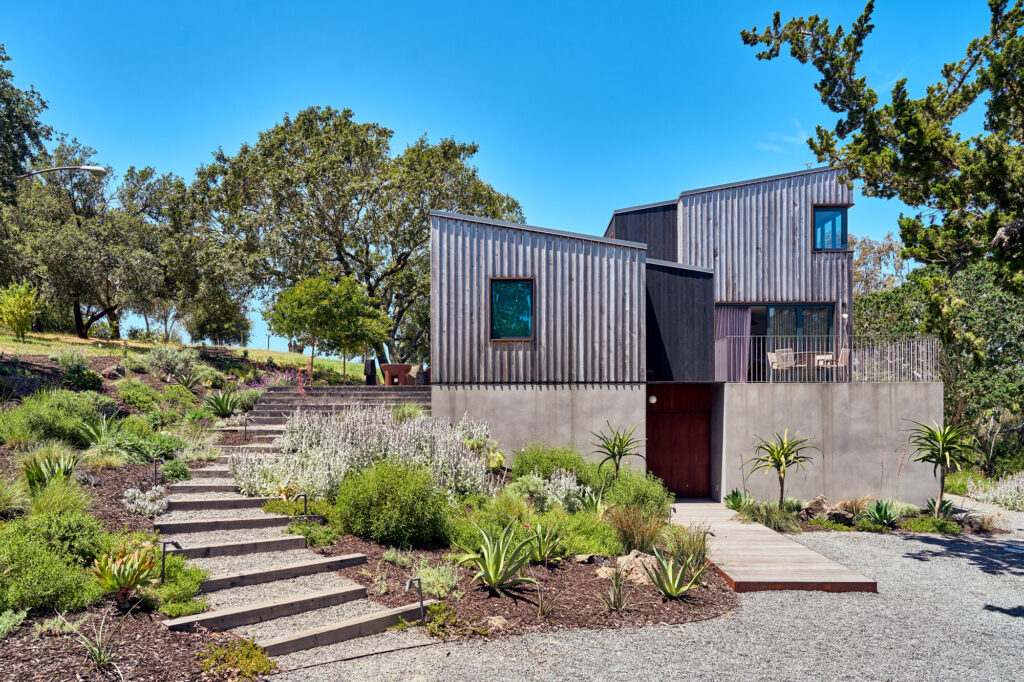
“We kept that idea of partially burying the house in the earth in the design concept, but we decided to start over for a new build,” says Bowles. “The footprint of the house is the same as it was and we used a bit of the foundation. The low volume that’s in the hillside is clad in plaster, and that creates a massive, solid base to the house. The tasting room and the wine cellar are down there and it doesn’t need air conditioning. It stays naturally cooled by the earth. It’s moody, dark, and durable. The upper two floors are lighter and more playful.”
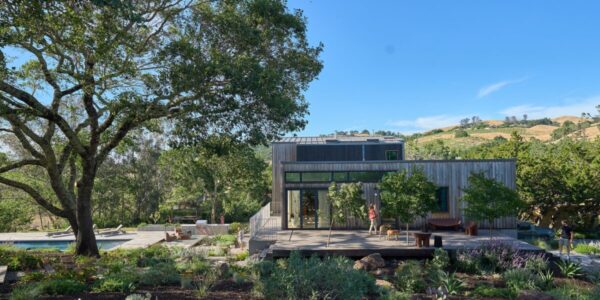
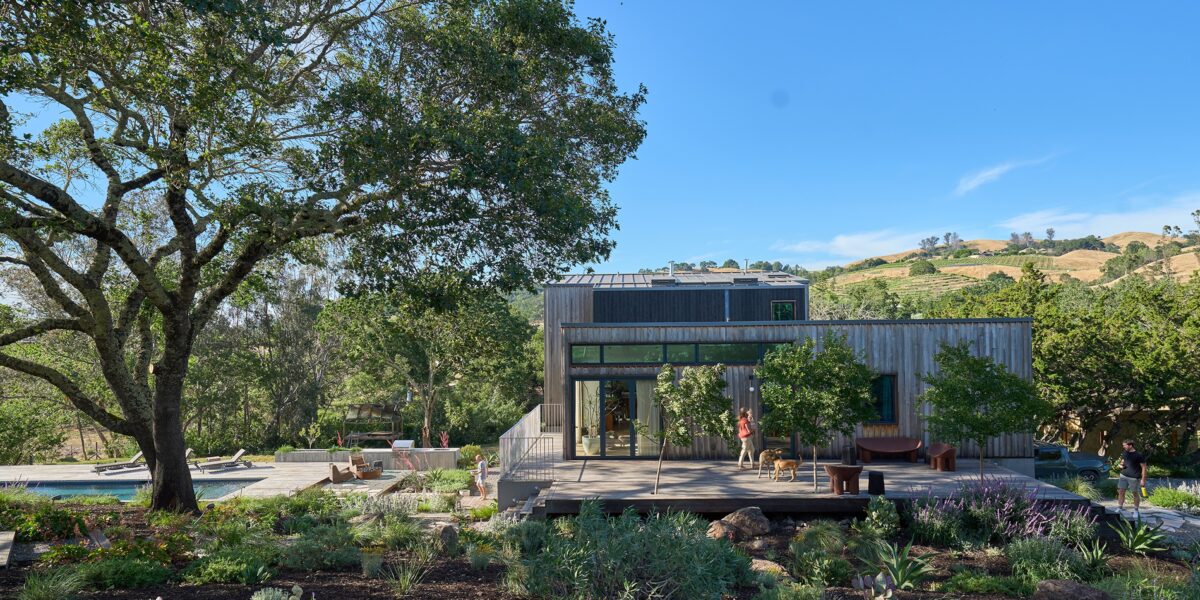
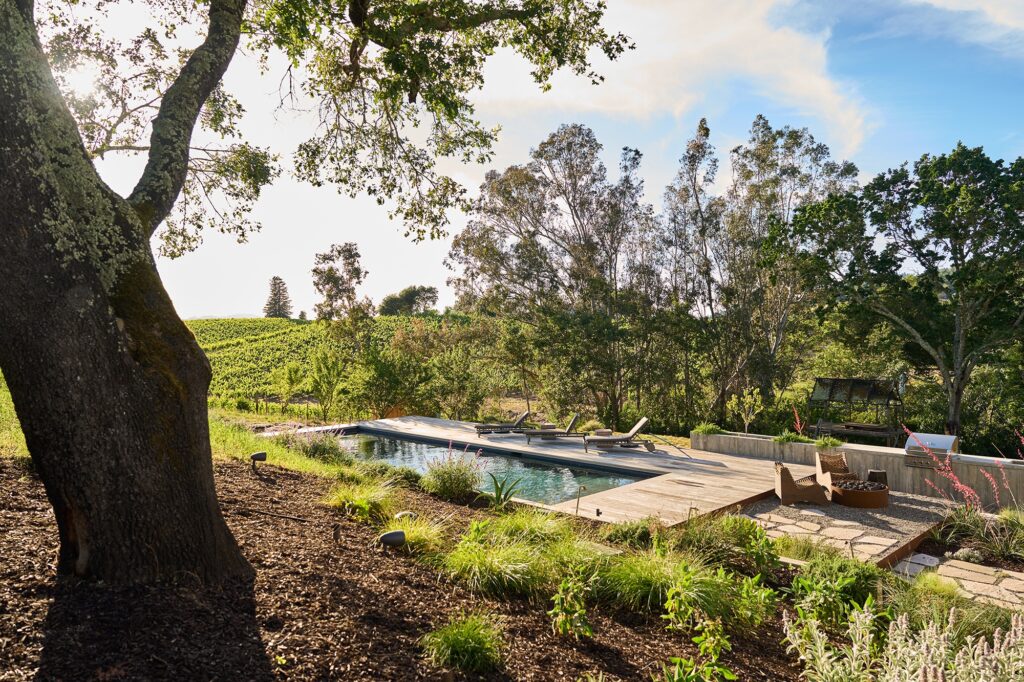
Their design is an unapologetically modern, angular alternative to the area’s ubiquitous farmhouse. Unfinished Monterey Cypress board and batten exterior siding will silver over time. And the surrounding terraced garden lets the breathtaking natural surroundings take center stage. Inside, the team committed to using simple materials like corten steel, terrazzo tile, and dark wood paneling in exacting and creative ways.
Thomas J. Story
Thomas J. Story
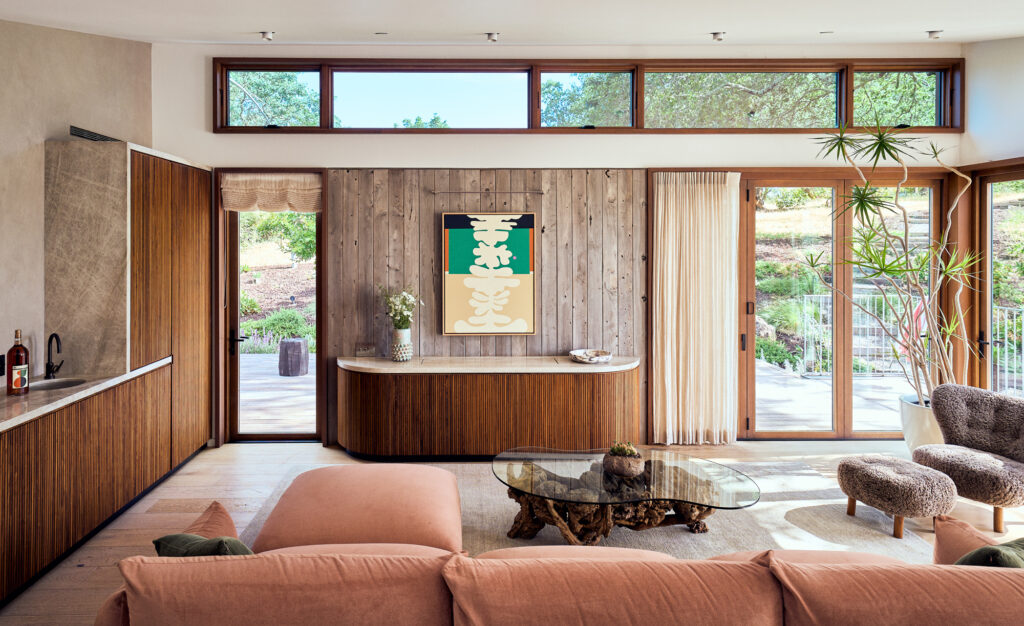
“What’s crazy about the house is how detailed Jill allowed us to get,” says Bowles. “There’s nothing in the house that doesn’t flush out or plane out. All of the doors in that walnut paneling are blind and hidden. It’s a very high level of detailing that’s a pain in the butt for a contractor, but makes the house feel very integrated.”
Bowles describes the look as earthy modernism, which is matched by the palette of dusty rose, terracotta, and sky blue.
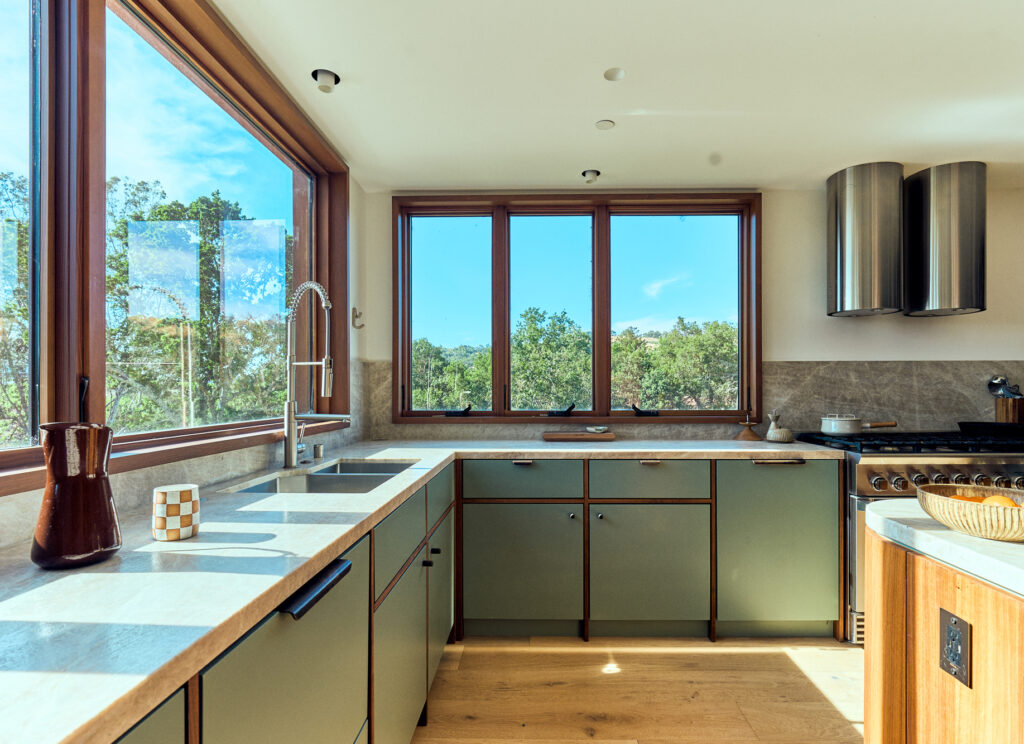
“It was really important to the three of us, Erik, Jill, and myself, to use raw materials with integrity and honesty,” he says, pointing out the walnut kitchen cabinetry and subtle quartzite stone from Brazil. “We didn’t use a high gloss finish anywhere. For the stone, we went with a leathered finish that has a soft, supple feel.”
Thomas J. Story
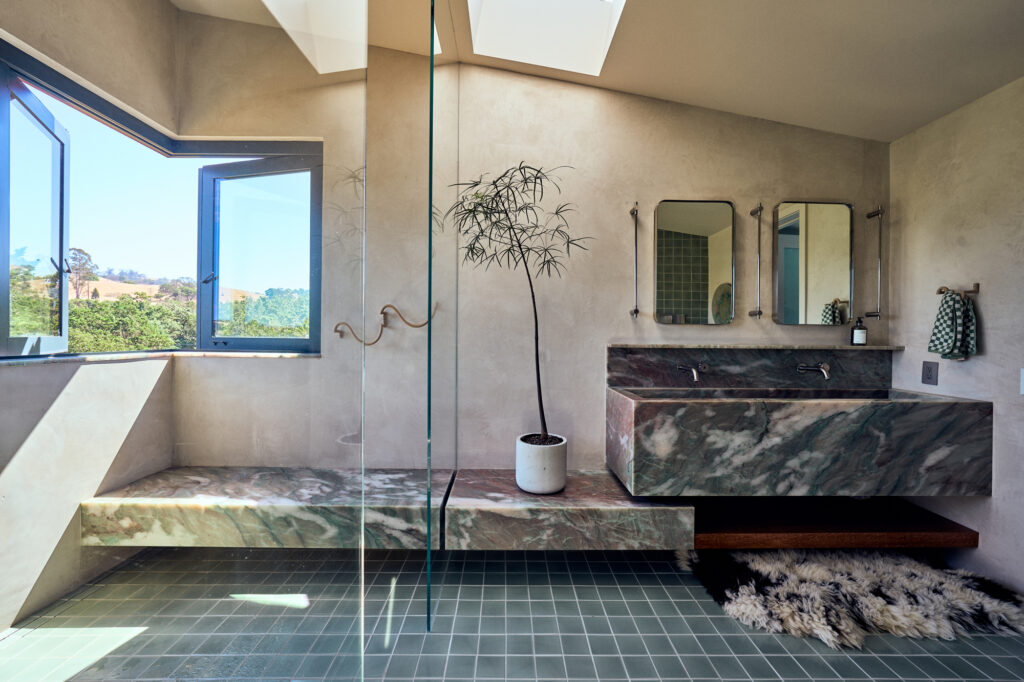
The home’s most remarkable feature happens to be in the most private space, the primary bathroom with a shower that opens up completely to a view of Chalk Hill.
Thomas J. Story
“That sink is all Erik, who designed the marble vanity to run through the glass into the shower,” says Bowles. “We worked hard to get that zero-post corner so we could open up those windows, so it felt spacious and calming. And we got that top-down light like you’d get from a skylight, which is different from the light from a window. When you’re in there it feels like an outdoor shower about 30 feet off the ground.”
The result is equal parts rooted in nature and suspended in beautiful, open space. It’s both grounded and light as a feather, fun, not too serious, and punctuated with sunshine. Like you could bottle it and drink it, and savor every sip.
We only recommend things we love. If you buy something through our site, we might earn a commission.