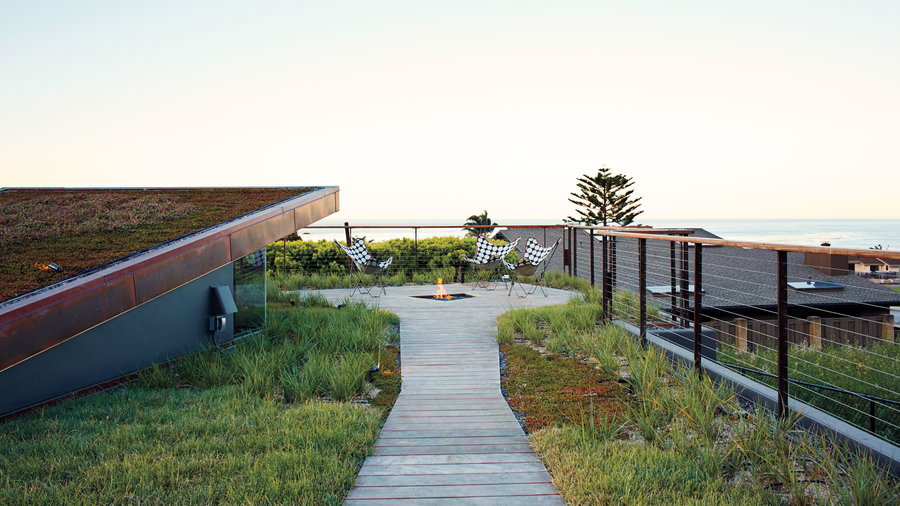
Beach boardwalk
This rooftop aerie, atop the guest house of a Shell Beach, California property, offers sweeping views of the Pacific Ocean. Wild rye, native to the Channel Islands, edges the deck, which has a sunken firepit at its center. Design: Jeffrey Gordon Smith Landscape Architecture, with Architect Richard Blair LeGros.
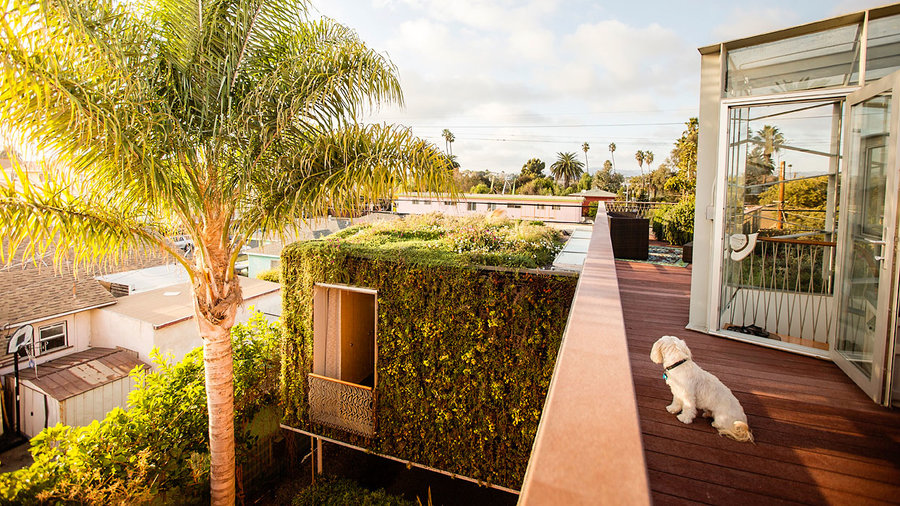
Garden in the sky
This garden cloaks the walls and rooftop (reinforced for the extra weight) of a cube-like master suite addition in Venice, California. Wrapped in waterproof vinyl, the structure is fitted with modular cells that resemble ice cube trays, each containing rooted sedums and meadow plants (lantana, ornamental grasses, and yarrow). An automatic drip system takes care of watering. Behind the meadow, vegetable garden beds bask in sunlight, and a deck offers the best seats in the house for taking in ocean views. Design: Marc and Paul Bricault.
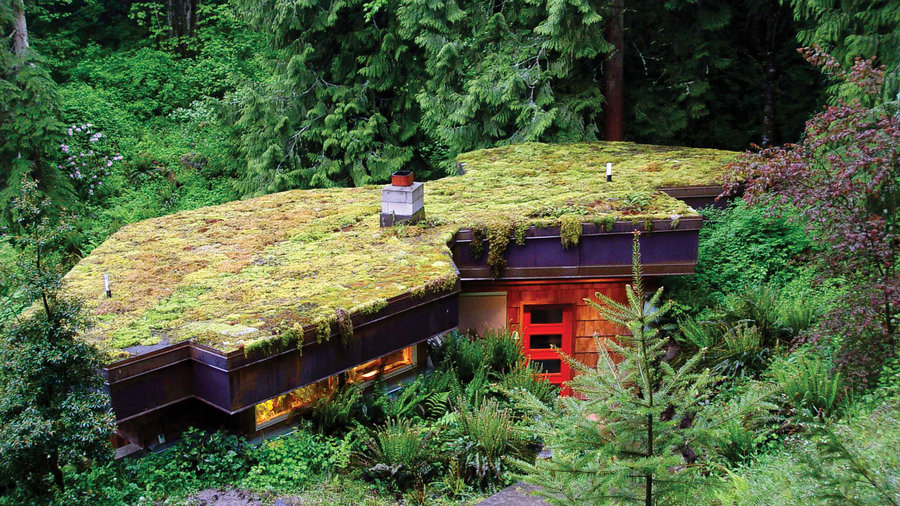
Mossy meadow
“Stuff falls from the trees, then moss grows over it,” says architect Roy Hellwig, the owner of the spongy mat of ferns, lichens, and moss that thrives atop this house in Sequim, Washington. Hellwig gathered moss from around the property and spread this “starter kit” on the flat roof’s rubberized asphalt surface. Then the lichens and moss arrived.
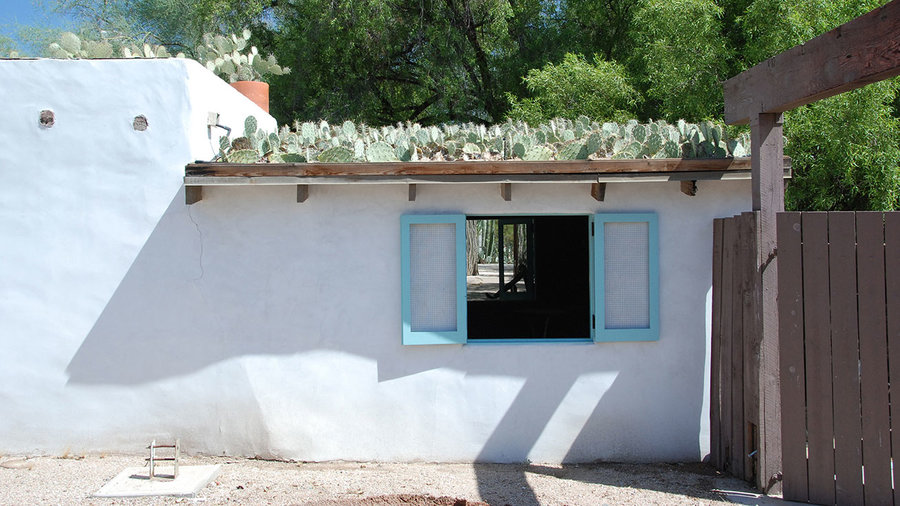
Southwest “shingles”
Landscape architect Steve Martino used cactus pads to cover the roof of a client’s old garden shed. “People use palm fronds elsewhere, he says. “This is my take on a thatch roof.” The prickly pear pads were planted in beds about 6 inches deep; gravel holds them in place until the roots grew together. The cactus stopped growing at two pads. Now several years old, the roof has even survived a fire!
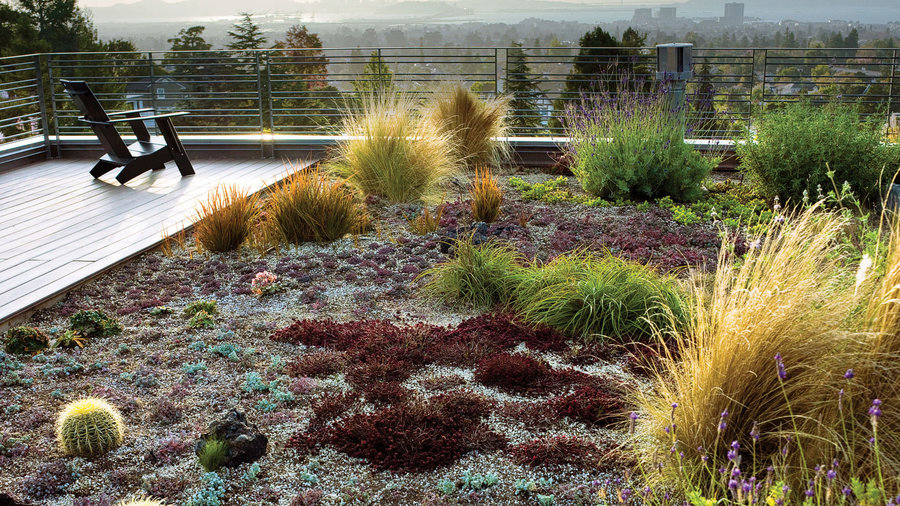
California tapestry
This roof tops the much-lauded Margarido House, in Oakland, California, which earned LEED-H Platinum certification. To cover it, landscape designer Lauren Schneider (wonderlandgarden.com) mixed California natives that thrive in hot, dry conditions with plants that evolved in similar climates. Tiny sedums (blue green S. spathulifolium ‘Cape Blanco’, lime green S. rupestre ‘Angelina’, and burgundy leafed S. spurium ‘Voodoo’) create a low tapestry around clusters of golden barrel cactus, orangey, grasslike Libertia peregrinans, and lavender and pink-flowered Lewisia cotyledon ‘Sunset Strain’.
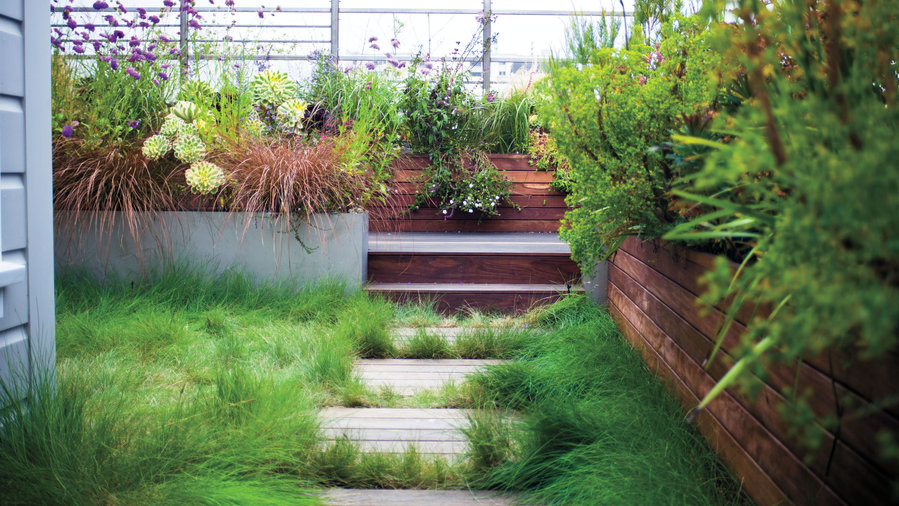
Island above the ground
Planters filled with grasses, ‘Sunburst aeoniums’, and perennials border this San Francisco rooftop, edged with a glass screen to block winds off the bay. Meadow grass creates a green carpet underfoot. Design: Loretta Gargan Landscape + Design.
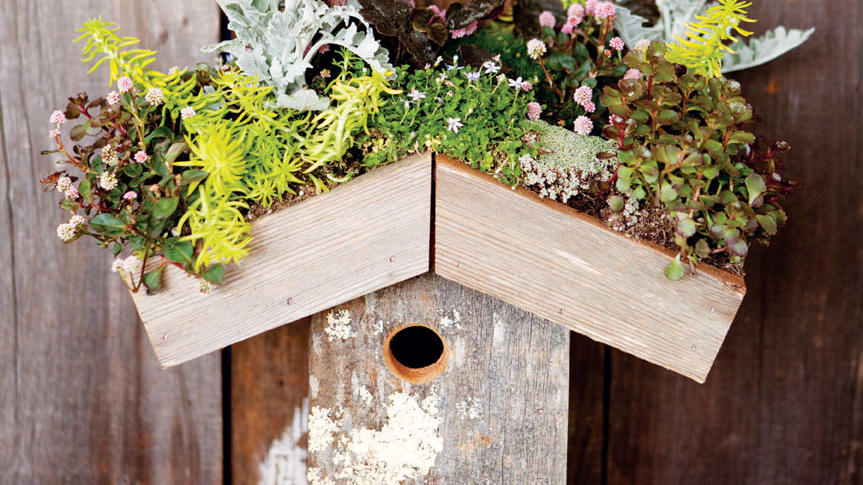
For the birds
Made of recycled wood, this birdhouse has roof trim that’s wide enough to contain a layer of soil and tiny rooted plants. White dusty Miller seedlings rise above chartreuse Sedum rupestre ‘Angelina’, pink-flowered knotweed (Persicaria capitata), and a small patch of thyme. (Keep the dusty Miller pinched back, or replace it with smaller plants when it gets too big). Irrigation water drains from beneath the outside eaves.
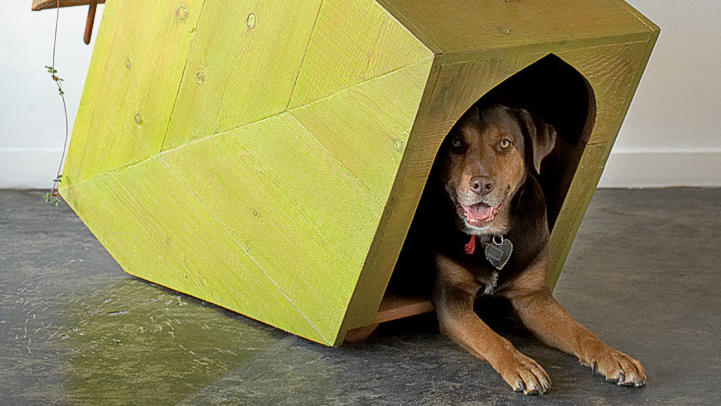
Mod doggie digs
Gone green down to the last detail? Think again. This pooch has everything a stylish pad that even a human might envy, and reduces his carbon paw print at the same time. Designed by Stephanie Rubin, this dog house is built of fragrant, Forest Stewardship Council–certified red cedar, assembled using nontoxic glue, and painted with pup-friendly pigments. The roof is waterproofed with beeswax and planted with native perennials.