March
What to do in your Southern California garden in March
Thomas J. Story
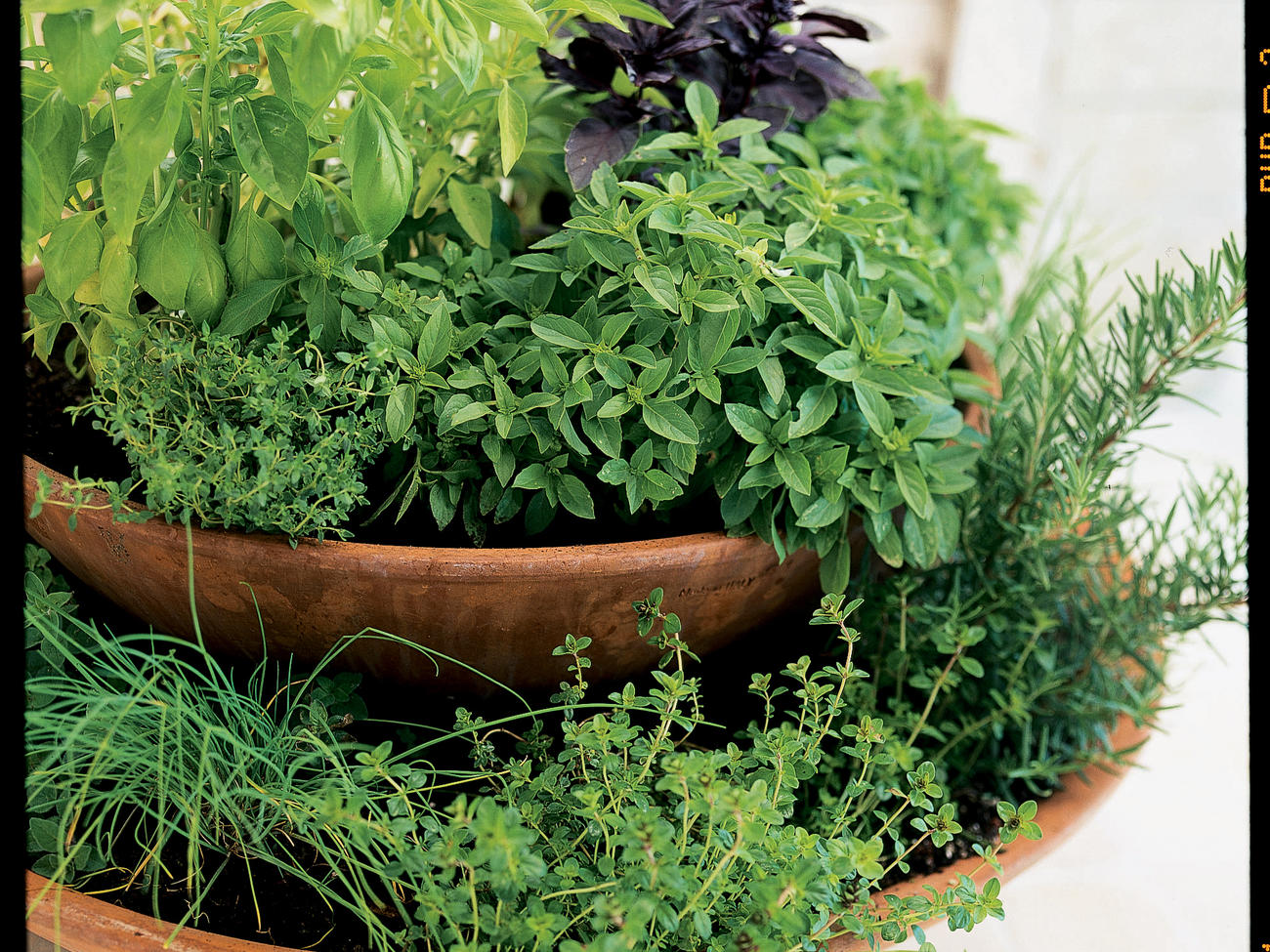
This two-tiered container garden holds a selection of basic herbs. Trailers and fillers ― chives rosemary and thyme ― tumble over the edges of the bottom pot (about 24 inches wide). Dwarf purple and sweet basils grow in the top pot
Plant
Attract good bugs. To keep insect pests under control in your vegetable garden, lure in their natural enemies ― hoverflies, lacewings, ladybugs, and parasitic wasps ― by planting the nectar plants they love, such as aster, chamomile, coreopsis, cosmos, feverfew, marigold, scabiosa, and yarrow.
Gardeners in Sunset climate zones 8–9 and 12–24 can all grow some kind of citrus, and March is the ideal time to plant. Ask your local nursery or county Master Gardeners for recommendations on the best varieties for your area. To ensure that you get a true dwarf tree ― which grows to half the size or less of standard citrus ― make sure your tree was grafted onto ‘Flying Dragon’ rootstock (this is often specified on the plant label). In the high desert (zone 11), continue to plant bare-root nectarines, peaches, plums, and other stone fruit.
Start an herb garden with chives, parsley, rosemary, sage, savory, tarragon, and thyme. Sow seeds of arugula, chervil, cilantro, and dill.
Plant rich, romantic blooms. You might do a double take: Are these exotic roses? Miniature peonies? Nope. They’re Maché ranunculus. With luscious petals that look like layers of brightly pigmented tissue paper, the 4-inch-wide blooms sit atop sturdy stems and foliage. They’re available in seven colors, including the rose and purple pictured here. Find them as blooming potted plants in 4-inch containers at nurseries this month and next. Treat Maché like an annual and remove plants when blooms fade, typically as summer arrives.
Maintain
Almost all plants appreciate a boost of nitrogen now. Feed fruit and ornamental trees, shrubs (except camellias ― wait until after bloom), lawns, container plants, houseplants, perennials, ground-covers, and annuals that have been in the ground for six weeks or more.
To keep your blue-flowered hydrangea blue, acidify the soil now. Apply aluminum sulfate, which is often packaged expressly for hydrangeas, following label directions. You can also use cottonseed meal.
Protect
Use succulents for fire protection In addition to their sturdiness, foliage colors, and sculptural forms, succulents contain lots of water in their leaves. This makes them an excellent choice for fire-scaping (landscaping to prevent or minimize fire damage). Aloe, cotyledon, crassula, echeveria, and sedum are all good options.
Apply deer and rabbit repellent. It smells nasty ― like rotten eggs and garlic ― but many gardeners swear by the all-natural Liquid Fence deterrent. Spray directly on foliage that deer and rabbits like to eat to train them to avoid the leaves in the future. More than one application a season may be needed.
Manage snails now to reduce their numbers for the rest of the year. Locate their daytime hiding places ― usually strap-leafed plants like daylilies or agapanthus ― and handpick regularly. Or set out commercial bait. Protect citrus trees by circling their trunks with copper bands; snails receive a mild shock when they contact the copper and retreat. This also works for edibles in raised beds.