
Apricot trees
Quick facts and care essentials
Derek Fell
Apricot
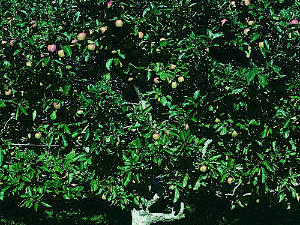
Beautiful trees that bear luscious fruit, apricots typically grow best in the Western states (Zones 3-24). In mild-winter areas, choose varieties with a low chill requirement, such as ‘Earligold’ or ‘Royal’. Hardy varieties bred from Manchurian apricot, such as ‘Chinese’ and ‘Goldcot’, are worth trying in Zone 2 and adjacent areas of the Great Plains states in Zones 35 and 41. Fruit of most varieties ripens from late spring into summer. Some apricots need a pollenizer.
Standard trees grow 30 feet high and wide but can be pruned to 15 feet. Semidwarf forms are sold, as are genetic dwarfs reaching 6 to 10 feet high.
Training and pruning
Because apricot trees tend to form too dense a canopy, open-center training is usually recommended. On mature trees, prune out dead, diseased, and broken branches, as well as any that cross through the tree’s center or crowd major limbs. Remove older, unproductive branches, cutting back to new branches.
Diseases
Bacterial canker and brown rot of stone fruit are serious diseases. To control brown rot, prune trees to improve air circulation; also collect and dispose of diseased fruit. For chemical controls and timetables for treatment, contact your Cooperative Extension Office.