Sukuma Wiki
Excerpted from AFRICALI: Recipes from My Jikoni. Copyright @ 2024 by Kiano Moju. Photography Copyright © 2024 by Kristin Teig. Reproduced by permission of Simon Element, an imprint of Simon & Schuster. All rights reserved.
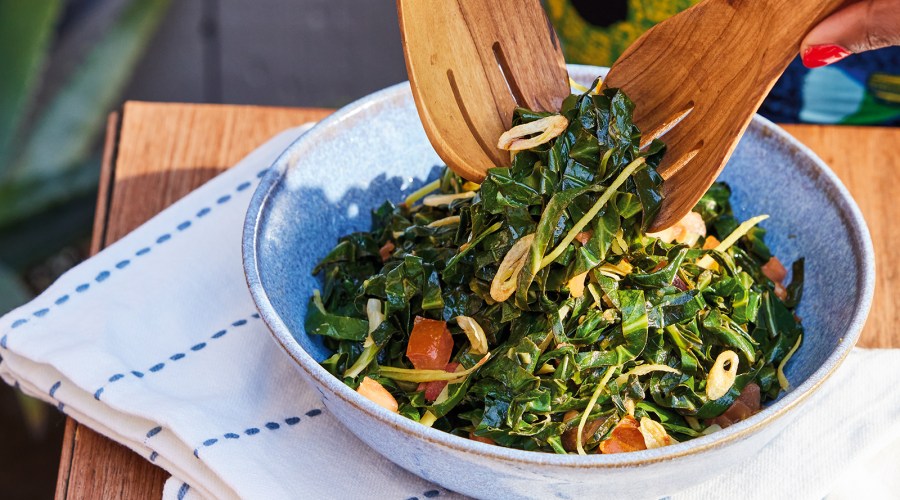
The translation of “sukuma wiki” is deceitful. In Swahili, sukuma means “to push,” and wiki means “the week,” as in the day of the week. The name of this dish has nothing to do with energy, but rather it is a commentary on how cheap this dish is to prepare—cheap enough to push you through the week until you get paid. In Kenya, sukuma leaves can be purchased whole or precut. The market vendors cut them thin, even thinner than angel hair pasta. They grip the tightly bound bundles as they gently shave off layers with a steady hand that rivals a good barber. Sukuma can be your main dish or a side as part of a larger meal. A classic way to enjoy this is with ugali, cooked white cornmeal similar to firm grits or polenta.
How to Make It
1
Remove the thick stalks from the center of the collard green leaves. Arrange them in a neat stack, then roll the leaves into a tight cylinder. Gripping the bundle tightly in one hand, use a sharp knife to finely slice the greens ¼-inch thick, being careful not to shred too thin, or they will clump together when cooked.
2
Thinly slice the garlic. Dice the tomatoes. Peel and cut the ginger into small matchsticks.
3
Heat a shallow and wide pan over medium heat. Once hot, place the oil in the pan, then add the ginger and garlic. Cook until they are lightly browned on the edges, about 5 minutes. Add the greens and mix to combine.
4
When the collards brighten in color to a vibrant green, add the tomatoes and cover with a lid to steam the mixture. When the greens have darkened in color and cooked down slightly, 2 to 3 minutes, remove the lid and season with salt to taste. Serve immediately.
Ingredients
1 lb collard greens
4 garlic cloves
2 medium tomatoes
1 thumb fresh ginger
3 tbsp extra-virgin olive oil
fine sea salt