
This Southern California City Is America’s Only Blue Zone for a Surprising Reason
Why this small California city has such a high population of citizens over 100.
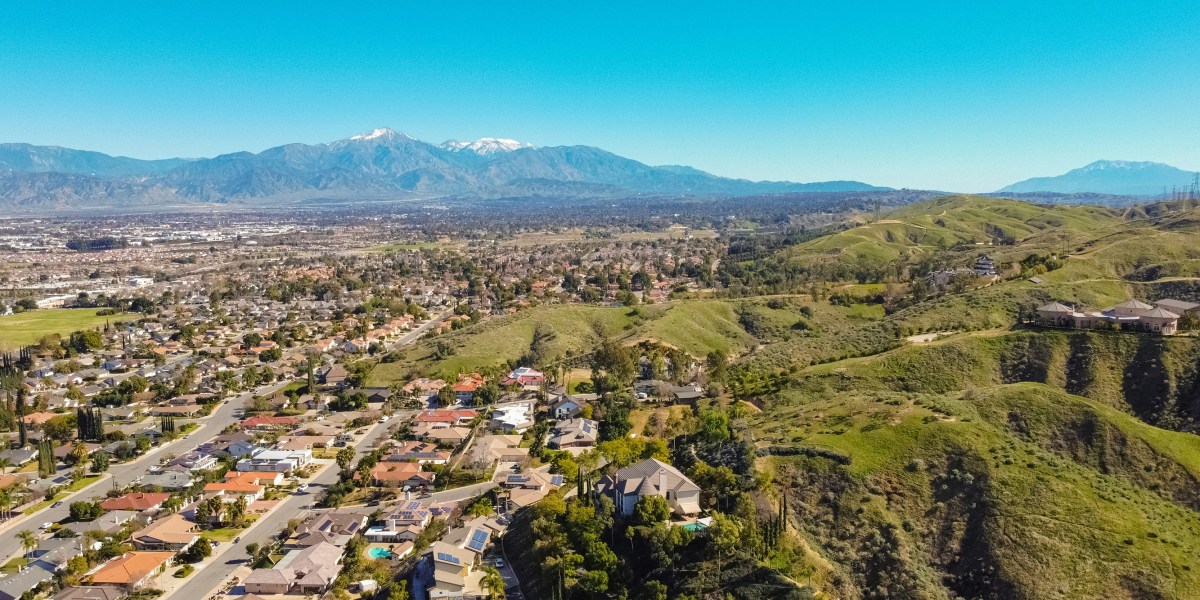
Jabez Impano/Unsplash
In a time of countless additions to wellness routines and ‘the newest prebiotic gummy vitamins you just have to be taking’, it seems almost as if “wellness” has become increasingly less accessible. But a small city in Southern California redefines wellness to focus on some of its most simple tenets: nutrition, community, and perspective. The city, Loma Linda, has been dubbed a “Blue Zone.” A Blue Zone is a location “where people consistently live over 100 years old,” according to the American Journal of Lifestyle Medicine.
The term “Blue Zone” was trademarked by journalist and National Geographic Fellow Dan Buettner. Buettner then began researching longevity along with renowned researchers Gianni Pes and Michel Poulain, among others. There are five identified blue zones in the world with only one in the United States: Okinawa, Japan; Nicoya, Costa Rica; Sardinia, Italy; Ikaria, Greece; and Loma Linda, California.
Unlike the other Blue Zones, Loma Linda is not a coastal location. As you drive in and around Loma Linda, there are a number of sights you’ll come across—none of which are particularly “scenic.” There are strip malls with vegetarian grocery stores. Adventist churches for a number of cultural identities: Chinese, Thai, Filipino, and Romanian, to name a few. Elementary school playgrounds. A monument sign with the Loma Linda University motto, “To make man whole.”

Sarah Lonser
Loma Linda is 60 miles east of Los Angeles. Located just off Interstate 10 and south of the San Bernardino Mountains, the just-under-8-square-mile area in San Bernardino County is home to around 23,000 residents. Approximately 9,000 of those residents are practicing Seventh-day Adventists, part of a denomination of Christianity that began in Battle Creek, Michigan, in 1863.
The official Blue Zone website notes that this Seventh-day Adventist population within Loma Linda lives “as much as a decade longer than the rest of us.” Maybe the most differentiating factor between the average American lifestyle and the Loma Linda Adventist lifestyle is on the latter’s the focus on a vegetarian or plant-focused diet and staying active.
Dr. Gary Fraser is a professor at the Loma Linda University School of Medicine and School of Public Health, medical researcher, epidemiologist, and cardiologist. He has dedicated years of his career to leading research for the Adventist Health Studies, which seek to understand differences in health outcomes based primarily on diet and nutrition—“but with a clear understanding that that is not necessarily the only thing that’s important,” Fraser says—within the Adventist population. In comparison to the Blue Zone research, Fraser says his research is focused more on average life expectancy versus the centenarian emphasis from the Blue Zone research.
In a research paper that compared mortality rates of 34,000 Adventists from California to those available for the state of California as a whole, Dr. Fraser says the research found “Adventist men on average were living more than seven years longer and the women about four and a half years longer.” Even when looking at the same common causes of death between the two populations, such as diabetes, heart disease, and cancer, the deaths happened later for the Adventist population.
Dr. Fraser calls Loma Linda “a slightly strange example” of a Blue Zone, as the factor that allows it to claim that title is the significant Adventist percentage of the population who are health-conscious.
“[Adventism] is related to physical disease, simply because it promotes better diet and promotes exercise. So, you can say that the religion is a causal element before the health practices that, in turn, affect physical health,” Fraser says.
Fraser’s research with the Adventist Health Studies mainly details the differences in health outcomes based on diets present among the Adventist population—these include lacto-ovo vegetarians (consume dairy and eggs), pesco-vegetarians (consume dairy, eggs, and fish), and strict vegetarians (also called vegans). Though Fraser says it is difficult to isolate parts of diet since many are related to one another and other various factors, there are a few key insights from the research that can be useful:
- Avoid red meat: “I think they are hazardous in many different ways for some of the cancers (not all of them), cardiovascular disease, diabetes, insulin resistance, and so forth.”
- Avoid dairy milk: “Even though it’s controversial, I say to people these days ‘be very cautious about dairy milk,’ particularly if you have a family history of prostate or breast cancer.”
- Nuts: “Small quantities, we’re not talking about a bucket in front of the TV”
- Fish: “We have suspicions that fish in modest quantities may be helpful with our pesco-vegetarians, we’re going to try and dig a little deeper on that as well.”
- Be cautious about overprocessed foods with a lot of additives: “Plant-based foods as much as you can, relatively natural as much as you can.”
The Loma Linda Lifestyle
Though diet and nutrition are significant determining factors of health outcomes, they’re certainly not the only influences.
Marijke Sawyer has been living in Loma Linda for 19 years. Sawyer’s daily routine includes walking five miles a day, including to the athletic center to do exercise classes, weights, balance, and stretching. Every week, she volunteers for 35 to 40 hours. Then, as a practicing Adventist, she keeps Sabbath every Saturday. One of the things she cites as significant to her lifestyle is community.

Courtesy of Marijke Sawyer
“As we retire we have two choices. Either you sit and work that remote control in front of the TV or be productive, pay forward into the community, and create joy and enthusiasm for life,” Sawyer says.
Sawyer has certainly chosen the latter, and she says she is “determined to bloom where I am planted.” She makes continuous commitments, both big and small, to better herself and her community.
Her 35-40 hours of weekly volunteer work includes time at Loma Linda’s medical center and Feeding America, all in the effort of creating community. For Feeding America, she helps distribute food with “no questions asked.” According to Sawyer, differences—denominational or otherwise—do not exclude someone from community.
“It’s all about human beings and that is the core.”
The Centenarian Perspective
Rhonda Spencer, a resident of Loma Linda and professor at a local university who researches centenarians, was elected to Loma Linda City Council in 2024. She then joined the team of five total city council members, the first woman to serve in 20 years according to Spencer. In her work on city council, she incorporates her research to create grants and intervention proposals.
Spencer says her research on centenarians began as a personal interest to understand how centenarians handled stress, which eventually became her published book, Raising Resilient Kids. From her research, Spencer cited three main takeaways.
The first was the “slower pace of life” described by the centenarians she interviewed. In the current generation, Spencer says that so many of the things we access on a daily basis exist to increase productivity.
“If you pull open your calendar and those are your priorities, where is the majority of your calendar? Do you have any empty space on your calendar? Because sometimes the most meaningful connections and the best things happen in that blank space,” Spencer says.
Such meaningful moments can be as simple as getting a call from a friend who is having a rough day or someone who wants to catch up for lunch. These are often things that take the backseat to matters of productivity and output.
The second key takeaway Spencer cites from her research is the perspective taken on hardships by centenarians. Over the course of her research interviews, she says she found that centenarians often wouldn’t answer right away when she asked them about hardships in their lives. It was only when she simply asked them to share about their lives that she understood the “tremendous hardships” they had endured.
Spencer says she looked at adverse childhood experience (ACE) scores among the centenarians. All of those she interviewed had a minimum ACE score of four.
“One had a minimum ACE score of six, which said her life should have been shortened by 20 years. She lived to 108,” Spencer recalls.
Therein lies the question: what does it take for an individual who experienced numerous traumatic experiences in their lifetime to remain resilient into their tenth decade? In analyzing her research and interviews, Spencer says the centenarians had a commonality in the way they viewed hardships. In fact, they often did not even view them as such. Instead they viewed them as experiences that had helped to shape them into the people they are today.
“Sometimes it’s like refining a diamond when you’re going through the heat. Without it, you wouldn’t have the diamond that comes out in the end,” Spencer explains.

Sarah Lonser
It’s simple things like perspective shifting and framing that can completely change the way you respond to and understand difficulties in your life. This is something that the centenarians of Loma Linda seem to be experts in. Spencer says another factor that aided in these perspective shifts was the “faith foundation” that the Adventist centenarians share.
Spencer describes the third main takeaway from her research as time spent in nature. She says many of the centenarians were either farmers or spent multiple hours a day outside walking to and from school. Time outside allowed them ample time to disconnect from distractions and reconnect with nature, according to Spencer, something that is not as integral in our current daily routines.
Strength in Community
In her extensive research, time as a city councilwoman, and resident of Loma Linda, Spencer has also observed the importance of community.
“Loma Linda is still a small community, and, in that sense, neighbors still know neighbors and still help one another,” Spencer says.
Spencer says the centenarians she spent time with had “vibrant lives,” finding their purpose in their communities, networks, families, and even their pets to be most important in their final years. Not their career achievements, but their communities. Since such importance is placed on community and giving back, this becomes a vital part of life for older residents in Loma Linda.
Getting older means a disappearing network, which means it takes everyday efforts to maintain your community. For Loma Linda residents like Sawyer, this can be as simple as a “Hello, how are you” when she heads into town or spending a spare half hour visiting the retirement homes in the area and gathering a group to sing hymns.

Sarah Lonser
“Of course I’m not a vocalist, but I just enjoy making a joyful noise… to be an inspiration for life and for people to enjoy, even though we have gray hair, we have wrinkles. It’s all okay. This is a beautiful season in our life,” Sawyer says.
Though diet and exercise are significant influences for health outcomes, there is still more to it. Intention—whether that be choosing a meatless diet, taking life at a different pace, carving out time to spend with those closest to you, or dedicating a day or an hour every week to giving back to your community—is an integral part of living a long, vibrant life. These aspects are not exclusive to the Adventist community in Loma Linda, though there are lessons passed down from the people living longest to help us carry out lives that are as well-rounded and meaningful as possible.