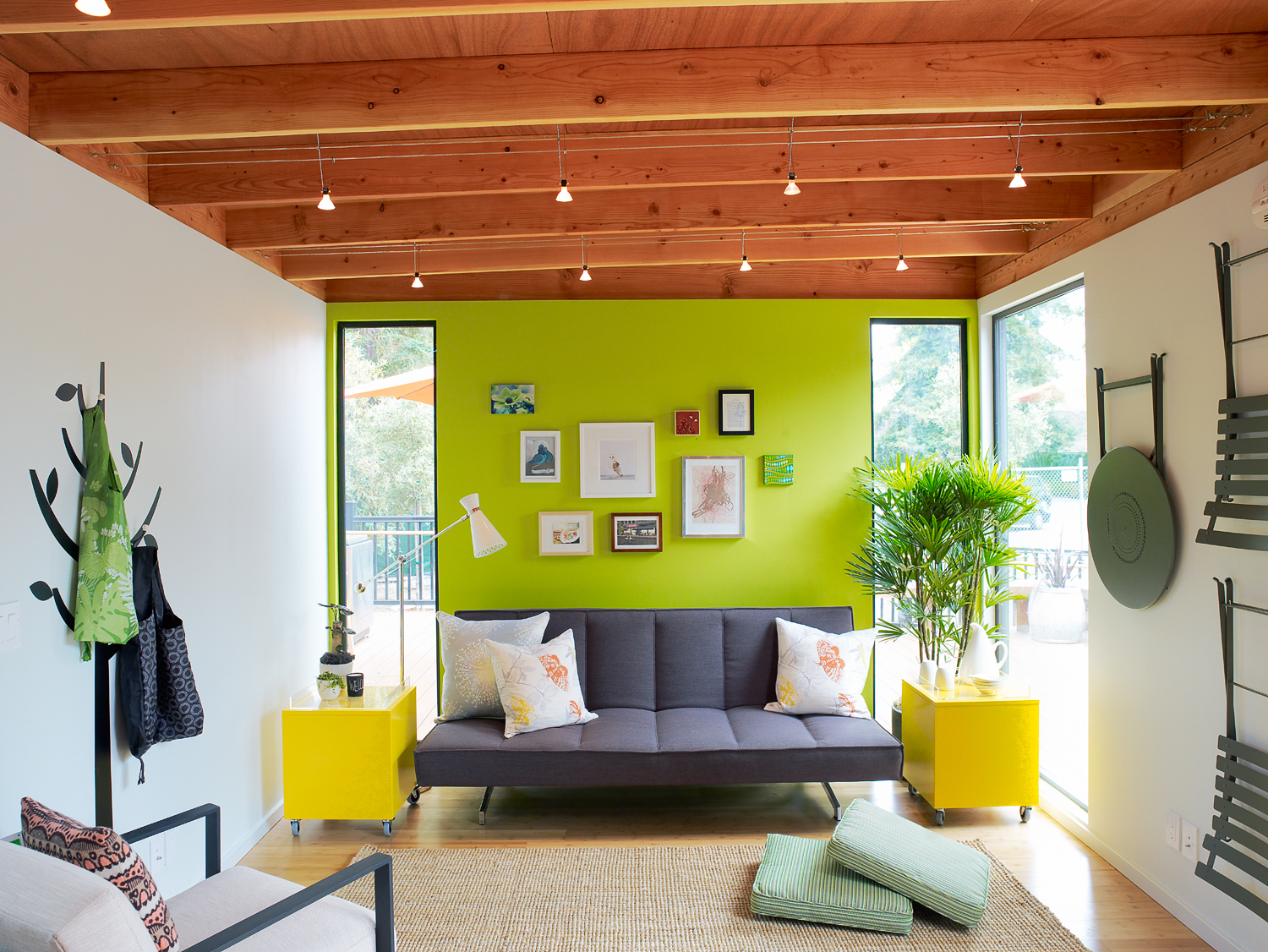
Provide a common denominator
Diverse mediums and frames are brought to together by a single, shared wall color.
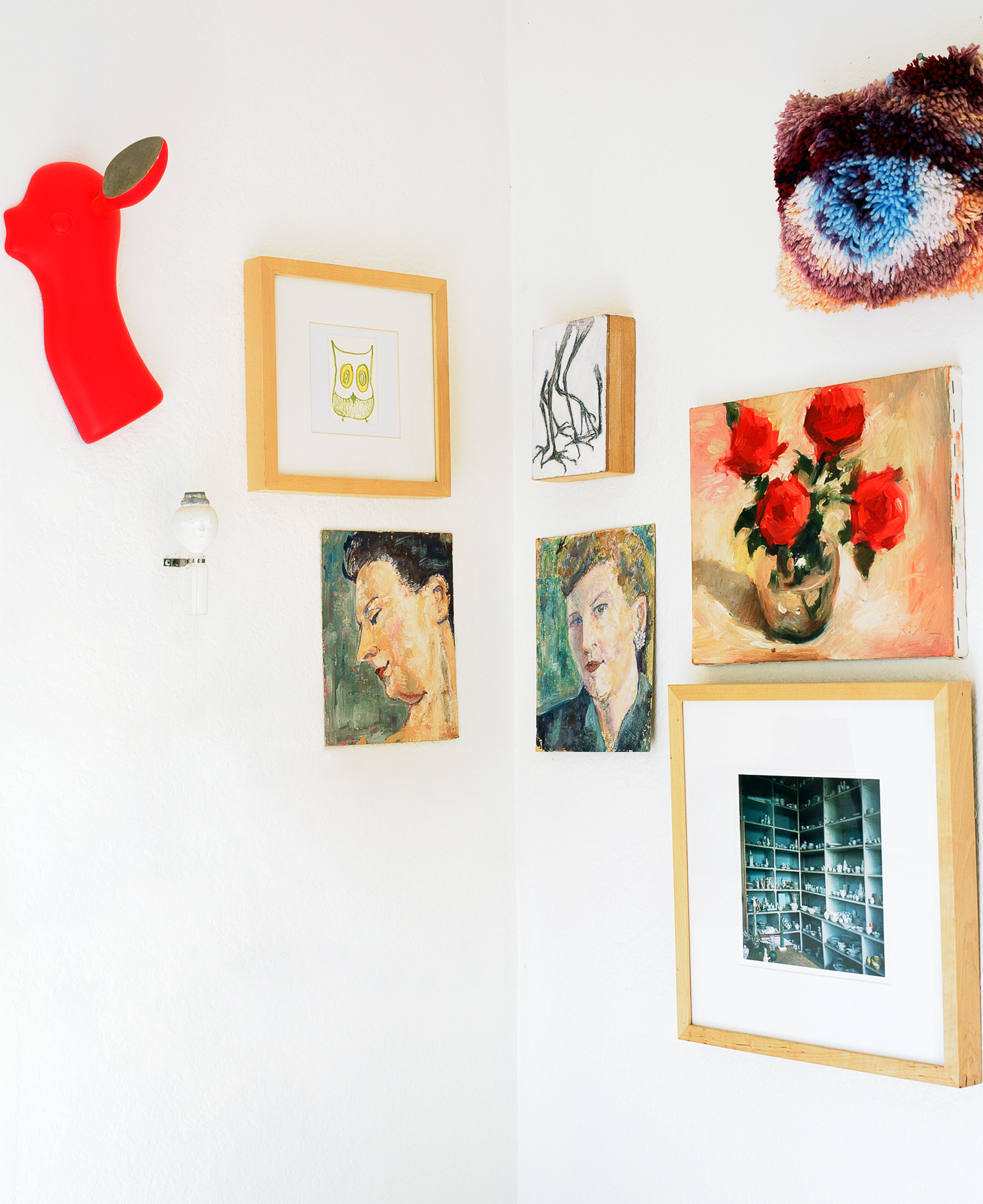
Use negative space
Corners are notorious difficult places to fill. Take the opportunity to make your own curated corner gallery.
Shelve it
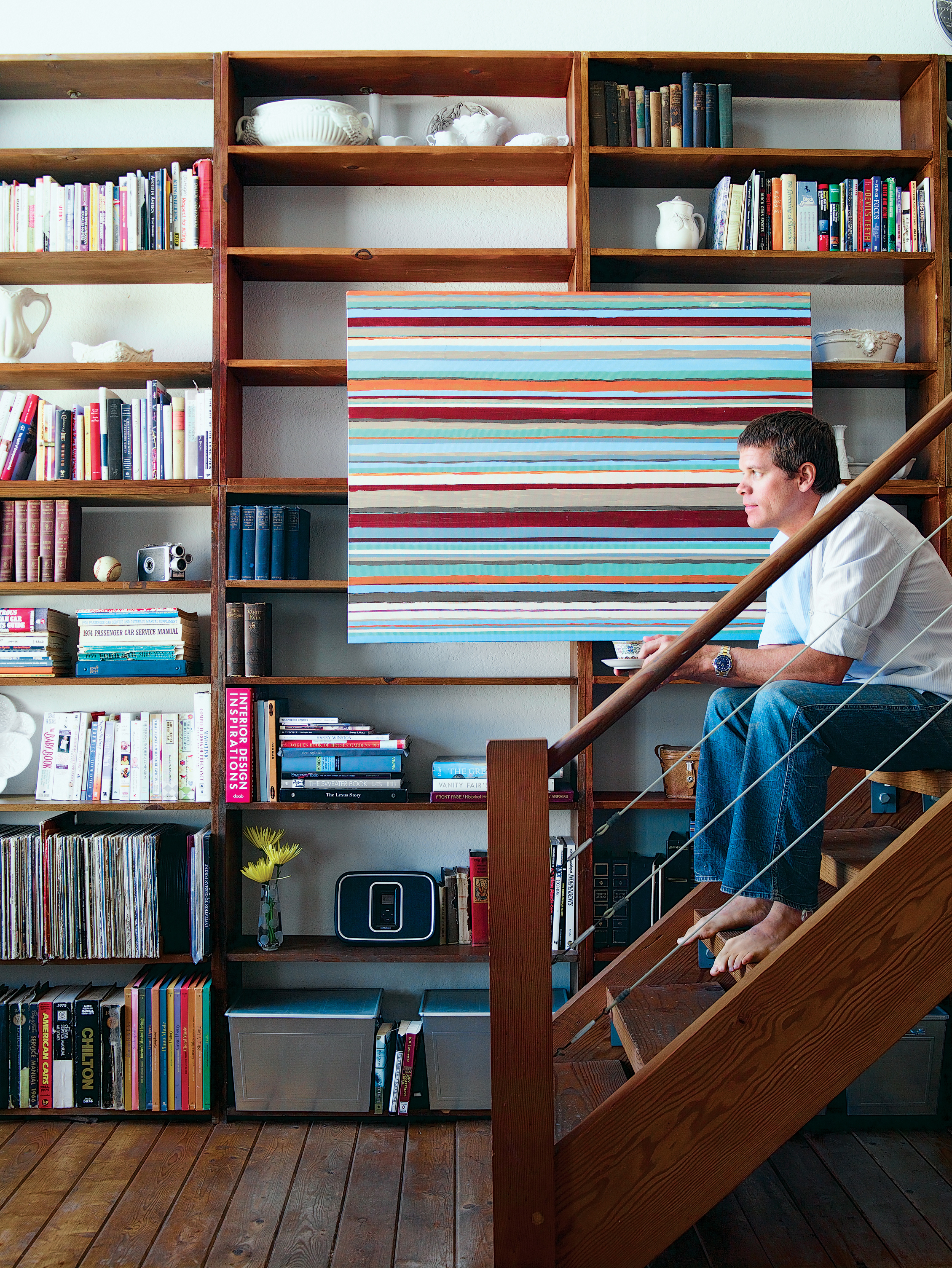
Have more bookcases than free wall space? Hang your art on the shelving itself. This works well for both large and small pieces; with small ones, group lots of them together or they’ll get lost visually.
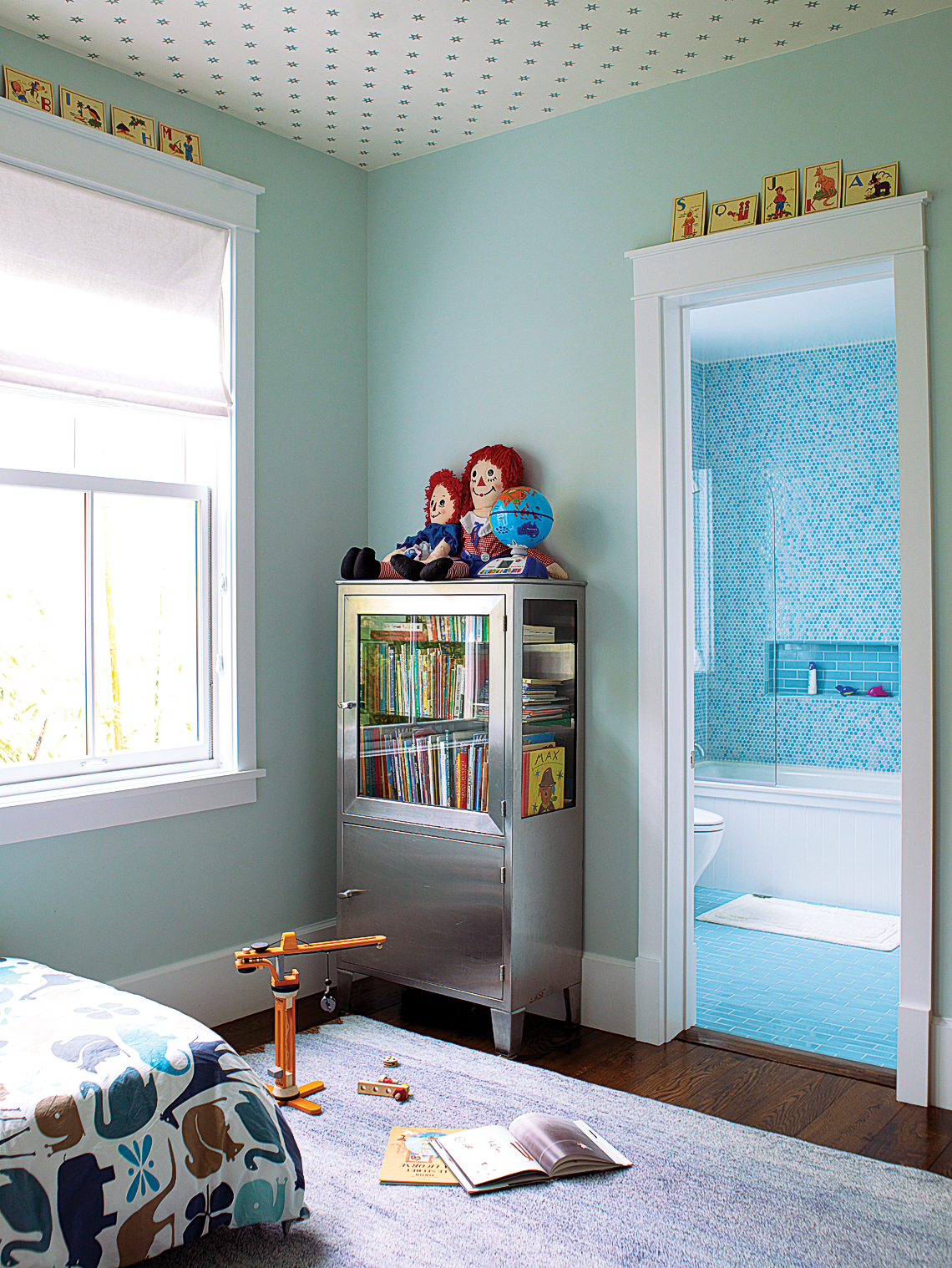
Raise it
Draw the eye up (and save your walls from holes) by using the tops of window- and doorframes to showcase small artworks. Color is key: See how the yellow pieces here pop against the robin’s-egg blue.
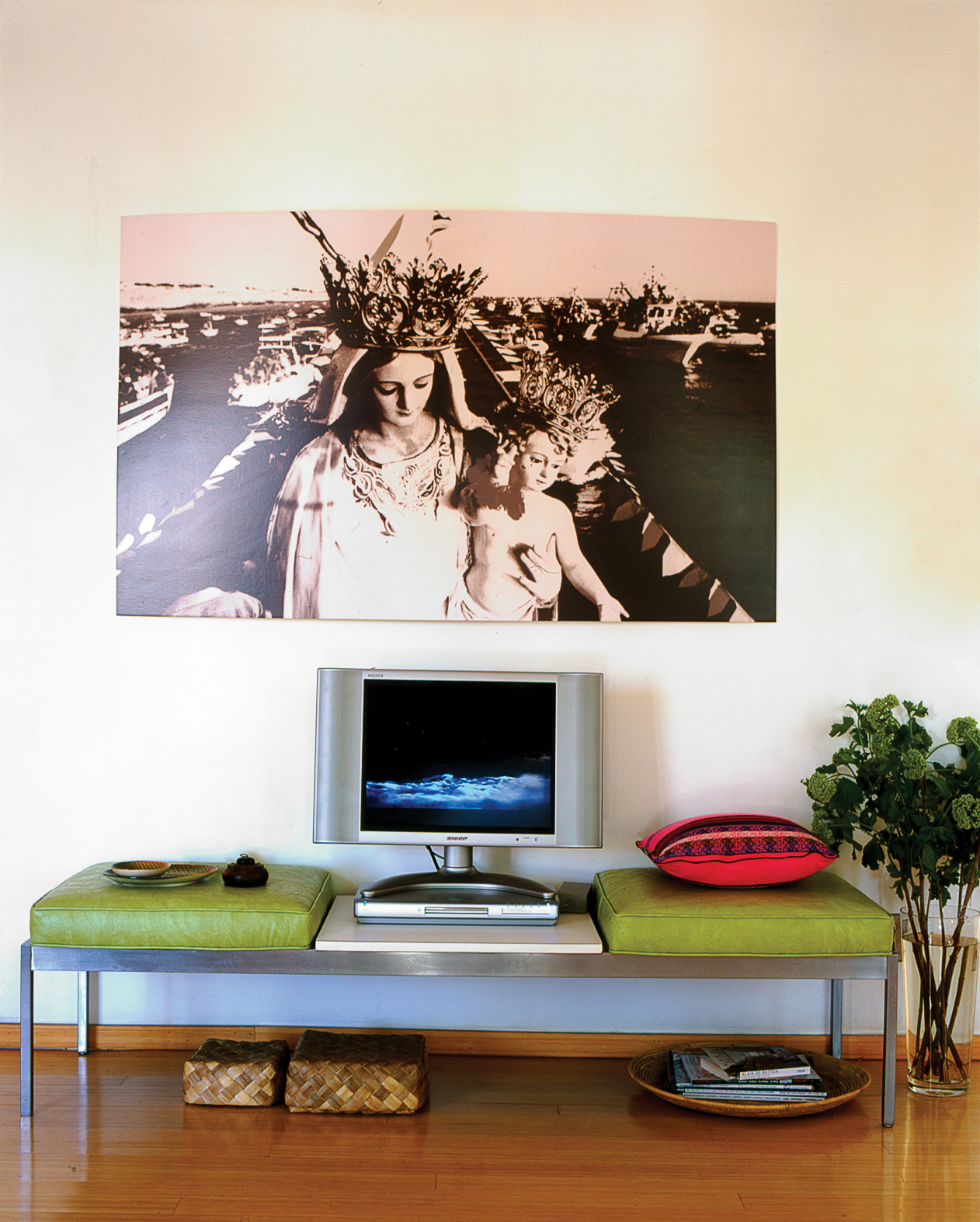
Distract with it
Divert the gaze from the ubiquitous living-room eyesore by hanging a painting larger than the flat-screen right above it. Note: Since the TV already has a frame, ditch the one on the art.
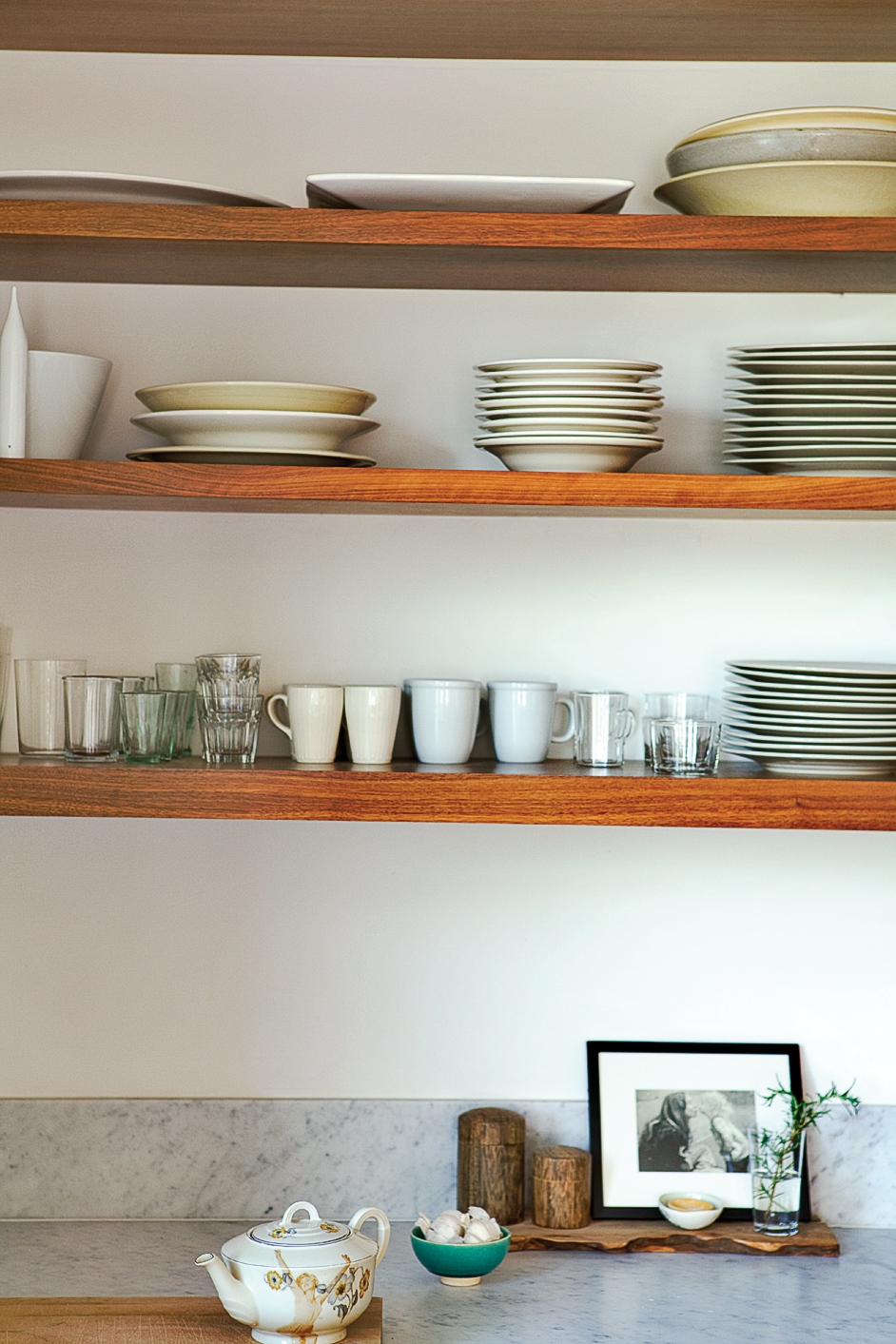
Surprise with it
Art becomes comfortably everyday when you incorporate it into a high-traffic-area tableau. This tip is not, of course, meant for your Chagall—or any other irreplaceable pieces.
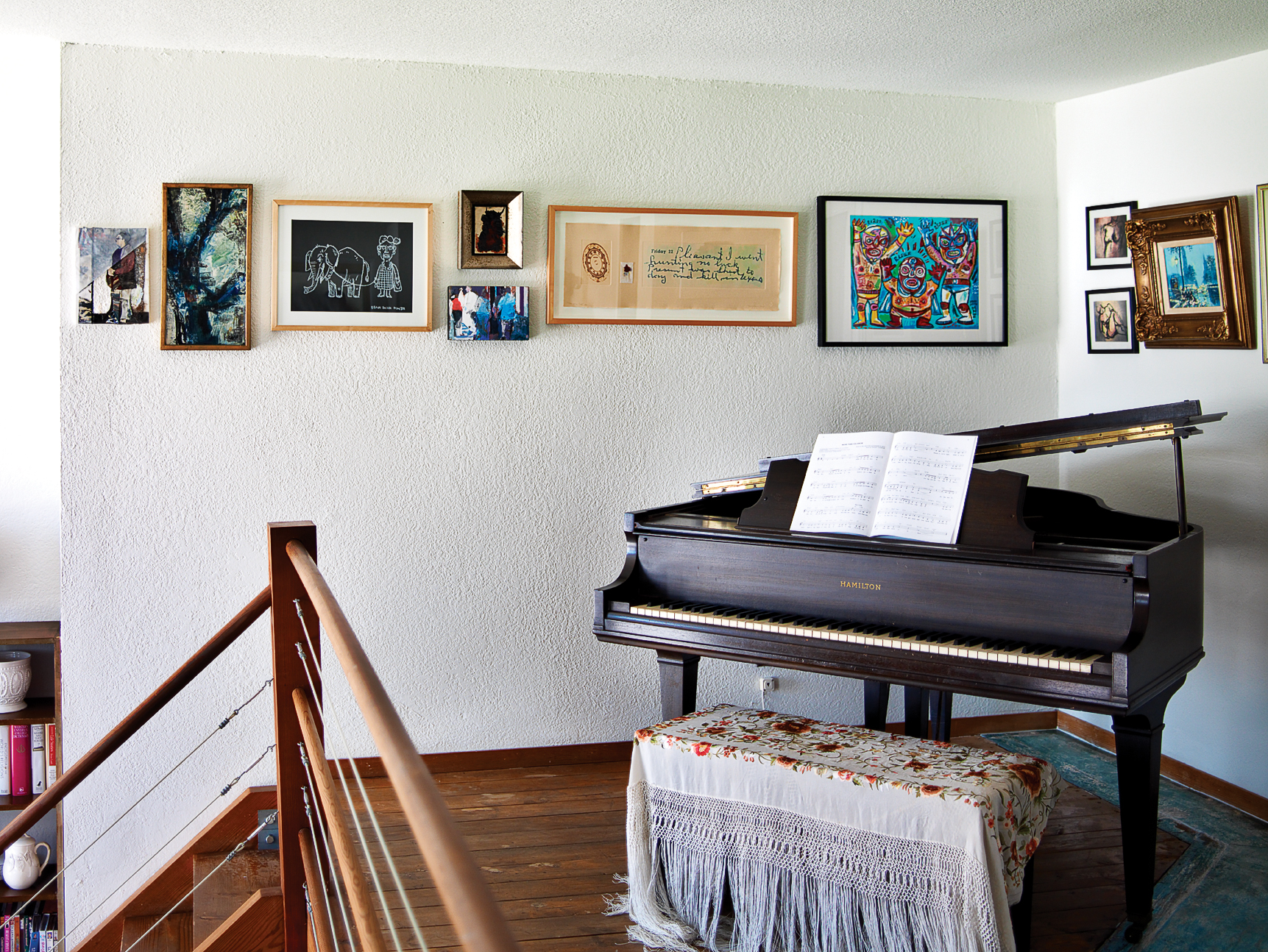
Unify it
Even a random collection feels coherent when displayed in a wraparound gallery. The trick here? Hang the gallery centered on a line just above eye level.
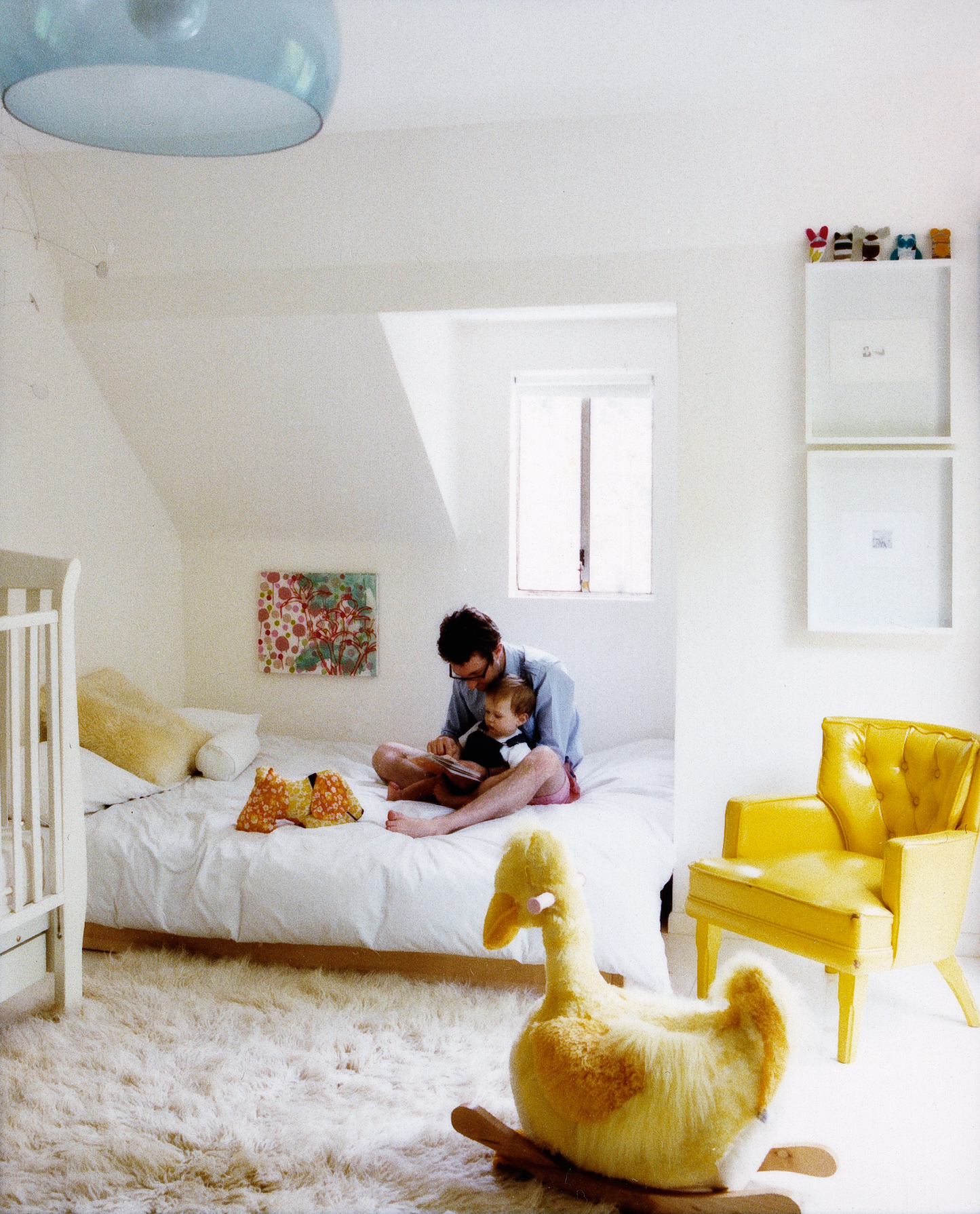
Embrace unexpected placement
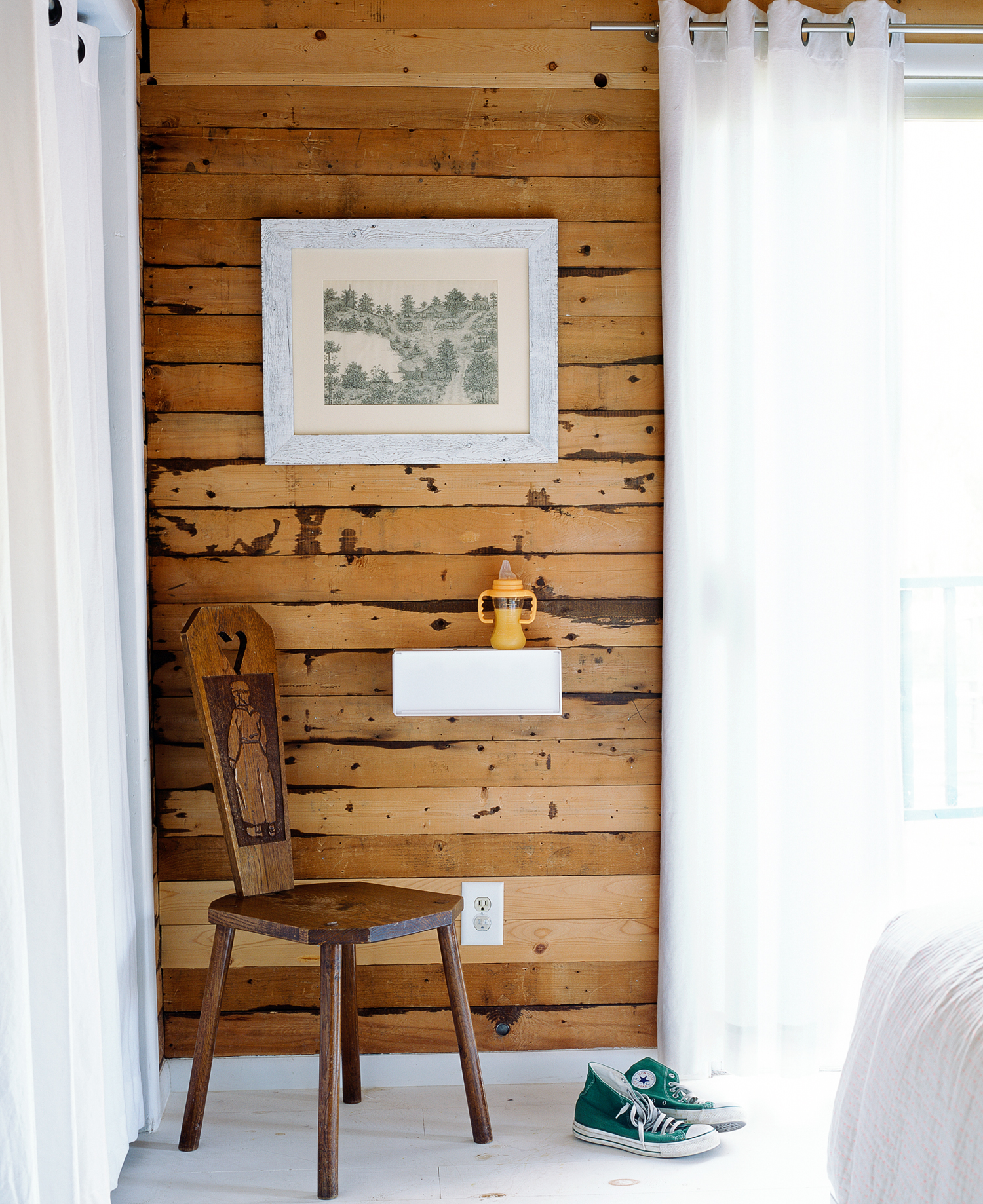
Art is a sweet surprise when hung for the benefit of those with their head on the pillow.