Fall Is the Perfect Time to Change Your Garden’s Flow—Here’s How to Do It
Let fall inspire a new form for your garden—cozy, functional, and full of life.
Courtesy of terrene
Autumn has a way of revealing the garden’s true character. With summer blooms fading and deciduous trees shedding their leaves, the distractions of peak growth settle down, leaving behind the outlines—the “bones”—of your outdoor space. It’s a season that asks for clarity and structure, not only in the plants you choose but also in the way your garden supports daily life. “Fall is the season of discernment,” says landscape designer Rebecca Sunter, founder of the San Francisco-based design studio terrene. “It’s the perfect time to consider how the overall spatial flow of your garden serves you, and the expansive potential it has yet to offer.”
Ready to take on a new shape? Rebecca is offering her expert design guidance on how to help add structure and style into any sized space.
A Garden That Loves You Back
Courtesy of terrene
Sunter approaches every design as what she calls a “love letter” to both land and life. For her, it’s never about installing one pretty object at a time. Instead, it’s about creating a living, breathing composition. “Site design is about the spaces between, even more than the objects themselves,” she explains. That philosophy shows up in her projects: a preserved plum tree that continues to bear fruit for a family, a series of edible terraces carved into a hillside, a planthouse embedded into the earth so it feels like part of the story. Her designs blend memory and function—honoring what’s already rooted while carving space for what’s next.
Gardens, she believes, are shaped not only by plants and structures but also by the rituals that unfold within them. At one of her projects, aptly named the Impossible Garden, a weeping cherry frames a courtyard, creating a quiet altar where a client honors lost loved ones. Another family retreat, called Forest Lane, balances perennial edibles with layers of play and gathering space. In both, structure isn’t an afterthought—it’s the framework for how life unfolds outside.
Why Fall Is the Moment
Courtesy of terrene
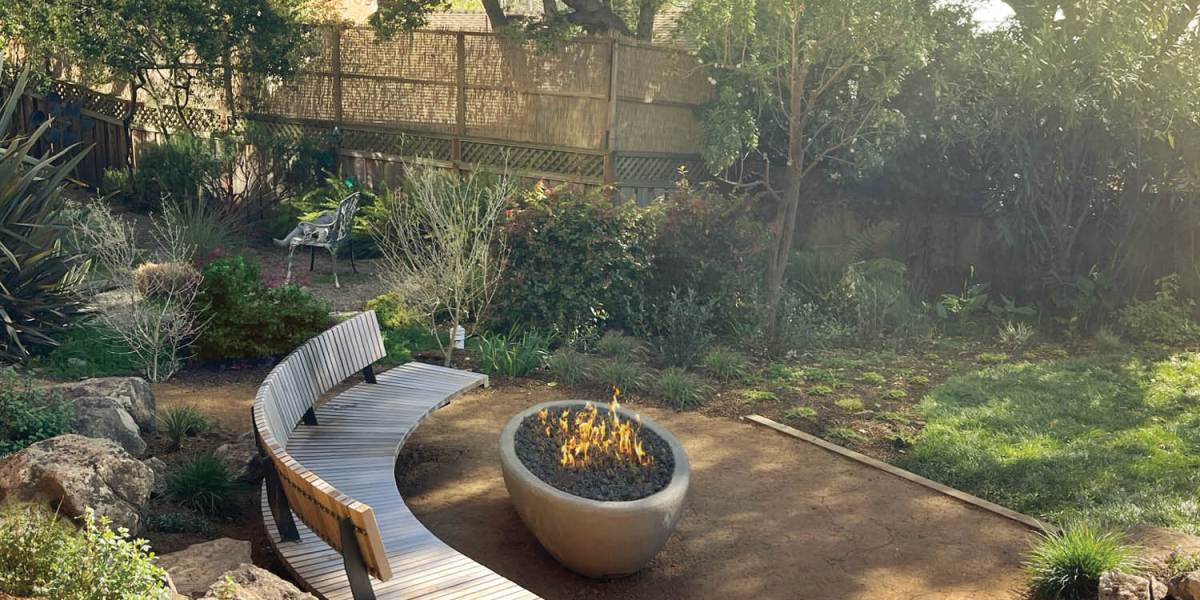
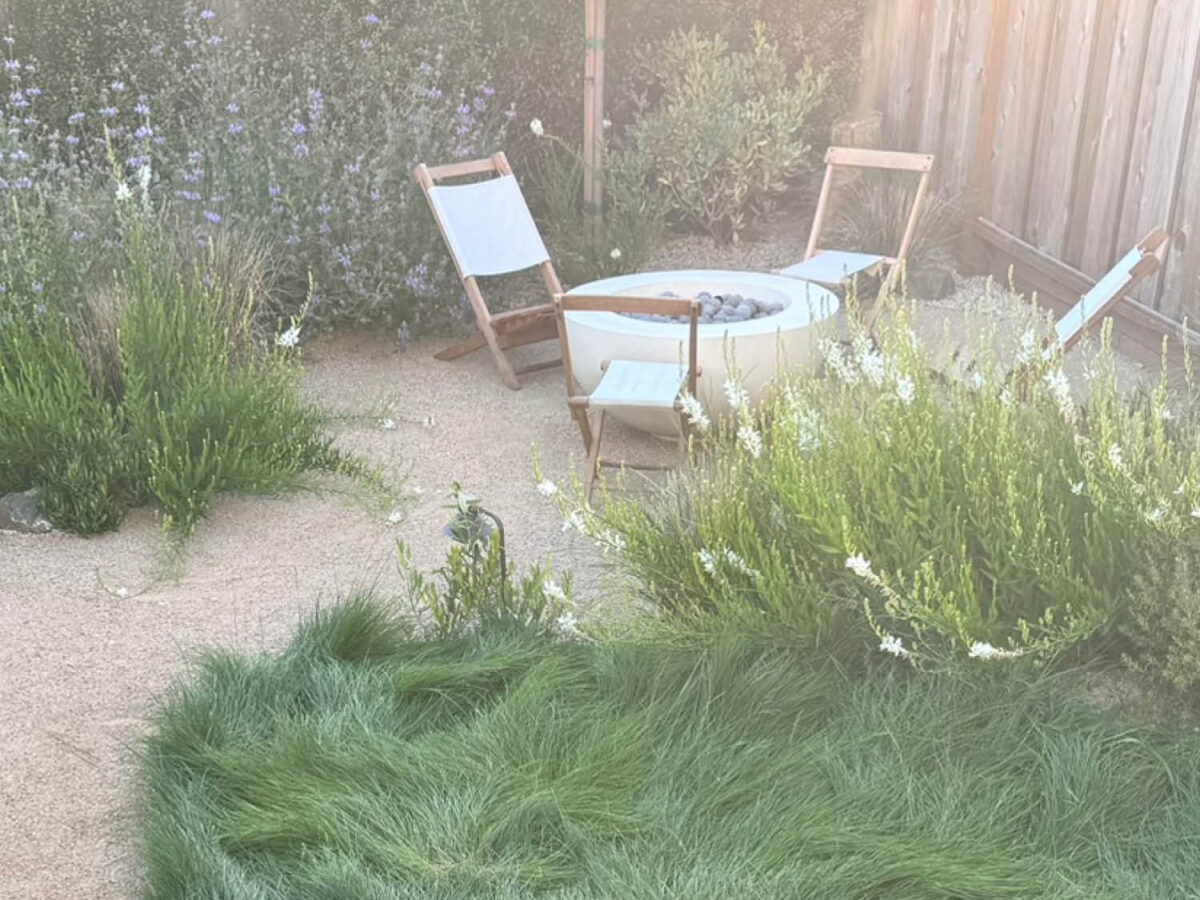
Beyond the romance of cool evenings and golden light, autumn is also practical. Cooler temperatures mean easier digging, less stress on newly planted trees or shrubs, and a quieter planting calendar that frees up headspace for design decisions. It’s also the perfect moment to stand back and evaluate circulation and comfort. “Ask yourself if you crave more shelter or privacy,” says Sunter. “Perhaps a pergola or humble but mighty tree can help. Do you long for an evening routine beyond hard walls and screens? A firepit or hot tub can be an irresistible draw into the night air.”
By making these changes in fall, you set yourself up for the cozy months ahead. Instead of retreating indoors when the days shorten, you can lean into evenings by the fire or morning coffee in a freshly claimed corner of the yard.
Small Shifts, Big Impact

Courtesy of terrene
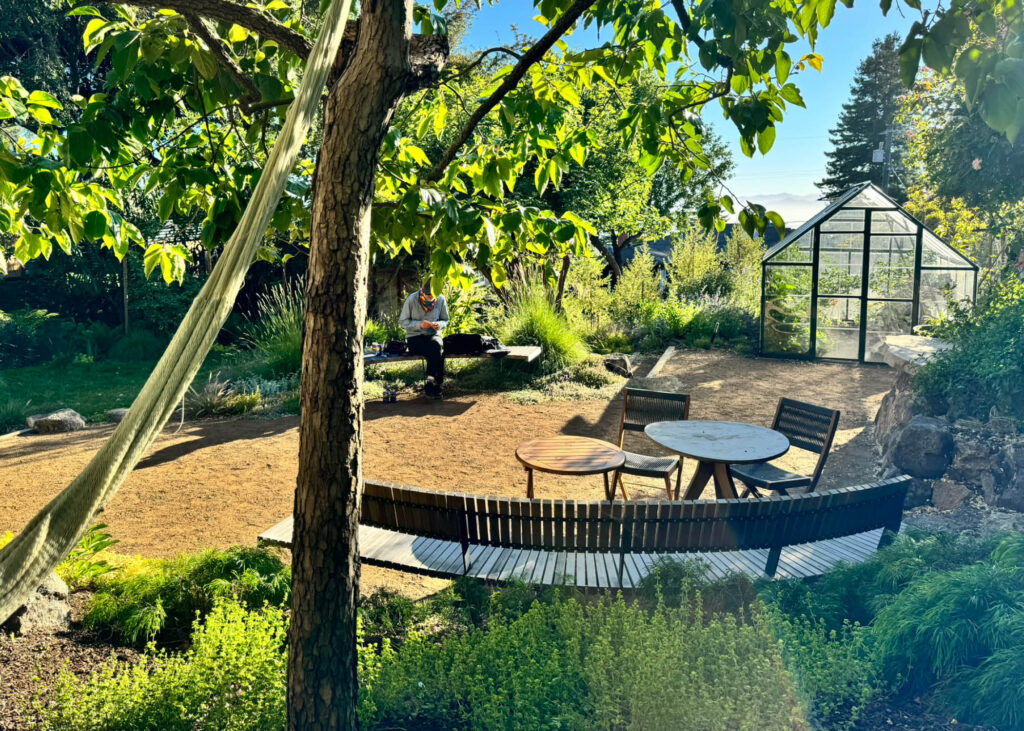
You don’t need a full-scale renovation to rethink your outdoor structure. Sometimes it’s as simple as adding a bench to anchor a conversation area or positioning two chairs in an underused corner to create a new destination. A bistro table tucked against a fence line can become a weekday ritual, while a well-placed path might invite you to wander a forgotten side yard.
Sunter encourages a shift in mindset from “adding things” to weaving them into a whole. “A new object in the field needs stitching in,” she says. That means considering the sightlines, the way light hits a structure, or how a path connects to a sitting space. Even the smallest gestures—stringing fairy lights between trees, tucking LED uplighting at the base of shrubs, or scattering candles on a dining table—can make a garden feel intentionally layered.
Planting Around the Frame
Courtesy of terrene
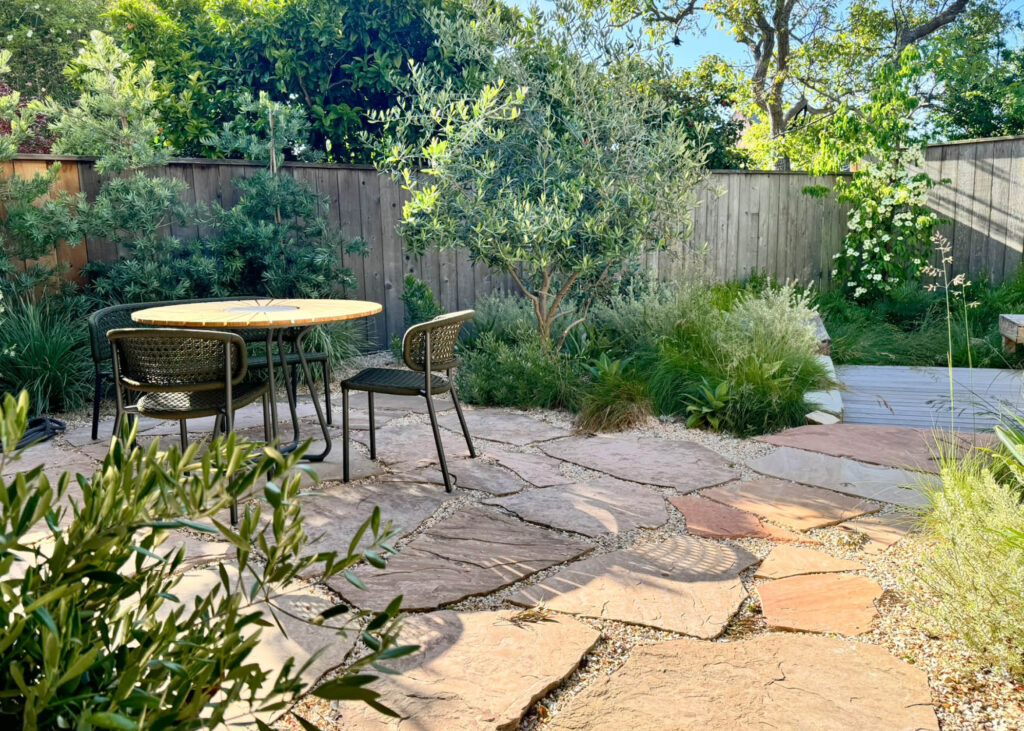
Of course, no structure lives in isolation. Plants soften hard edges, shift scale, and set mood. Sunter recommends balancing evergreen anchors with ephemeral seasonal layers. “Dense plantings may make you feel wrapped in a cozy blanket,” she explains. “Or opening up views could create a sense of connection, order, or possibility.”
Start with structural greens: Shrubs like coffeeberry or coast rosemary, or small trees such as tea olive provide year-round framework. Then weave in seasonal accents that echo fall’s drama—persimmons and quince for fruiting interest, Rogers Red grape for fiery foliage, pink muhly grass for movement, or goldenrod and Japanese anemones for late-season bloom. Think about placement, too: fragrant trees near patios, shade plants around hot tubs, vines softening pergolas. When plants and structures are in dialogue, a garden feels whole.
One of Sunter’s favorite examples, a project called Mint Julep, does exactly this. A simple deck becomes more than a platform thanks to angled lines, silver-foliage plantings, and layered outdoor “rooms” that reveal themselves as you move through the space. The plants don’t just decorate; they complete the architecture.
Fire, Light, and Warmth

Thomas J. Story
As the days shorten, nothing extends garden life like heat and glow. “As evenings get earlier, a little fire element cozies up the garden in big ways,” says Sunter. Firepits, cedar hot tubs, and even heated furniture can pull you outside well past dusk. She’s partial to Galanter & Jones heated seating. “I fan-girl over it every time,” she laughs, but she also embraces low-tech options like candles and fairy lights. Layering warmth and illumination creates intimacy, whether you’re hosting friends or winding down solo.
Timelessness over Trends
Courtesy of terrene
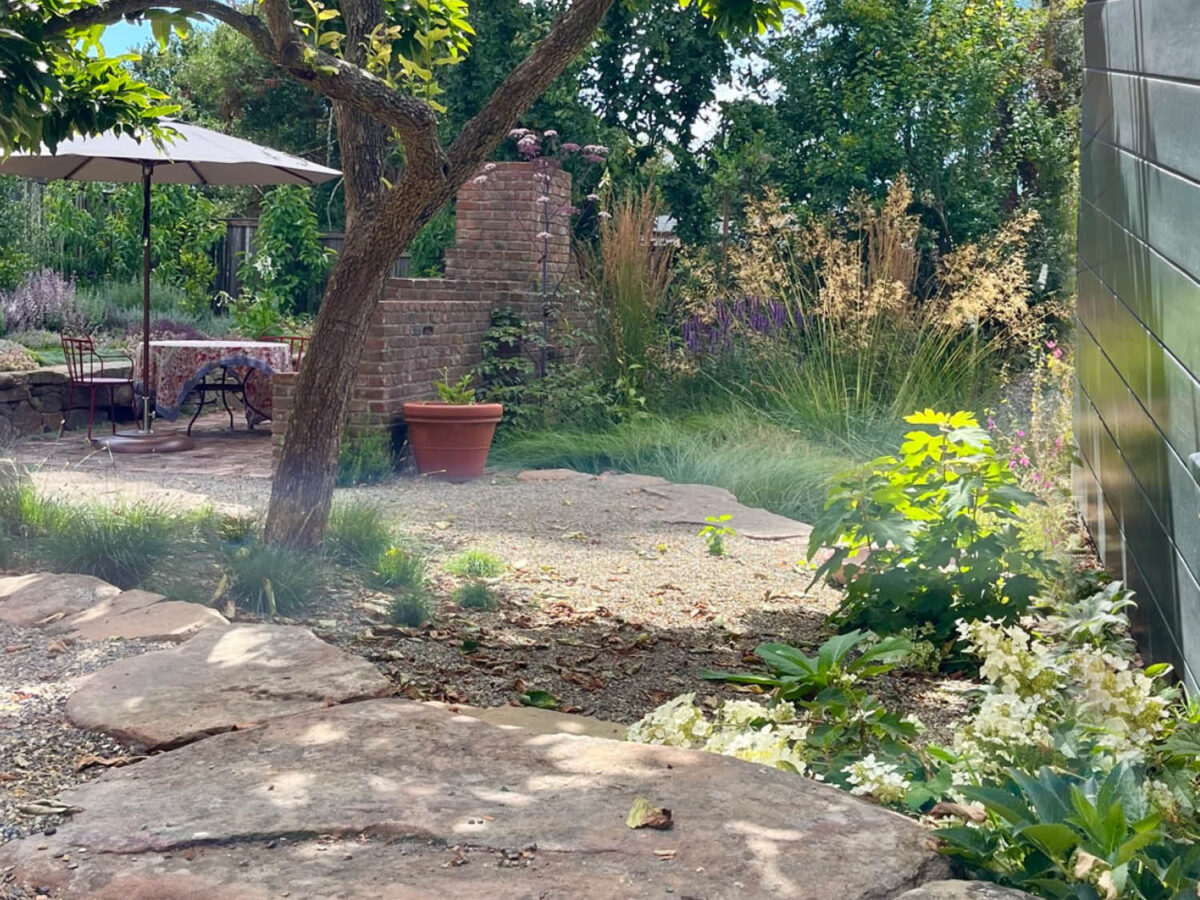
Sunter also notes that design isn’t just about beauty, it’s about durability and safety. In the West especially, balancing drought resilience with firewise choices is critical. “Timeless design is the quiet, stalwart elements that perform across styles,” she says. “Noble materials, craft, plants naturalized to a climate.” For her, the goal is to create a backbone that will outlast trends while allowing playful layers to shift over time. A timeless deck or stone path becomes the stage where seasonal plantings and decor can evolve.
The Garden as Relationship

Courtesy of terrene
Ultimately, Sunter sees gardening as a relationship. One that grows richer with time. “Just as much as we shape our gardens, they shape us,” she says. “Like all worthwhile relationships, you sift, sort, choose, grow, fail, adapt. There is always next season.”
That perspective makes fall feel less like an ending and more like an invitation. By adding structure now, you’re not only setting yourself up for cozy evenings and resilient design, you’re also investing in a landscape that will continue to give back in the seasons ahead.
We only recommend things we love. If you buy something through our site, we might earn a commission.