This 720-Square-Foot Sculptural ADU Was Designed for Both Work and Play
It is clad in striking yakisugi siding.
R. Brad Knipstein
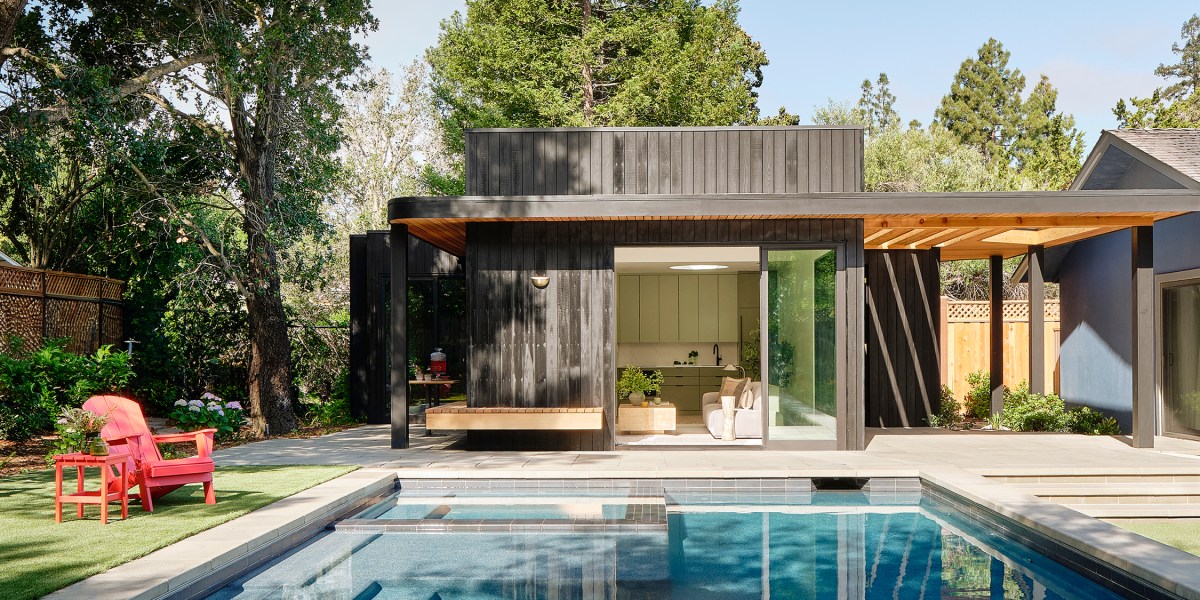
The backyard of this Lafayette, California, ranch-style house was large, but uninspired. It didn’t have any outdoor gathering spaces or seating areas. So, the owners—a couple with two young sons—brought in architect Mahya Salehi (who partnered with Strata Inc. Landscape Architects and GR Innovative Builders) to create a one-bedroom ADU, plus a new pool, BBQ area, and outdoor spaces for entertaining.
R. Brad Knipstein
The couple wanted the ADU to serve two purposes: as a dedicated office for the husband who works primarily from home, and as a pool house for family gatherings, weekend entertaining, and hosting out-of-town guests.

R. Brad Knipstein
“The goal was for the ADU to flex between these uses: a quiet workspace during the week and a social hub for friends and guests on weekends, with the ability to host overnight visitors multiple times a year,” explains Mahya. “Using California’s ADU code allowed us to build in areas of the property that were otherwise unbuildable under traditional zoning. We designed the pool and ADU together as a unified composition, positioning it at the west edge of the property and placing the pool to the east for all-day sun. The alignment between the two creates a balanced, cohesive outdoor experience.”
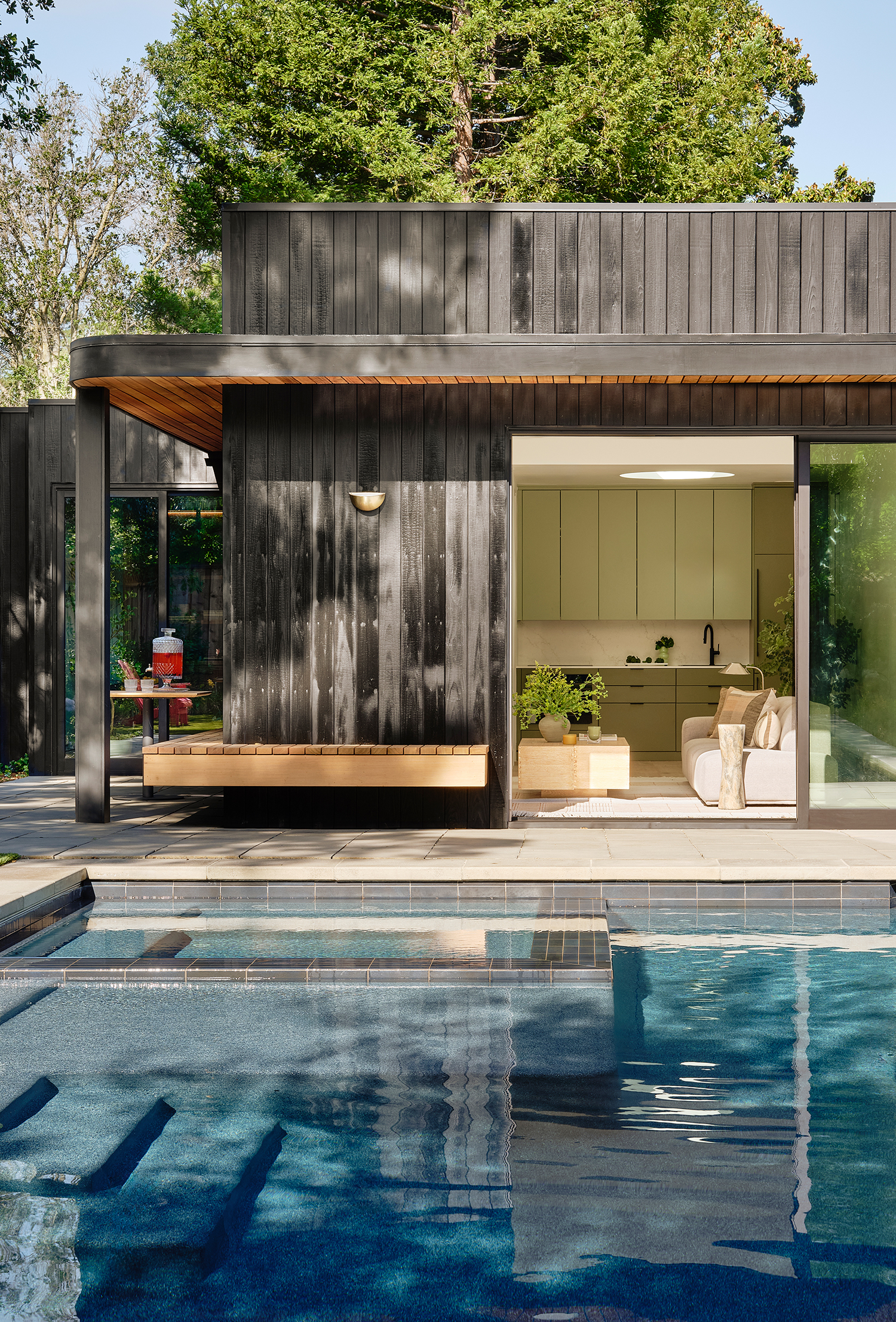
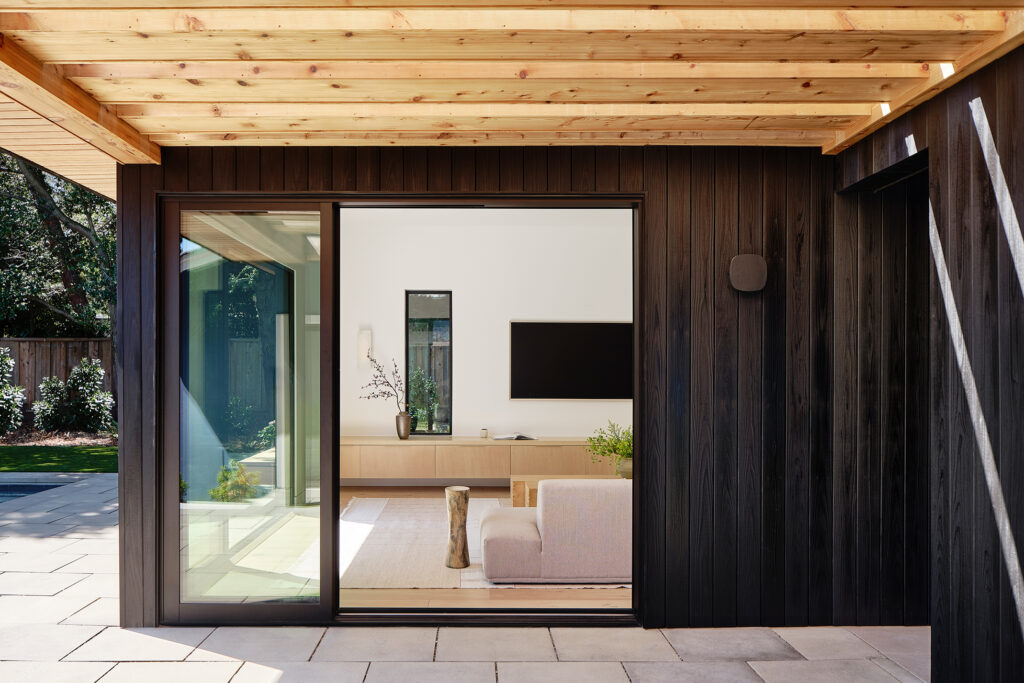
Mahya says a connection between the ADU and the main house was also key. The clients had wanted a covered or semi-covered walkway that linked the two structures, but there was a concern about blocking natural light, so Mahya and team designed a trellis-like roof overhang as a compromise.
R. Brad Knipstein
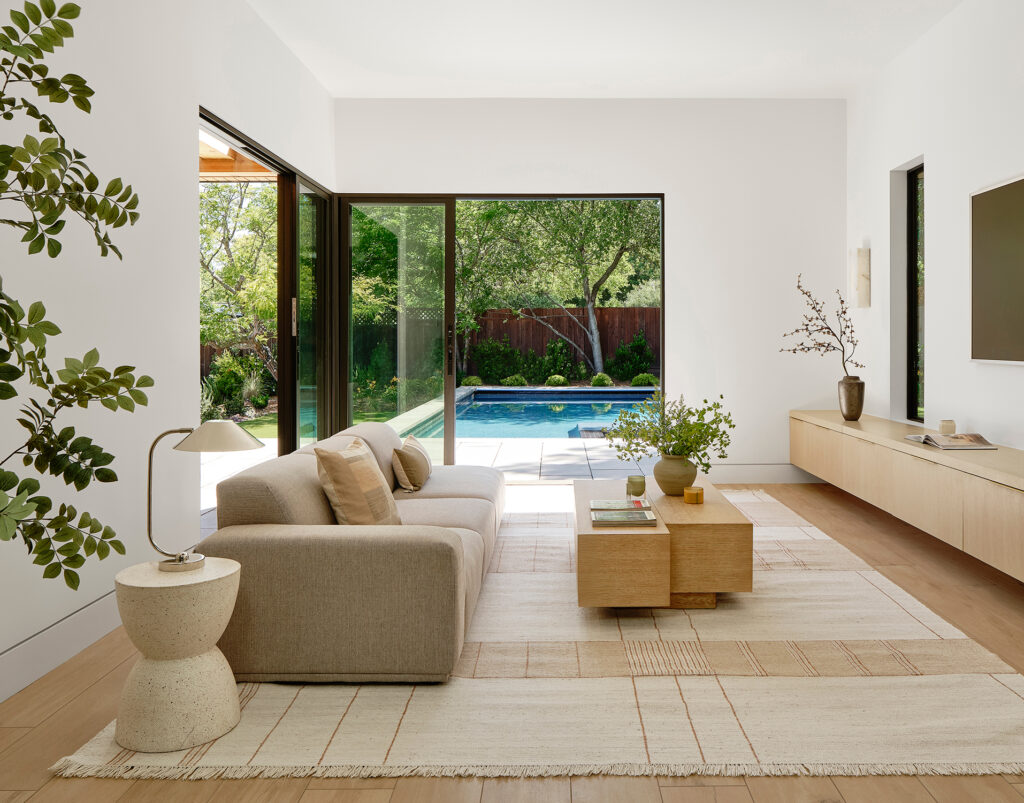
The ease of California living was the inspiration for the design, both inside and out. “We thought of the architecture as a solid mass with the interior carved from its core,” Mahya explains. “We developed the interior palette alongside the architecture. We envisioned bright plastered walls, warm oak cabinetry, an intentional layering of colors and textures as the inner belly of the dark, moody, and modern structure. This back-and-forth play with contrast between the exterior and interior finishes is dynamic and playful. After dark, the structure blends with the night sky and the interiors glow like a warm and cozy lantern in the backyard.”
R. Brad Knipstein
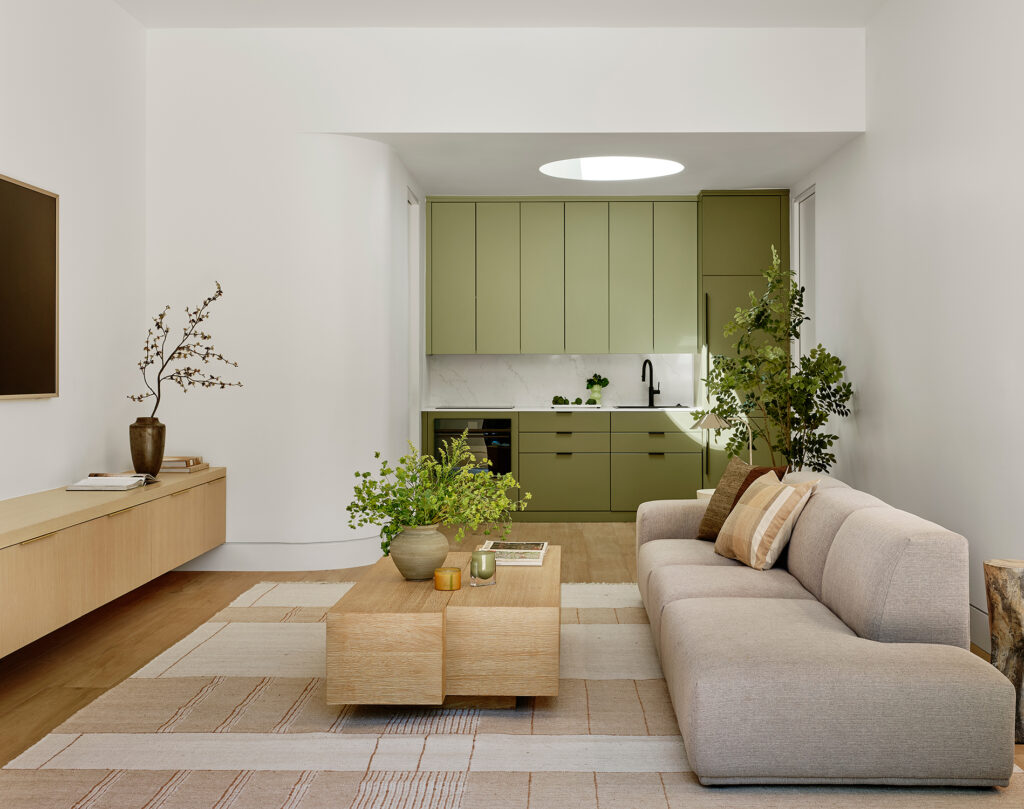
As for the layout, the ADU features three distinct zones: a private office, a central open-plan living space, and an indoor-outdoor bathroom. The heart of the ADU is the living space, which was designed to feel casual and effortless. The round skylight in the kitchen filters soft light through the space.
R. Brad Knipstein
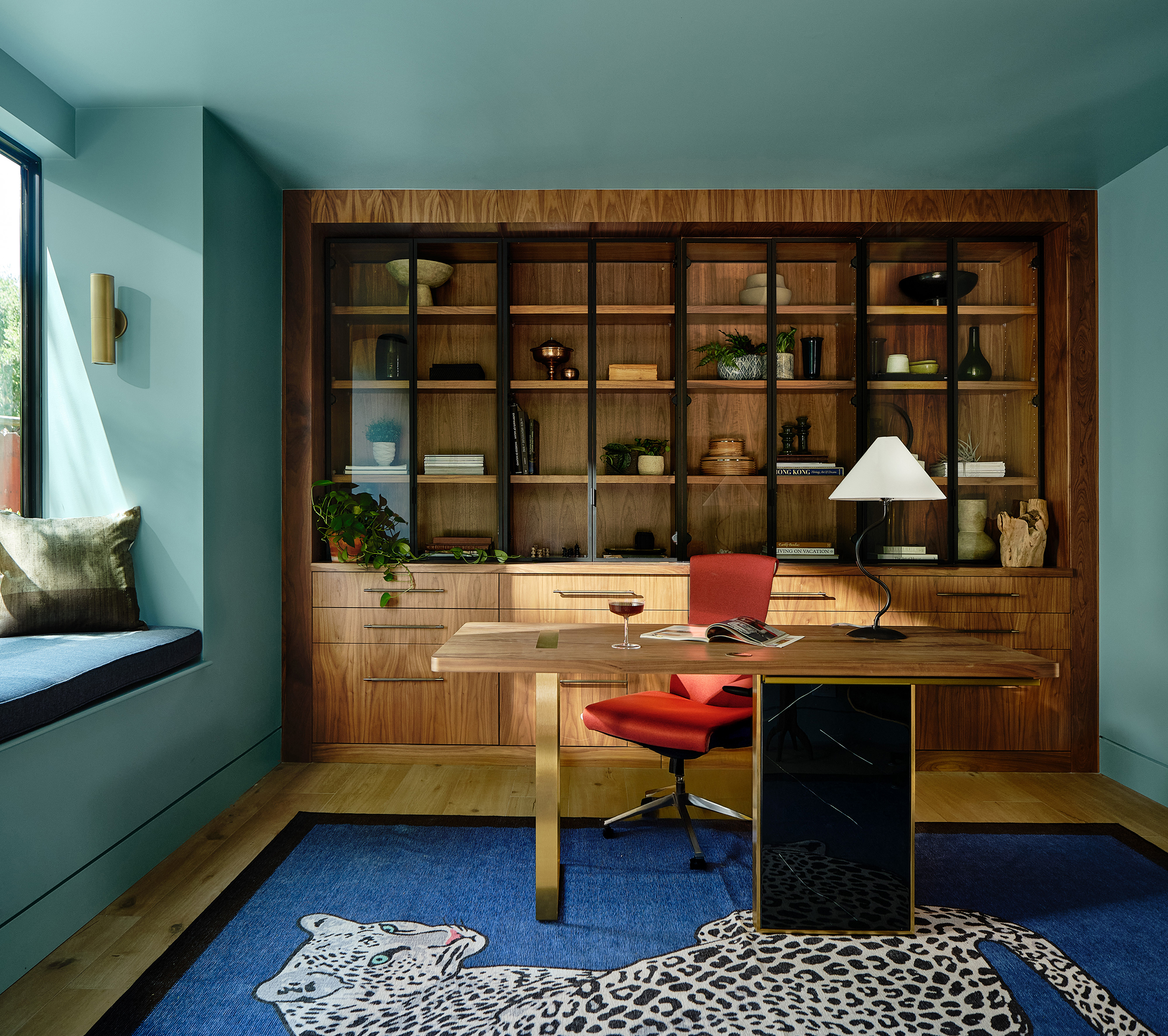
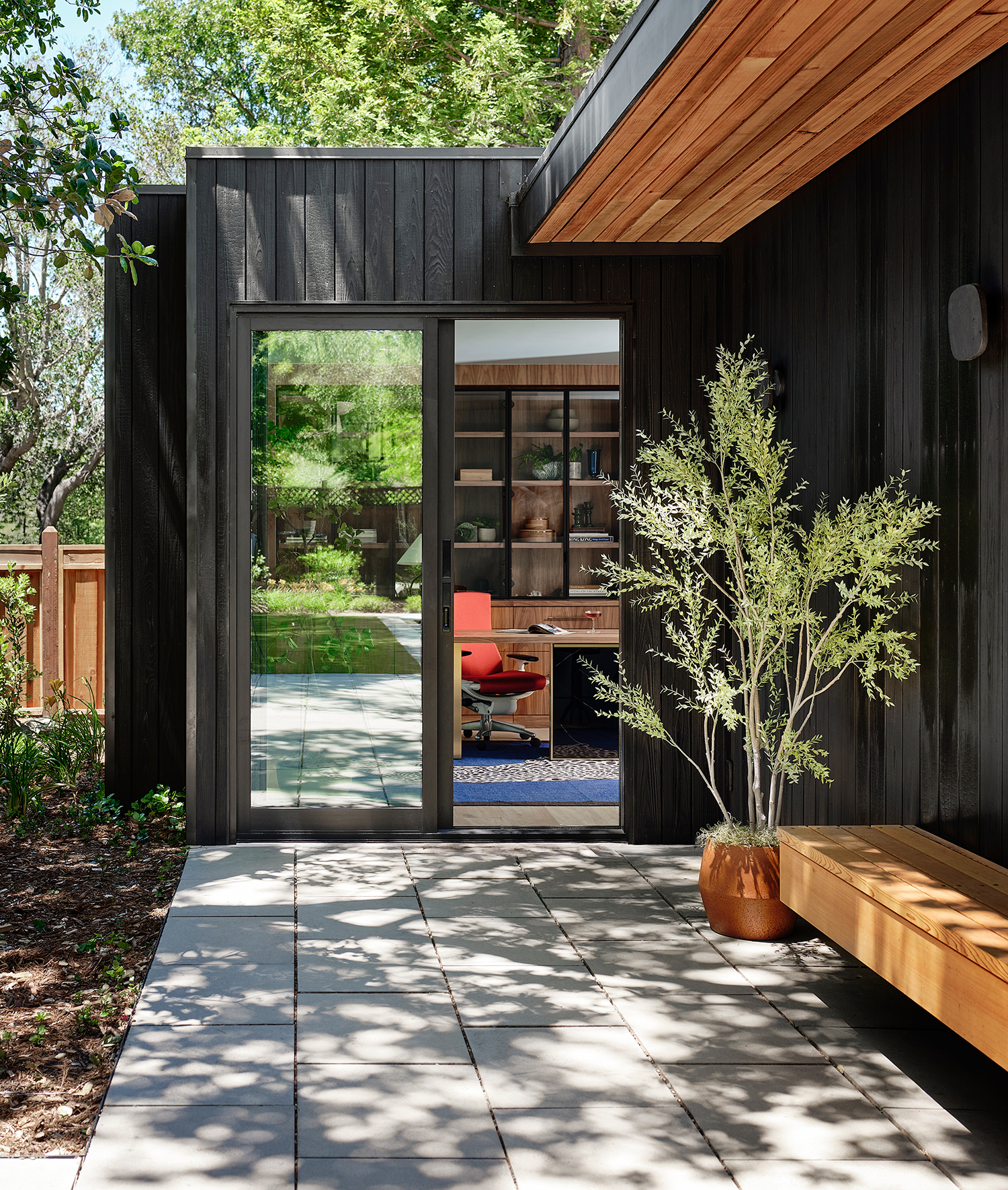
The home office features a deep blue palette, chosen to create a calming environment optimized for productivity and focus. But there’s a surprising element: a playful snow leopard rug from Jonathan Adler.
R. Brad Knipstein
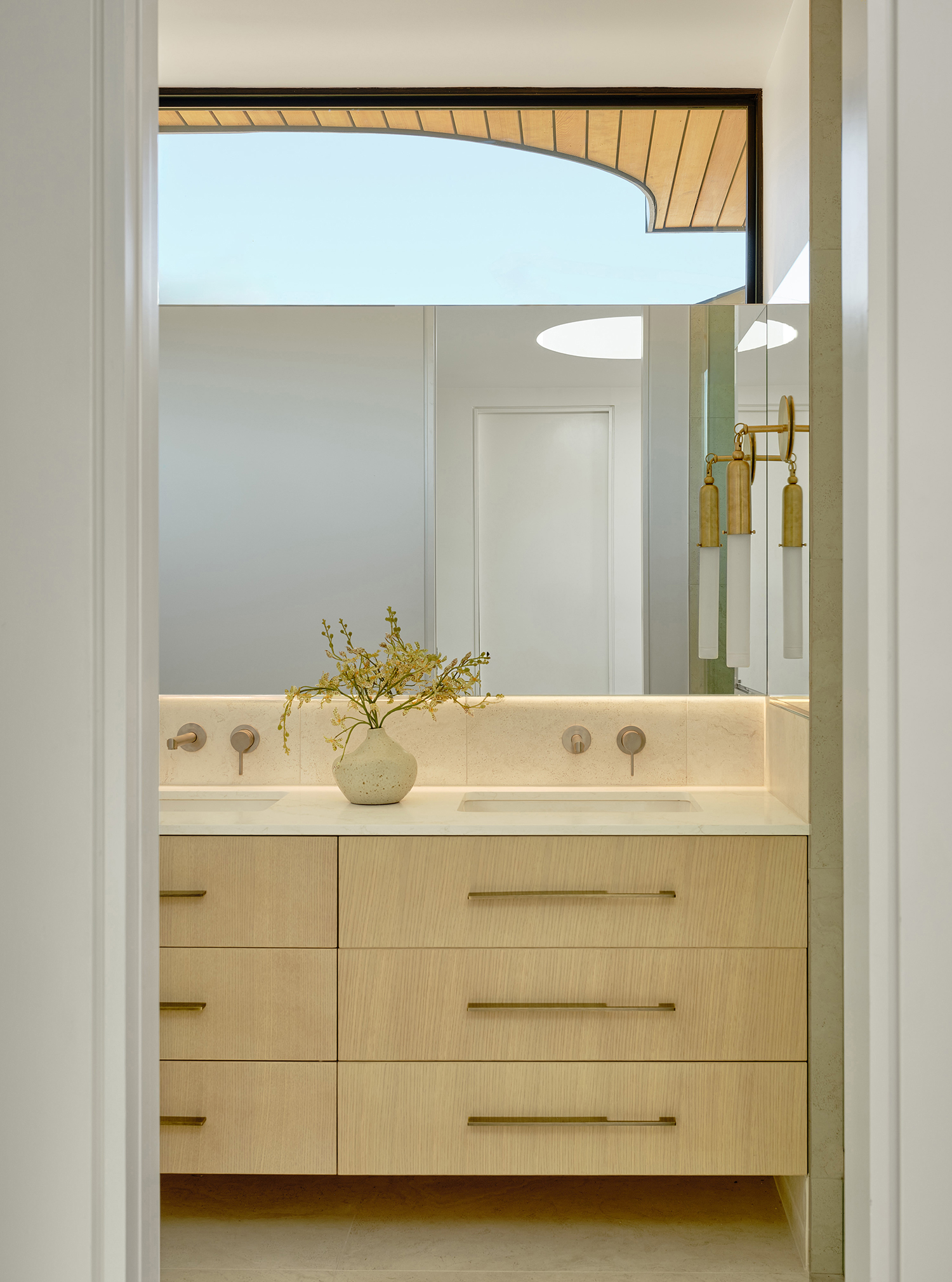
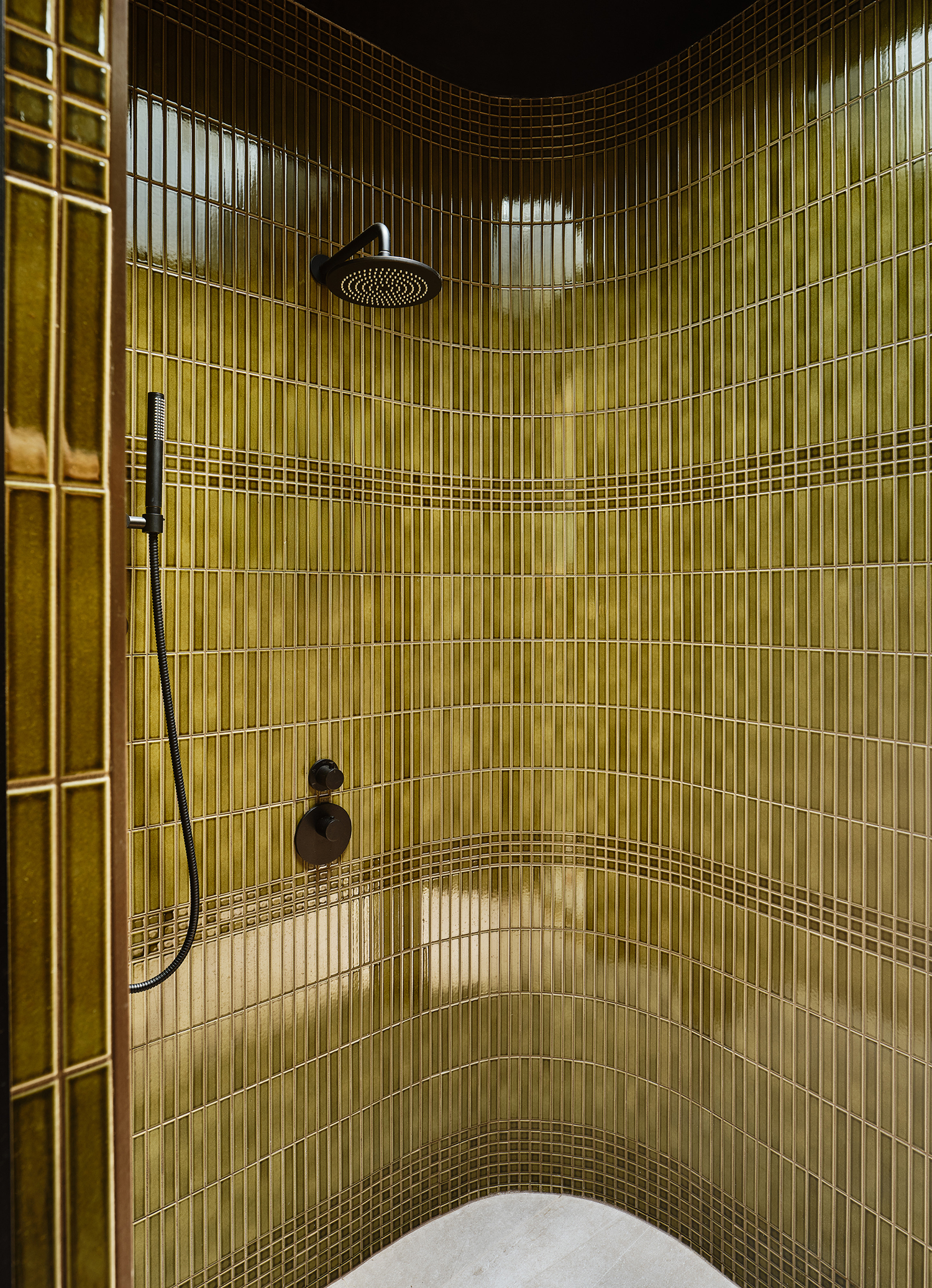
“Each room opens to the outdoors: The office has sliding doors beneath the oak canopy, the living area onto the pool deck, and the bathroom through a steel door leading to the outdoor shower,” Mahya says. “Together, these connections create a continuous flow of movement and light, which is a true reflection of California indoor-outdoor living.”
R. Brad Knipstein
Outside, the ADU features striking black siding—specifically Gendai® from Nakamoto Forestry, which is the brand’s most popular yakisugi cladding product (Japanese cedar preserved via a heat treatment that leaves the surface charred). In addition to its aesthetically appealing look, yakisugi is also fire- and termite-resistant, and it weathers beautifully.
R. Brad Knipstein
“I’ve always been drawn to black cladding,” says Mahya. “With Nakamoto Forestry’s yakisugi, we got the depth and drama, but also a softness from the natural grain. It’s alive in the California sun—the way it shimmers and subtly shifts makes it perfect for a structure so connected to the outdoors.”
R. Brad Knipstein
The family has gotten a lot of use out of the ADU. It’s a productive space, a weekend hangout, and a space for the couple’s children to play with their friends. “They’ve already hosted several gatherings, and the space has adapted beautifully to each occasion. For them, it feels like a natural extension of their home, one that reflects how they truly live,” Mahya adds.
We only recommend things we love. If you buy something through our site, we might earn a commission.