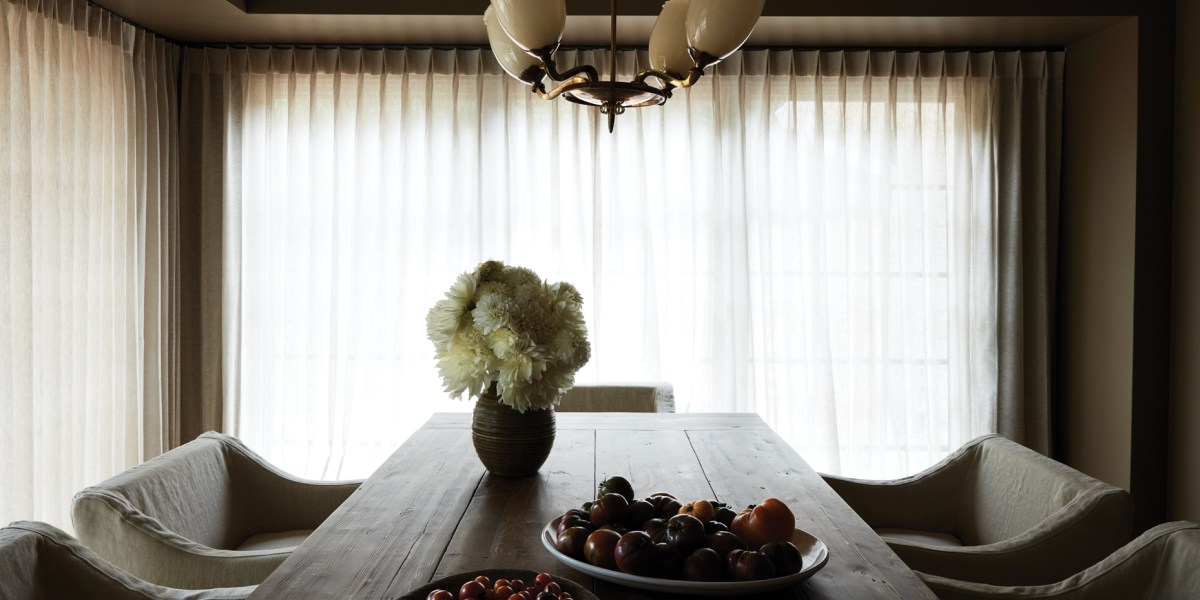
After a Devastating Wildfire, This Sonoma Rebuild Was Inspired by the Trees
The home honors the nature surrounding it.
Adam Potts
Not only was the original home on this Sonoma County 3.7-acre property destroyed by the 2017 Tubbs wildfire, but also over 100 trees surrounding it were fatally damaged.
“When it came time to rebuild, we knew we wanted to honor the majestic pines, bays, manzanitas, and oaks that had once graced the land,” explains interior designer Lucy McLintic, who owns the home with her husband, Morgan, and worked on the project with architect Ryan Knock and Doran Construction and Design. “That goal quickly expanded into a plan to build a home that acknowledged the history of the entire ridge—a former cattle ranch—on which the home stood.”
Adam Potts
Lucy says that after the Army Corps of Engineers cleared the site, there was nothing left of the previous home, and even the foundations were compromised. All that was left was rubble—remains of an old brick fireplace, melted glass, and a washing machine. Before the rebuild could start, a lot of work needed to be done to clear the lot. And because the original home was a narrow structure perched on a rocky ridge, earthwork had to be done to create a level building surface.
Along with making the most of the beautiful surroundings and the property’s hillside vantage point, Lucy wanted to retain some of the former home’s humble charm. The new build also had to serve as an inviting space for entertaining and hosting friends and family, while also being a refuge from city life in San Francisco for Lucy, Morgan, and their kids (they spend their weekends in Sonoma).

Adam Potts
“The building had been long and narrow with multiple doors and windows along one side, resembling a stable,” Lucy explains. “In fact, the prior owners had kept horses on the property. Before the house and the neighboring properties had even been built, the land was used for cattle ranching. The plan was to reference this history in the new design.”
Lucy and Ryan had gotten their design inspiration—both exterior and interior—from vernacular structures in the areas, which included agricultural buildings and elegant barns.
“The idea was to create a modern version of those regional buildings,” Ryan says. “Take the simple forms, dramatic spaces, and natural materials, and create something more refined and contemporary with them.”

Adam Potts
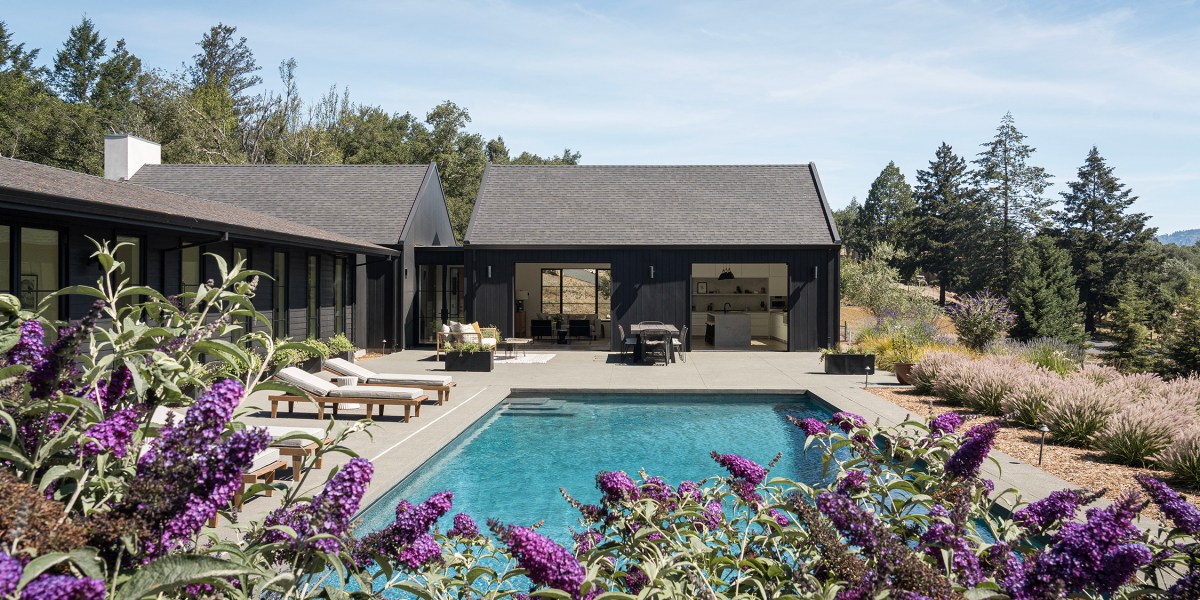
And of course, wildfire resistance was top of mind for the rebuild. A large outdoor tank at the south end of the pool services the home’s interior fire sprinklers. The pool can be used as a water source by the fire department, and there are also hydrants on the property and enough space for fire trucks to maneuver. The exterior patio is composed of concrete for durability and fire resistance. Landscaping is kept away from the home, overhanging branches have been cut back, and there are no wood structures like fences.
“A Class-A fire retardant comp shingle roof, constructed as an unvented assembly, was the first thought as the roof is the primary spreading factor of the house, besides the surrounding vegetation,” Ryan explains. “Overhangs were removed where not needed, and the overhangs were 1-hour fire-rated where needed on the east and west sides for solar control to the bedrooms. The siding is James Hardie, a combination of v-groove and lap siding, and is cement and non-combustible. All the windows have tempered glazing for fire resistance. The home uses an innovative water-resistive barrier beneath the siding and liquid flashing to ensure complete protection from the elements.”

Adam Potts
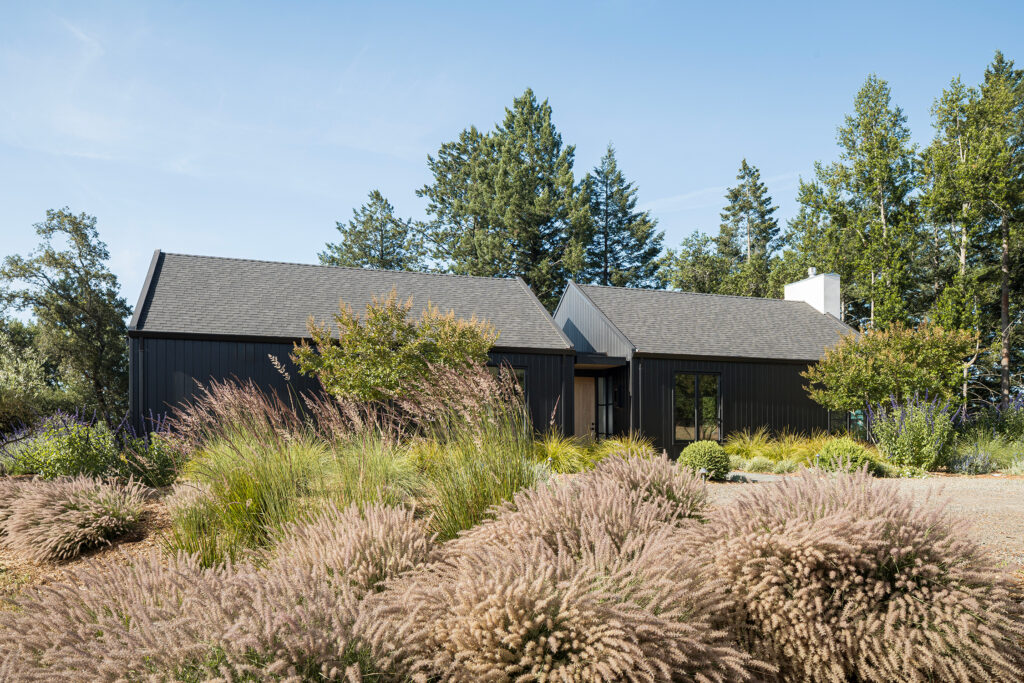
For the flow of the new house, Lucy and Ryan wanted to improve how you entered the space. The previous home required you to walk through a long exterior portico off the side of the house, passing all the bedrooms, in order to reach the front entry and living spaces. Instead, they decided to place the new entry near the driveway, integrating it into the landscape and showcasing and framing the architecture of the home.
Adam Potts
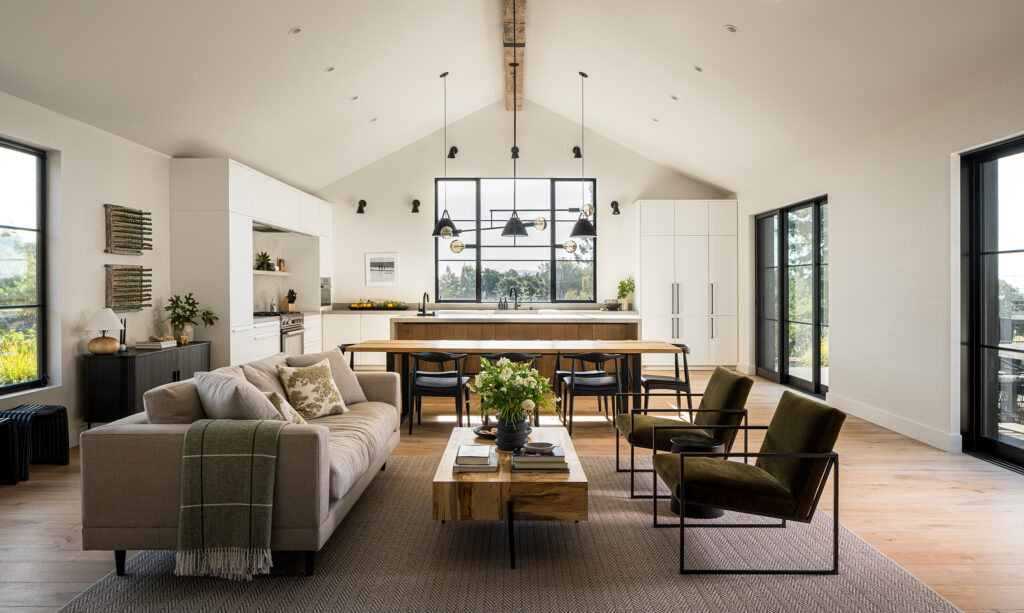
“After placing the entry, the rest of the layout came naturally,” Ryan says. “The desire to have a connected but distinctly separate living room from the kitchen/dining/family room made having a lower entry volume and hall placed between them a logical choice. It also gave an opportunity to compress the entry, and make the experience of the vaulted ceilings, with their reclaimed barn beams, in the two living volumes each side, more dramatic and apparent. This effect is emphasized by the large picture window at the far end of the kitchen volume and the fireplace at the end of the living volume opposite. It creates an unexpected sense of drama when you enter the house.”
Adam Potts
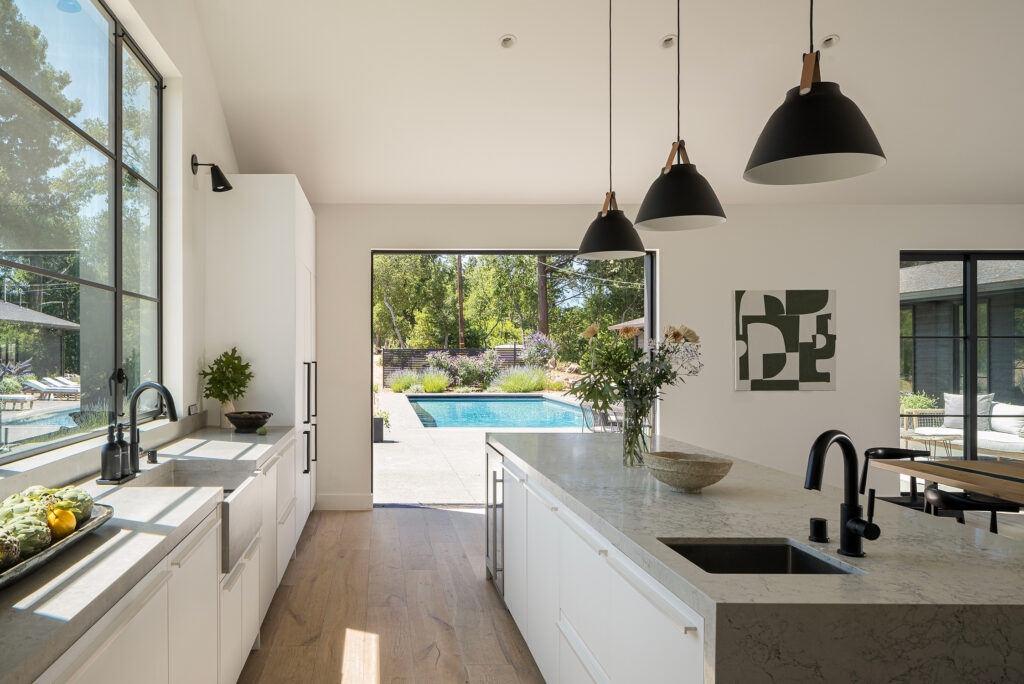
The kitchen/dining/family room is the center of activity when hosting—guests can gather around the island or easily go outside to the grill and pool area.
Adam Potts
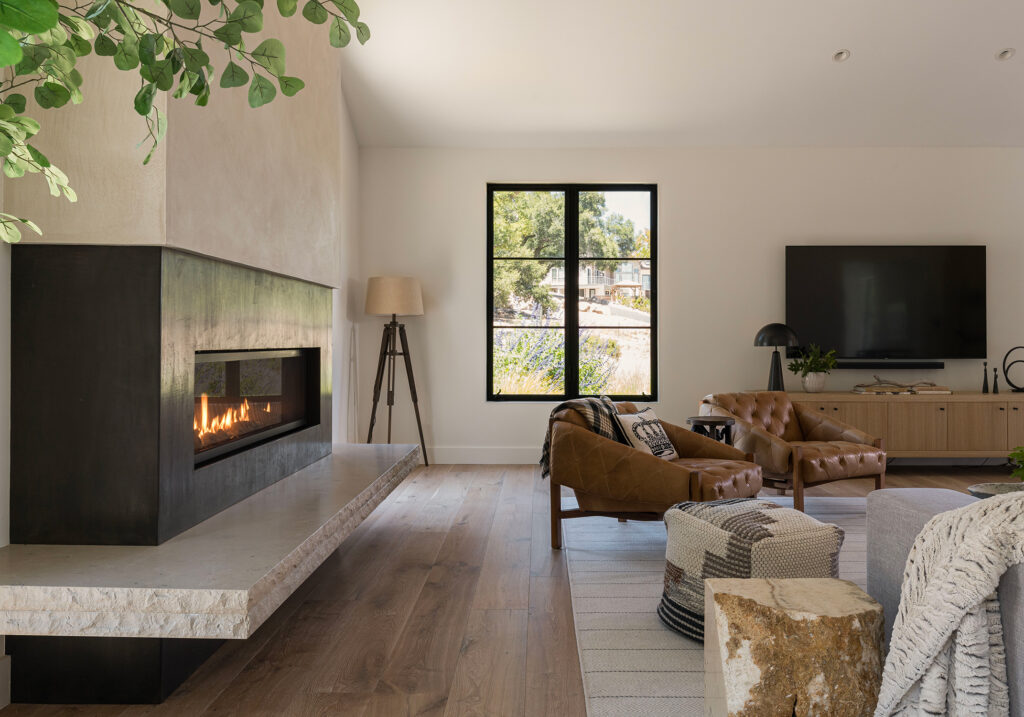
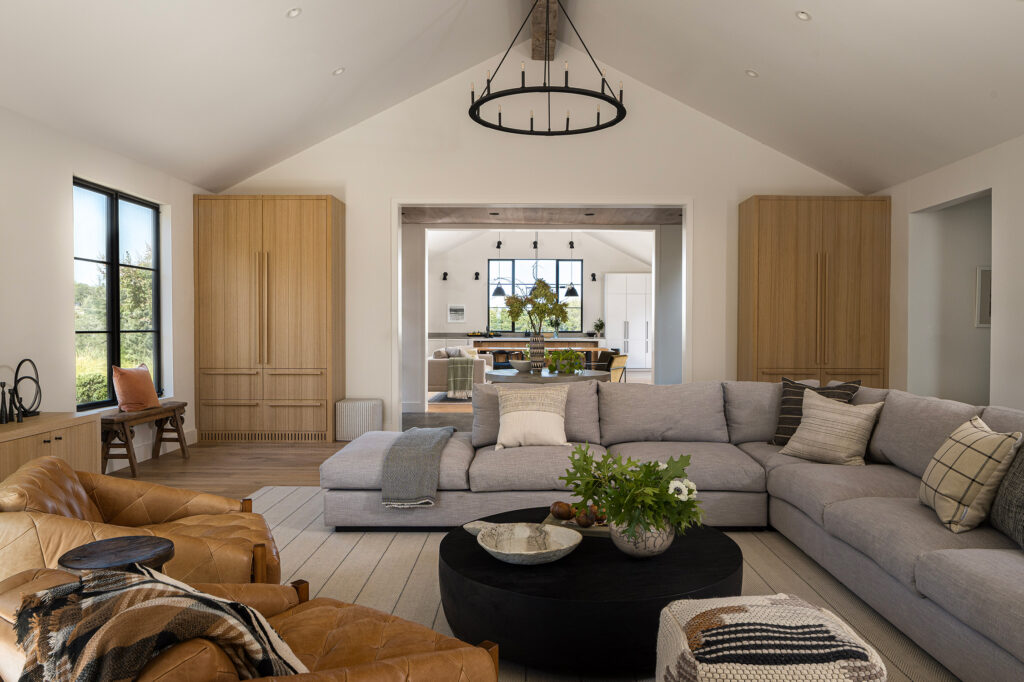
Lucy says the key feature in the living room is the plaster chimney and steel fire surround with its floating limestone hearth. Since the space is so large, she used a sectional to divide it into a living area and entry hall, which connects seamlessly to the bedroom wing. It’s a great space to gather for holidays, movie nights, and watching sports.
Adam Potts
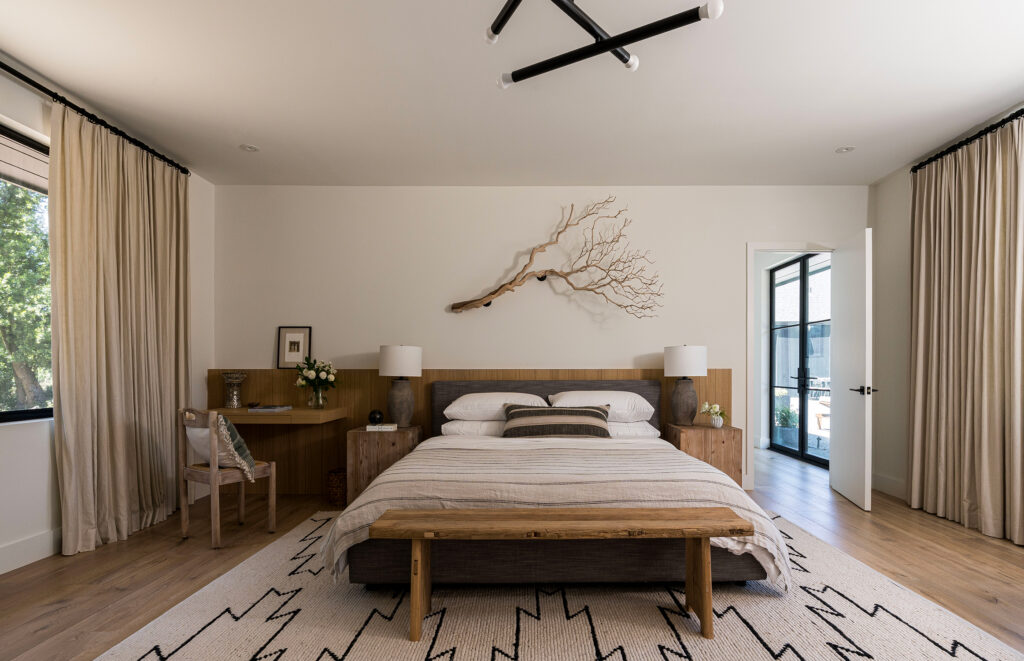
The bedroom wing makes good use of the views and natural light. An east-facing hallway connects all the bedrooms and filters in morning light, while also creating a sense of privacy for all the rooms, Ryan adds.
Adam Potts
“It completes the ‘form follows function’ approach to the layout, and creates a clear hierarchy of private versus public spaces for the home, while also allowing full access to the patio and pool area from the bedroom spaces,” he says. “This connection offers a form of summer-camp-like pleasure in allowing you to go right from the bedrooms to the pool and outdoor spaces, without having to reenter the main living areas.”
Adam Potts
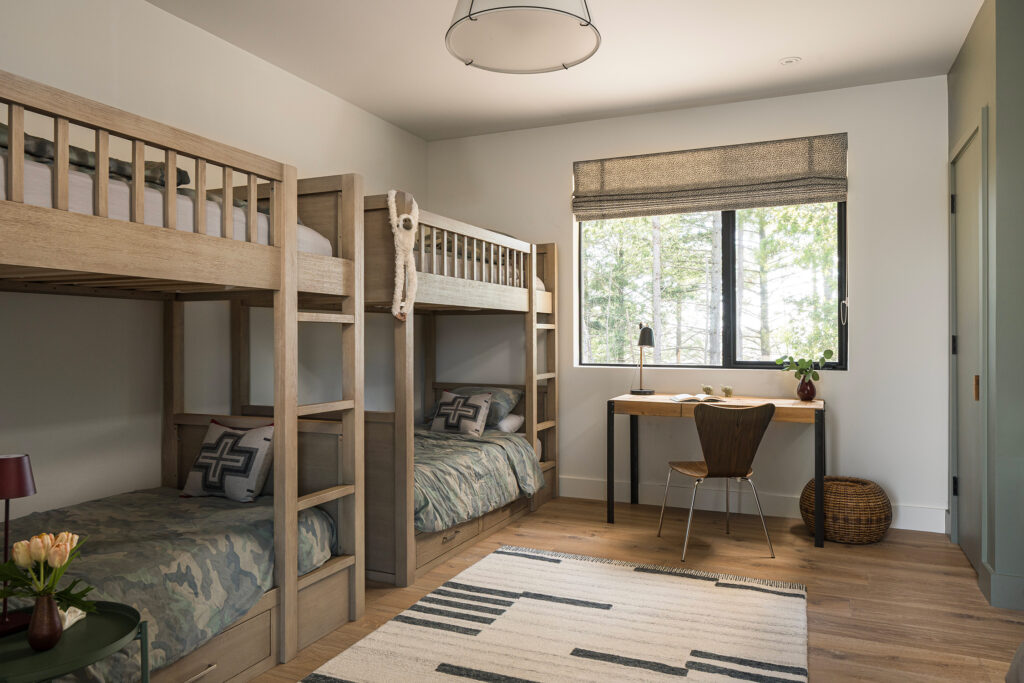
For the design of the bedrooms, Lucy says she made them look distinctive, yet complementary—two guest rooms in green and ochre, the kids’ bunk room in green, and a neutral primary suite.
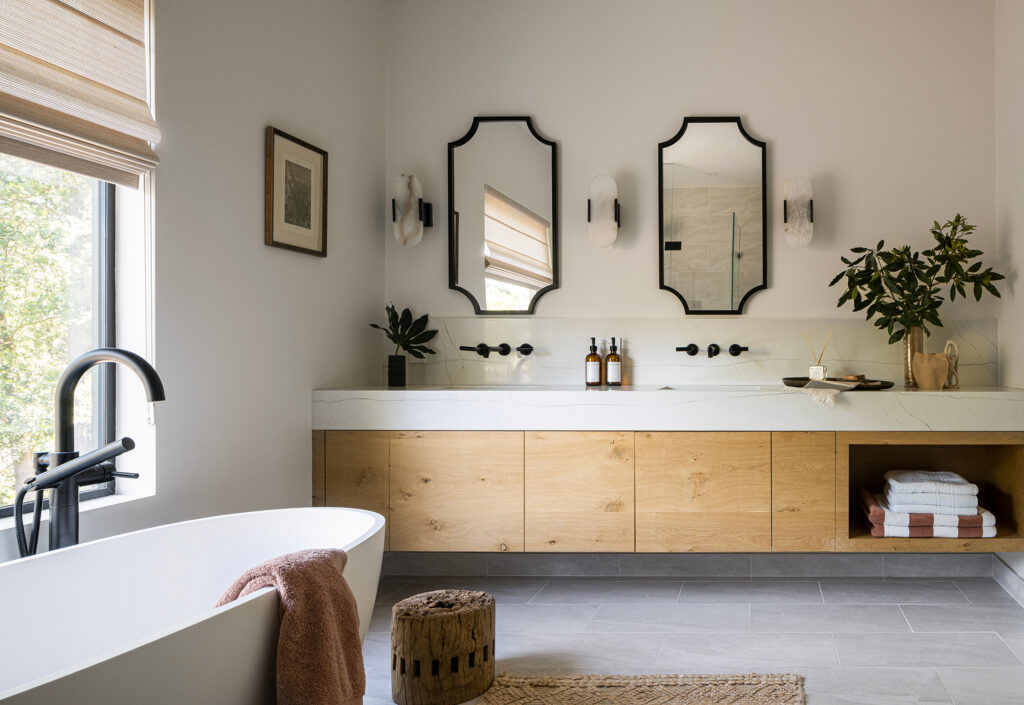
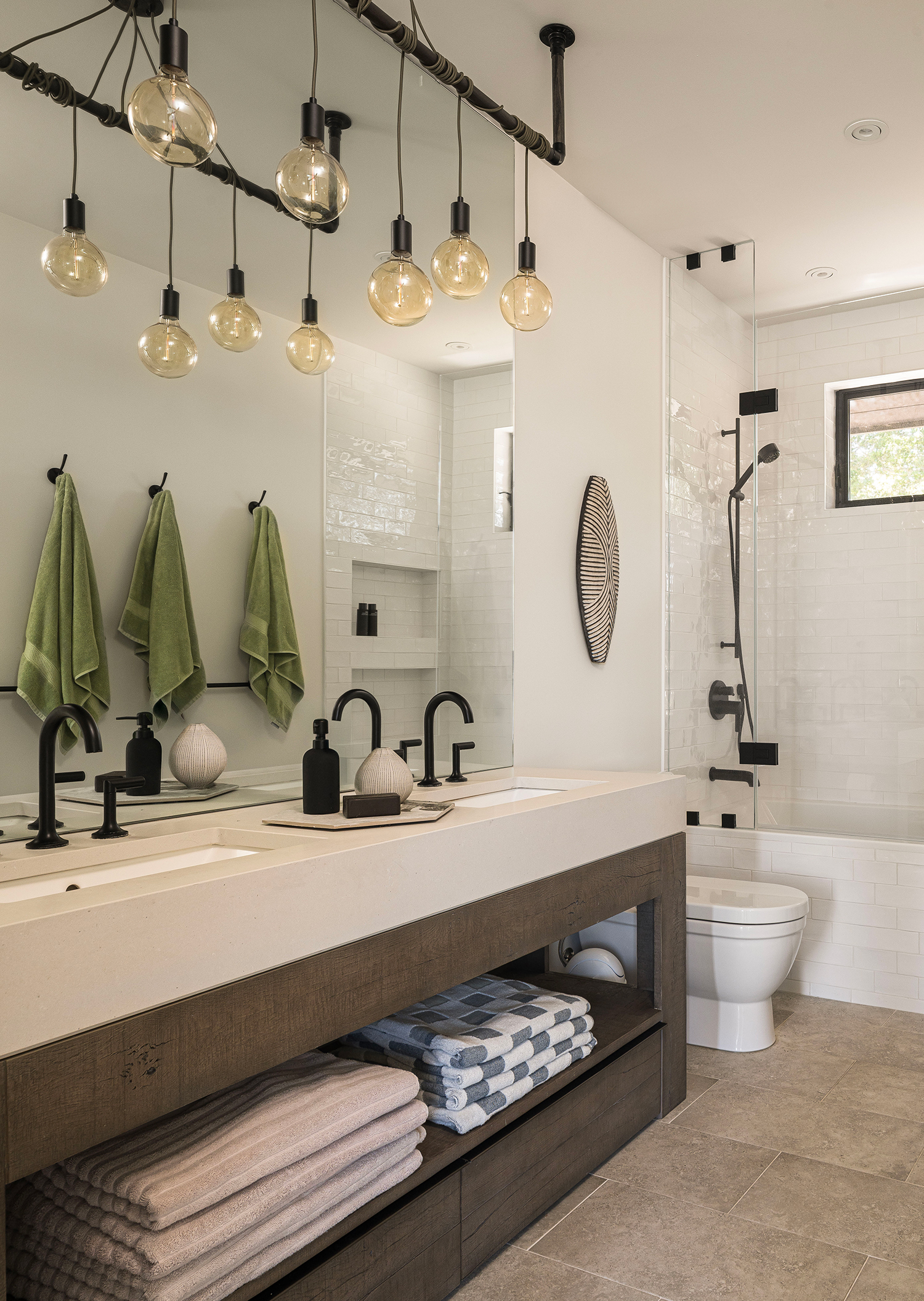
“We were able to achieve a high-end look in two of the bathrooms without pricey materials, using porcelain tile, quartz countertops and off-the-shelf vanities,” she says. “The key was specifying 6-inch deep mitered edge profiles on the countertops to create a more elevated effect.”
Adam Potts
The finishes and furnishings echo the architecture, Lucy explains. Chairs reflect the grid pattern of the windows; globe and bell shapes are repeated in the light fixtures, side tables, and accessories; and accents like the primary bedroom’s manzanita branch wall hanging was chosen to bring the outdoors inside.
Adam Potts
To make the new build feel more authentic and lived-in—especially when so many personal items were lost in the fire—Lucy chose materials with texture and added accents from local vintage stores and markets, as well as finds from the family’s travels and pieces made by family members.

Adam Potts
Outside, the landscape was designed to be drought-tolerant, wildfire-resistant, and deer-resistant. “A variety of grasses were used and they add beautiful movement when the wind blows across the ridge,” Morgan says. “Mexican sage was added for color, and buddleia and lavender, too, but in small amounts because they contain flammable oils. Two olive trees mark the approach to the house and two crape myrtles frame the front door. Regulations allow only a small percentage of the property to be irrigated, so the rest was left natural and just needs to be mowed and trimmed regularly to minimize fire fuel.”

Adam Potts
The final design is a peaceful refuge that truly respects and honors the land. “It has exceeded our expectations and provides the perfect retreat from the city,” Lucy says. “You can quite literally feel your body relaxing the moment you pull into the driveway. This home is like a giant exhale.”
The Latest