After Working on This Home 20 Years Ago, the Architects Returned to Give It a Refresh
They found that its original design still held up.
Mariko Reed Photography
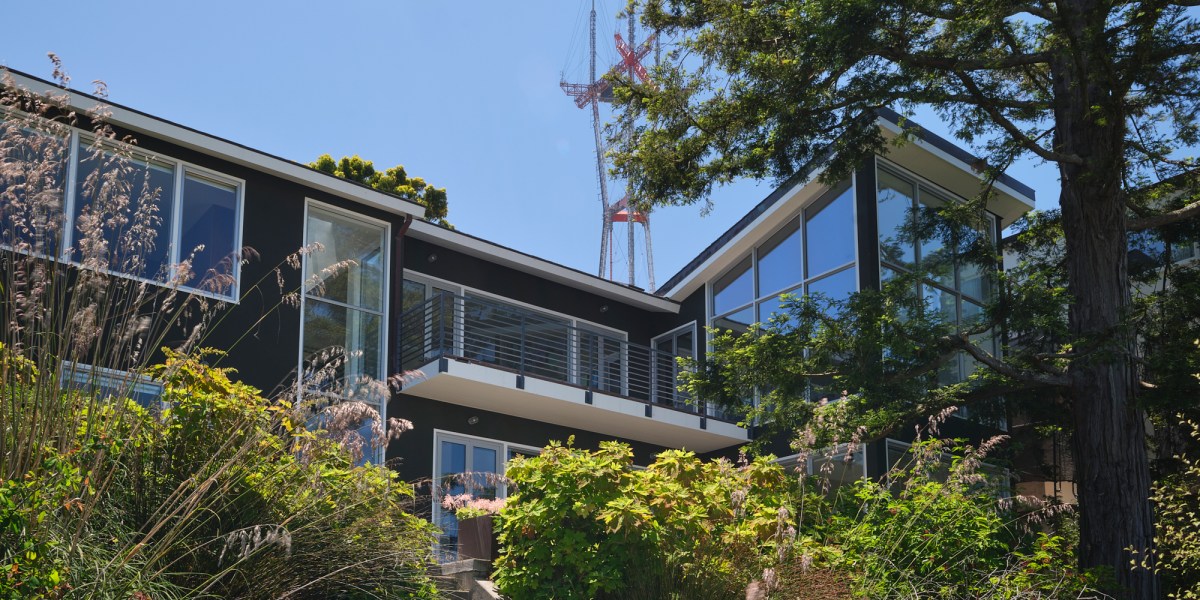
It was a trip back through memory lane of sorts for the team at MDa Studios, who was brought on to revisit a one-story San Francisco ranch house that was now home to a family of four.
“We’ve visited the house numerous times over the years, and each visit has been nice to see how the house has held up over time,” says Malcolm Davis. “I can easily imagine living there myself. When we walk through with other architects or design-conscious friends, the consistent response is that the house doesn’t feel tied to a particular moment or trend. It still flows naturally, the spaces still function exactly as intended, and the details still feel considered and appropriate.”
Mariko Reed Photography
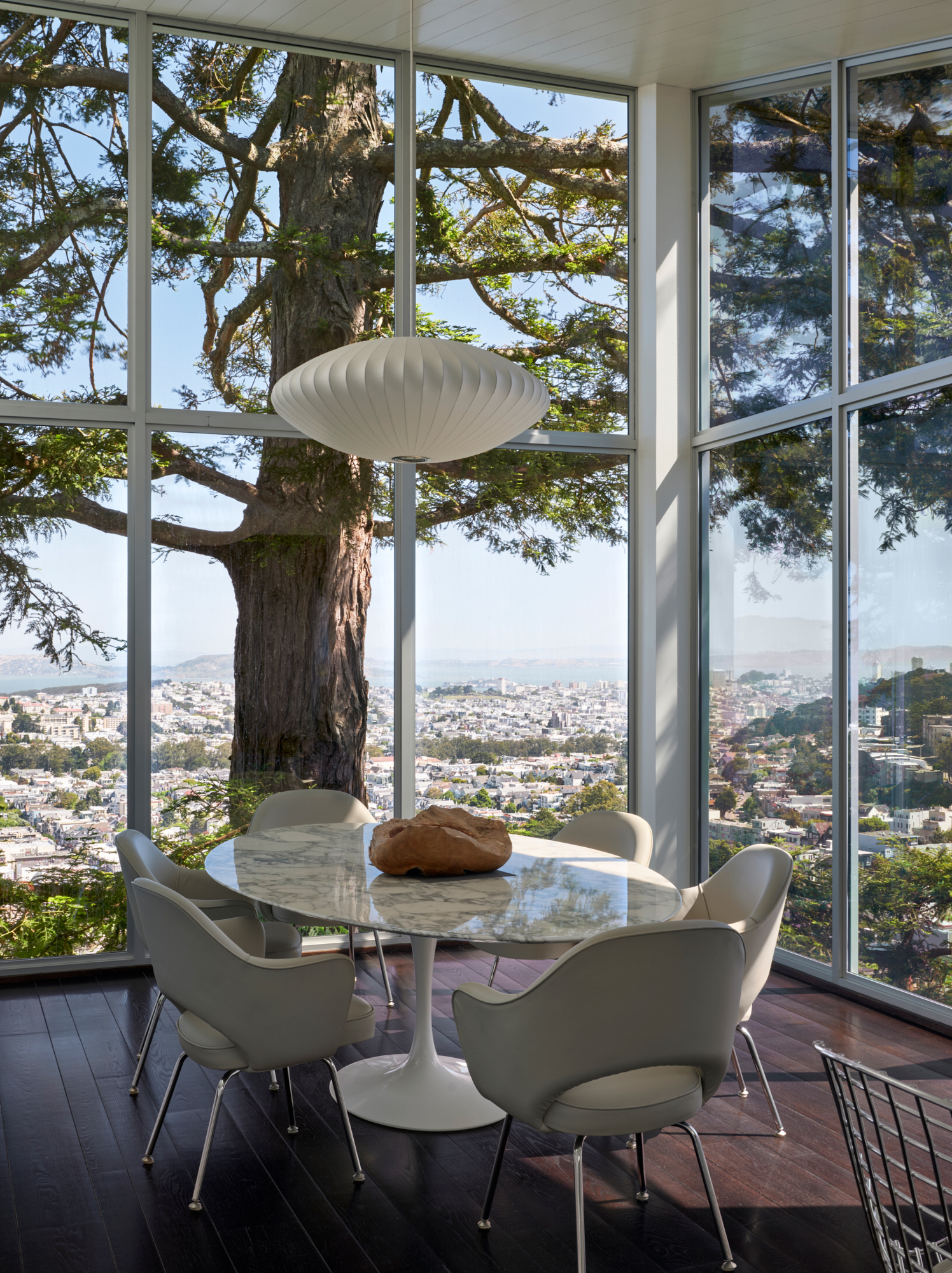
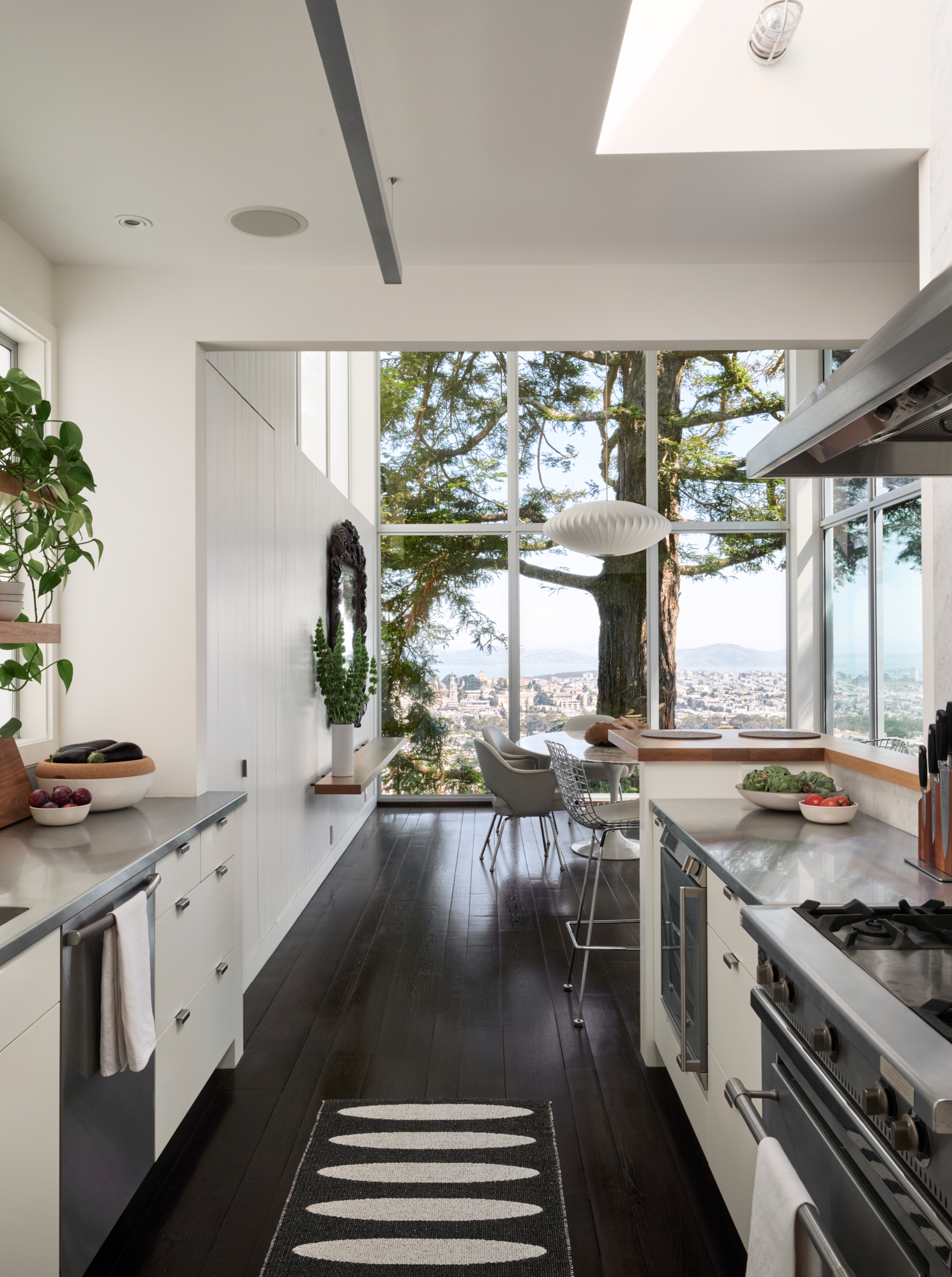
The original design was unassuming with a large crawl space underneath—it was perched on a hillside with expansive views stretching from the Golden Gate Bridge and Mount Diablo. The clients wanted a space that showcased the views, that felt full of light, and had an open feel for hosting and entertaining.

Mariko Reed Photography
“Having worked with us previously, they understood how thoughtful design could elevate daily experience,” says Malcolm. “They sought a residence where the site was intertwined with everyday life, and spaces that are separated programmatically for a successful blend of familial togetherness and privacy.”

Mariko Reed Photography
The MDa team transformed the one-story home into a multi-level residence with five bedrooms and four-and-a-half bathrooms. They also took care to respect the site, preserving the redwood tree on property and designing foundations that wouldn’t disturb its root system.
Mariko Reed Photography
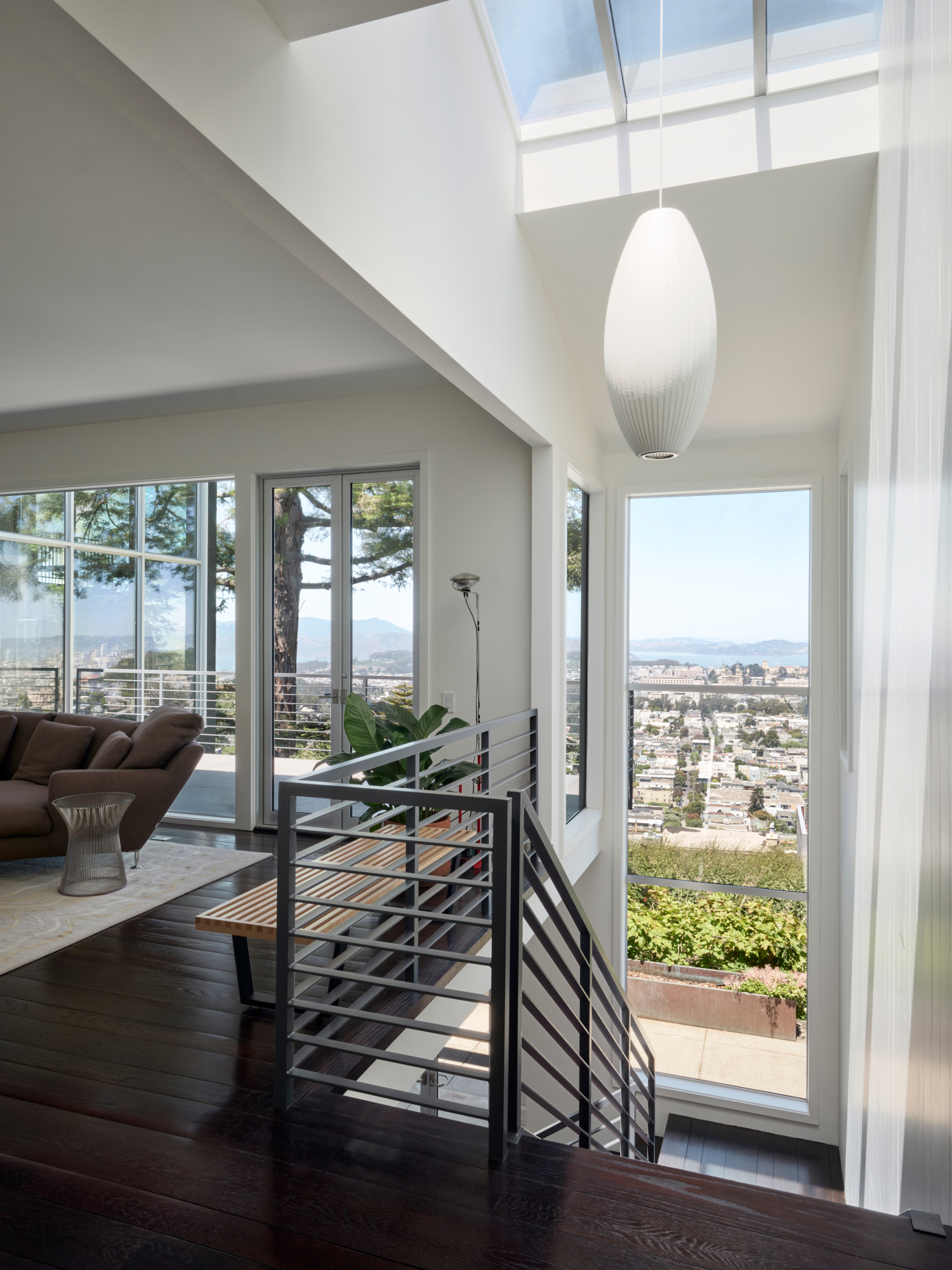
Light played a big role. The design was centered around what the team calls a “daylight spine”—using the new stairhall as a vertical connector to bring natural light throughout the home.
Mariko Reed Photography
“Light bleeds into the house through the use of skylights that illuminate the bathrooms and then transom windows above the doors, allowing for sun and light to penetrate into the central portions of the house,” says Elsa Brown. “In the living room, French doors flank the fireplace with floor glass directly below them, capturing the light at the first floor and bringing it down into the lower floor.”

Mariko Reed Photography

Mariko Reed Photography
Two smaller bedrooms were turned into the expansive primary suite. The newly created space showcases the beautiful bay views, with wrapping windows that frame the cityscape. Wood paneling was added for a warm feeling. And instead of separating the bedroom and closet, the team decided to keep it open, creating a multifunctional environment.

Mariko Reed Photography
That large crawl space underneath was turned into the downstairs area, which now has a media room, two secondary bedrooms, and a shared bathroom. Even though they’re on a lower level, all the rooms on the floor still have a great vantage point of the views and allow for natural light to stream in.

Mariko Reed Photography
Even though the renovation was extensive, the MDa team still find that they could take a sustainable approach to this project. The home was still a timeless design that they could play off of.

Mariko Reed Photography
“For this recent refresh, we discovered something valuable: the clients could change furniture, update paint colors, and reimagine how they used certain rooms without requiring any major architectural interventions,” says Malcolm.
“We found that something as simple as changing paint had a significant impact on the character of individual spaces,” adds Elsa. “This flexibility is what sustainable design should provide. Architecture that endures isn’t just about durable materials; it’s about creating frameworks that can accommodate change without needing to be gutted every decade.”
The Latest