This Family Added an ADU to the Front of Their Home to Create a Multi-Generational Compound
Architect Mike Yang’s own multi-gen compound is filled with inspiration for rebuilding with community in mind.

Thomas J. Story
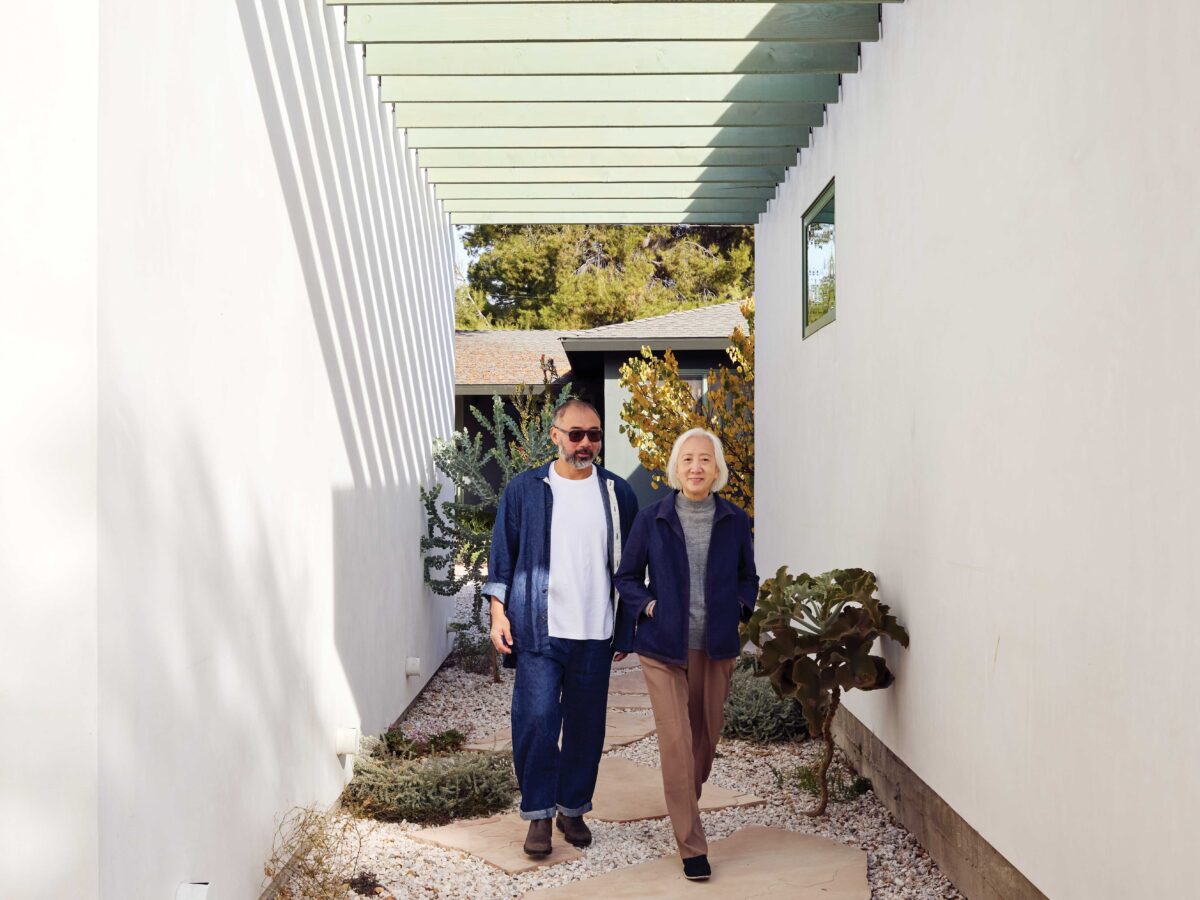
Architect Mike Wang has been building his small practice, Cover Architecture, for years, quietly designing thoughtful remodels and commercial properties around Los Angeles for about a decade. Then, a particularly important client and a challenging project designing an Accessory Dwelling Unit, or ADU, in the front yard of a 1960s house in Altadena led to a quite unexpected creative breakthrough.
“When I first had everything ready for this new design, I was worried about showing it to her. It’s very contemporary, and I thought she’d be taken aback,” Wang says. “She’s a scientist. She’s not so hip. And she has a very strong personality.”
Thomas J. Story
The client who set Wang’s nerves on edge? It’s Dr. Pei Feng, a 77-year-old retired professor and oncology researcher, who also happens to be Wang’s mother.
More Videos From Sunset
Feng and her husband, Daniel Jones, bought the home in 2019 when they were planning to transition from their busy lives in Baltimore, Maryland to a blissful retirement and more time in Southern California. Their intent was to be close to Wang, who was living in Highland Park in L.A. with his partner, architect and University of Southern California lecturer Erin Kasimow, and their daughter, plus his brother and his family in Sierra Madre. Feng’s grandchildren and better weather beckoned them westward. But it wasn’t until the COVID-19 lockdown prevented Feng from traveling and the house sat empty for months that a more nuanced plan came to light.
“We were quickly growing out of our 600-square-foot home in Highland Park, so we moved in as my mother’s tenants,” Wang says. He hatched a plan to add a separate structure on the lot to create a contemporary family compound. And the result of his efforts captured the attention of The New York Times.
Thomas J. Story
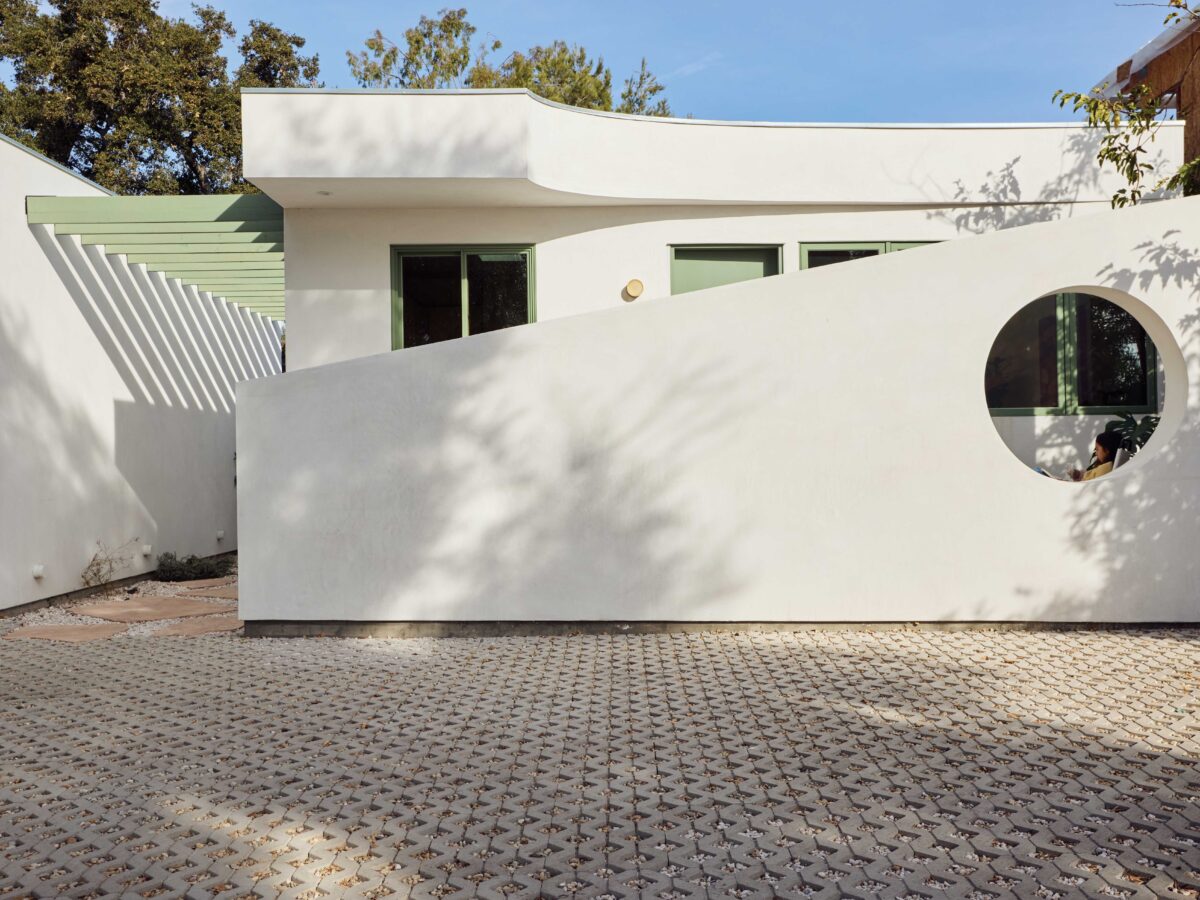
Wang took an unconventional approach to the design process from the beginning, out of necessity. The existing 1960s house was sited at the back of the lot, which sits at the edge of the Hahamongna Watershed Park. That meant the only available space for a new structure was in front near the street, and it would obscure the existing house. Unlike other ADUs that are hidden in the backyard, it would be fully visible from the street. Wang set out to design a visually intriguing structure with a single bedroom, a functional bath, and a full kitchen, which offered privacy and a little outdoor space of their own, and met the couple’s needs for aging in place. It also had to appeal to his mother’s no-nonsense practicality.
After toying with all the structure’s programmatic requirements and the restrictions of the space their building permits allowed, Wang had a fully functional design that left him cold and uninspired.
“I thought I could make it a little better,” Wang says, in his typically understated way.
Thomas J. Story
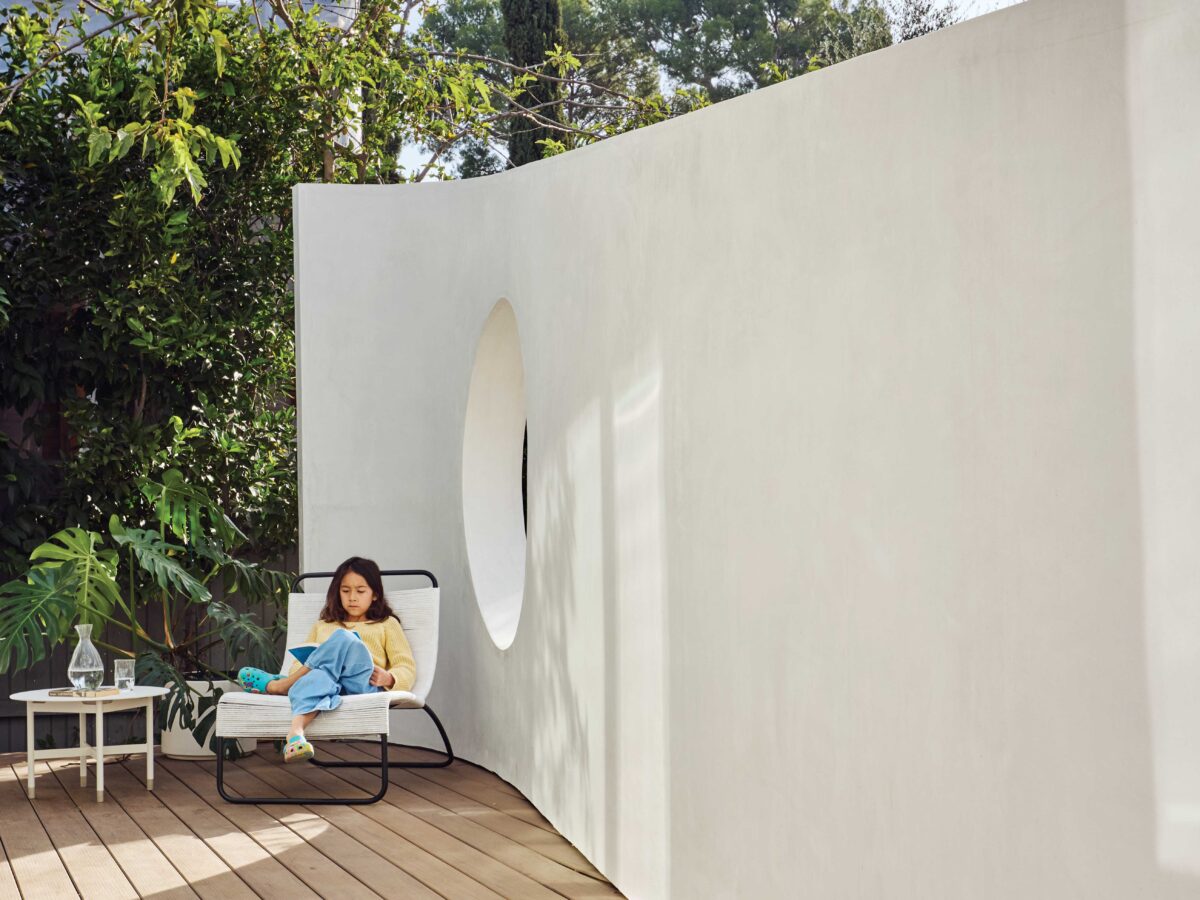
He started to play with curves along the front privacy wall that concealed a small deck outside the structure’s front door, creating sculptural lines, and added a circular window.
“I was dissatisfied with the design, so this was a result of iteration,” Wang says. “I didn’t set out to build this experimental thing, but it was reaffirming to me as an architect that it was a result of the process of working through challenges. I wanted my mom and her husband to have a little more outdoor space and more light, and that’s how it happened.”
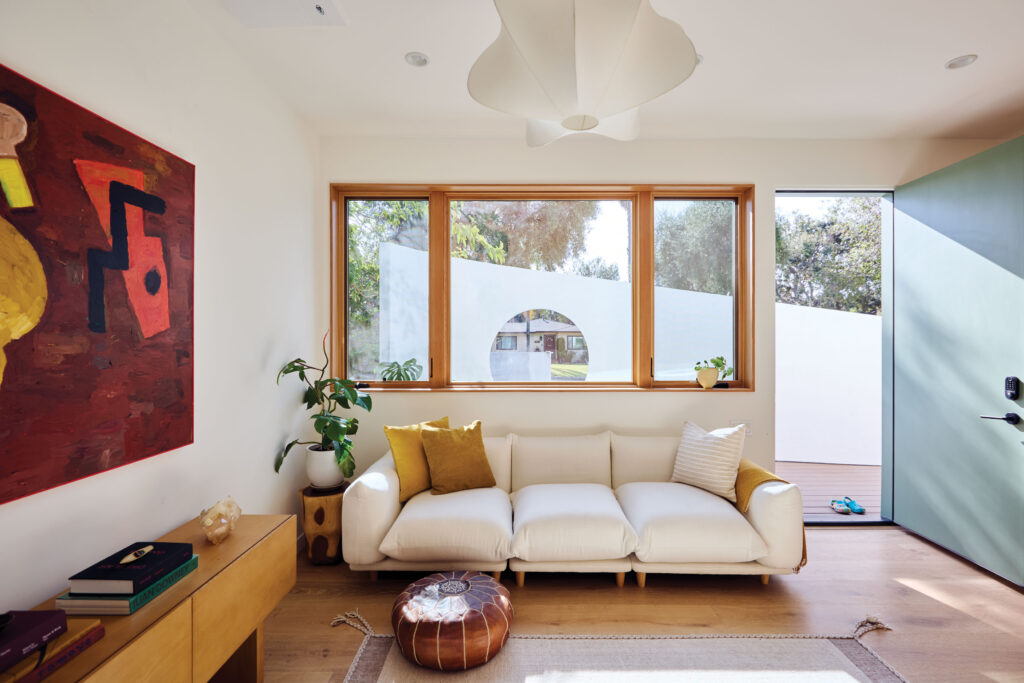
Inside, in addition to the basic requirements for a living space, there’s a small work area with built-in birch shelves, a wall of concealed storage, and a sleek bathroom with recycled Italian tile.

Thomas J. Story
Wang connected the 600-square-foot, one-bedroom house to the primary residence with a partially shaded walkway that leads to a flagstone and gravel courtyard. He also built a storage area to make up for the loss of the home’s garage, which is now blocked from the street and has become a family game room.
The construction was finished in 2023, and it was featured in the real estate section of the Times in the “Living Small” feature in July 2024. The family got to enjoy the benefits of multigenerational living—like live-in childcare and frequent family meals—for a year before yet another catastrophic event derailed their plans.
In January 2025, the Eaton Fires destroyed much of the city of Altadena and took a devastating toll on their community. While the Wang-Feng home is still intact, the family was evacuated because of air and water safety concerns and has not returned since. Wang, Kasimow, and their daughter stayed with Wang’s in-laws and friends initially, and then they found a rental to reside in while they continued to wait to return.
“It’s been the hardest six months of our lives, dealing with insurance every day, trying to work and take care of our 8-year-old daughter,” he says.
Feng has stayed back in Maryland and is eagerly awaiting her return. “She keeps asking me when she’s going to be able to come back,” he says. “Maybe just a couple of more months.”
Thomas J. Story
The tragedy has made Wang even more appreciative of the home he created and what he calls the “unintended positive consequences” of ADUs that people rarely talk about. Now the possibilities an ADU provides have come to the forefront of the conversation about how to rebuild the city and other communities impacted by wildfires and other natural disasters in a smart, safe, efficient way.
Even before the fires, California passed numerous bills to change the way ADUs are regulated, allowing cities and counties to choose whether owners could sell an ADU separate from the home, like a condominium, and lifting restrictions that stated owners had to live on-property to rent an ADU. It was an attempt to boost housing stock in a crunched marketplace.
Since January, even more initiatives have been put in place to streamline permits and construction. The Palisades and Eaton Fires in Los Angeles led Governor Gavin Newsom and Mayor Karen Bass to issue executive orders intended to streamline and expedite permitting for both primary residences and ADUs as a pathway for residents to return to their properties sooner, potentially living in a smaller temporary structure while they wait for their homes to be rebuilt. In a part of the world where safe and affordable homes, and tight-knit communities, were already in short supply, it’s a welcome shift in policy.
“For people like us who are getting our careers off the ground and have a young child, an ADU is ideal,” Wang says. “We built it so my mom could be close and help with our young daughter. We have so many friends in similar situations as us. They’re thinking about how they take care of aging parents and also afford childcare. Multigenerational living is prevalent around the globe, but we’ve lost that here.”

Thomas J. Story
The benefit of having a potential income stream for older residents who are struggling to stay in their homes, or having extra space to accommodate friends in need, are other potential positives that can’t be overstated.
“One of the things that came out of the fires was that it was a reminder of how important community is. Most people who got help received it from their community. We came together and helped each other. It’s a little more philosophical and abstract, but in a way, ADUs are a building block for community.”
Even without family concerns, an additional dwelling on a single-family lot can be a welcome refuge for friends when they need shelter, like so many families similar to Wang’s did.
“It takes a village. It’s really true,” Wang says. “And an ADU can be instrumental in building that village.”