How to Save Your Dying Container Plants This Summer
Six Ways to revive, refresh, and replant your patio pots with climate-smart, high-style solutions.

Courtesy of Rolling Greens
By midsummer, even the most devoted container gardeners across the West start to notice the signs: scorched leaves, bone-dry soil, drooping stems, or worse—plants that seem fine one day and gone the next. While in-ground beds benefit from cooler soil temps and deeper root zones, containers face the full brunt of summer’s heat. Pots heat up fast, dry out faster, and leave plants more vulnerable to stress. But just because your patio planters are struggling doesn’t mean it’s time to give up. This is the moment to pause, reassess, and refresh—with a few smart strategies that don’t require starting from scratch.
To guide us through this high-summer rescue, we’ve tapped two experts who know how to make container gardens work beautifully in Western climates: Greg Salmeri, co-founder and co-CEO at Rolling Greens, the design-forward L.A. nursery known for sculptural, climate-conscious styling; and author Lana Williams, whose book The Container Garden Recipe Book offers seasonal planting guides that prioritize both resilience and good looks.
One goal we all share this summer? Keeping our containers cool—and our gardens’ style intact. Let’s grow!
Know When It’s Heat Stress—Not Just Neglect

Excerpted from “The Container Garden Recipe Book” by Lana Williams (Artisan Books). Copyright © 2024. Photographs by Erin Scott.
When your container plants start to droop in the summer heat, it’s tempting to reach for the hose. But not all wilting is about thirst—sometimes, it’s heat stress. And watering at the wrong time (like during peak sun) can make things worse.
“Wilting during a heat wave usually means transpiration—water loss through the leaves—is outpacing absorption,” says Lana Williams. “Wait until evening to water so plants can actually take it in.” Leaf curling, cupping, or sudden drop-off are all signs your plant is stressed, not just neglected. “Fewer leaves mean less water demand,” she explains.
Salmeri agrees: “Heat-stressed plants look pale, withered, and stalled out. New growth is small or stops altogether.” A deep watering helps—but so does shade. “Sun protection is key.”
Even the container itself can add to the problem. “Plastic heats up and doesn’t breathe. Metal pots are the toughest—they trap heat,” says Salmeri. Terracotta or stone offer a cooler, more breathable alternative.
Quick cooling strategies:
- Elevate pots on gravel-filled saucers for airflow and humidity
- Use mulch to lock in moisture and insulate roots
- Choose larger containers for better soil moisture retention
- Add shade with umbrellas, sails, or taller companion plants
Rescue Dry, Compressed Soil Without Drowning It
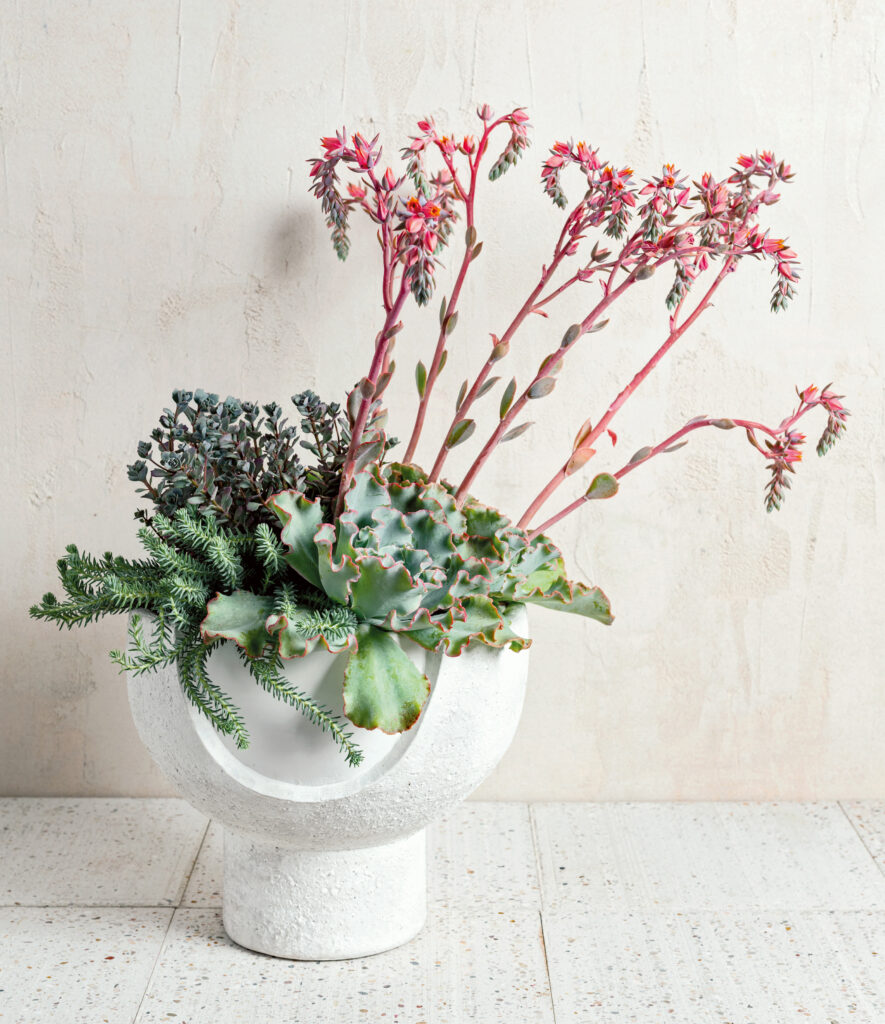
Excerpted from “The Container Garden Recipe Book” by Lana Williams (Artisan Books). Copyright © 2024. Photographs by Erin Scott.
When container soil gets too dry, it can turn hydrophobic—repelling water instead of absorbing it. A quick top-down watering won’t cut it. Instead, rehydrate slowly and strategically.
“For smaller pots, fully submerge the container in a bucket of water until air bubbles stop rising,” says Williams. “Let it soak, then drain thoroughly.” For medium containers, she prefers bottom-watering: “Fill the saucer and let water wick up. Pour off any excess after 30 minutes.”
For larger planters that can’t be moved, use a chopstick or skewer to poke holes in the soil, then water on a gentle trickle to help it absorb gradually. Salmeri adds: “Warm water can help, and loosening the top few inches makes a big difference.”
Once rehydrated, refresh the top layer with a mix of new potting soil or compost. Not ready to toss your soil? “You can extend its life by adding food-based mulch or a handful of worm castings,” suggests Salmeri. This slow, steady soak approach revives your pot without shocking the plant—and sets the stage for stronger summer growth.
When to Prune, Chop, or “Overpot”

Courtesy of Rolling Greens
If your container garden is looking overgrown, bloomed-out, or just plain tired, mid-summer is the moment to get hands-on. Light pruning, a strategic haircut, or even a full repot can give plants the breathing room they need to thrive through late summer.
Let’s start with the basics: deadheading. “With annuals or continual bloomers like cosmos and petunias, deadheading is key to encouraging new blooms,” says Williams. “For perennials like lavender or catmint, a harder chop, just an inch or two below the spent flowers, can spark fresh growth and a possible second bloom.”
Then there’s “overpotting”—the process of placing your current pot inside a slightly larger one. It’s not just a styling trick. It helps buffer roots from extreme heat, especially when outer pots are ceramic or terracotta. Just make sure the outer container drains well, or you’ll risk waterlogged roots.
If your plants are drying out too quickly or roots are poking out of drainage holes, it’s time for a bigger home. Williams points out that “tightly packed roots can press against hot pot walls with little insulation, making plants more vulnerable to heat stress.” Salmeri agrees: “Look for brown leaf tips, slow growth, and yellowing. When roots circle the pot, it’s time to size up, typically by two pot sizes.”
For more heat-proofing? Try a terracotta olla, an unglazed vessel buried in the soil that slowly wicks water to the roots—an ancient technique with modern relevance for pots and garden beds alike.
Refresh Without Replanting: Topdress Like a Pro
Sarah Sherman Samuel
Sometimes all your containers need is a refresh—not a full reset. Topdressing is an easy, high-impact trick that instantly improves the look of your pots while helping them perform better through the hottest stretch of the year.
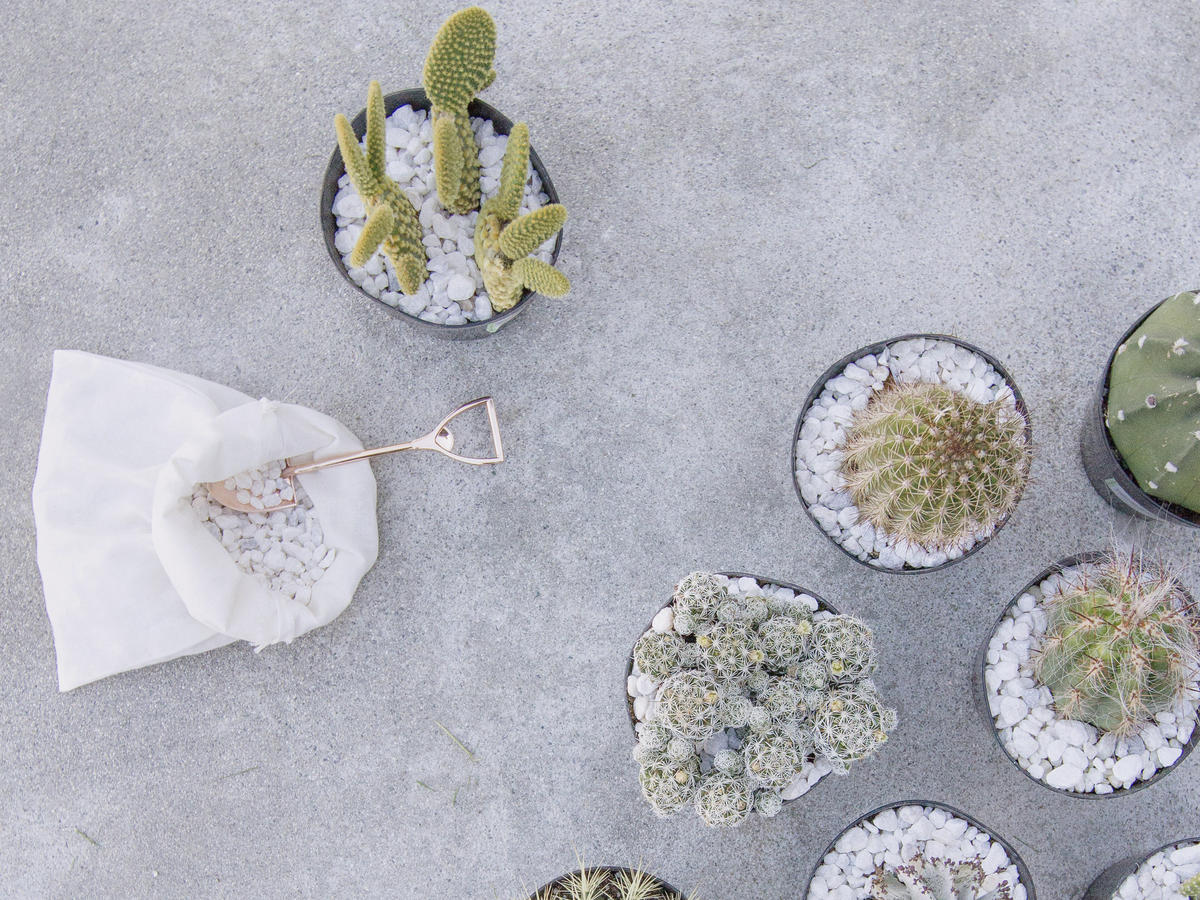
“I’m an avid topdresser,” says Salmeri. “Mulch or decorative gravel retains moisture and gives containers a finished, sculptural feel.” His go-to materials? Earthy gravel or brown mulch—nothing too flashy, but always intentional. Even a simple sweep of new topdressing can revive the whole scene.
Williams often turns to moss, pale gravel, or her favorite: living groundcovers. “They soften the look of the container and help regulate soil temperature by shading the surface,” she says. “It reduces moisture loss and keeps roots cooler during hot summer days.”
As for what to avoid: Skip dyed mulches or anything too dark, which can absorb and amplify heat. “Black mulch can leach chemicals into the soil,” Williams warns.
Plan on refreshing your mulch once a year—more often for organic materials like bark, straw, or moss, which decompose over time and may harbor pests. In contrast, gravel or stone may last several seasons with only minor touch-ups.
Think of topdressing as the finishing touch your containers didn’t know they needed—part skincare, part style upgrade.
Summer Stars: Heat-Loving Plants That Still Look Chic
Excerpted from “The Container Garden Recipe Book” by Lana Williams (Artisan Books). Copyright © 2024. Photographs by Erin Scott.
Container gardening in summer doesn’t have to mean survival mode. The right plants can take the heat and look good doing it. From sculptural succulents to vibrant bloomers and even edible showstoppers, midseason is the time to swap out fading spring plants for resilient, high-style performers.
Start by planting with your region in mind. Both Williams and Salmeri agree on climate-tough basics:
- Southern California & Southwest: Agave, trailing rosemary, hot-weather peppers, and citrus
- Pacific Northwest: Ornamental sedges, prostrate herbs like thyme, and lavender
- Mountain West: Heat-tolerant yarrow and cold-adapted herbs
Williams swears by a trio she returns to season after season: “A mix of grasses, succulents, and agaves. The grasses soften the architectural forms of succulents, and they’re drought tolerant—great if you head out of town for a bit.”
Salmeri echoes this logic with a Mediterranean palette of Italian cypress, bougainvillea, yucca, and cascading donkey tail. “Grouped in threes, it’s a dramatic, low-maintenance combo that lasts through the seasons.”
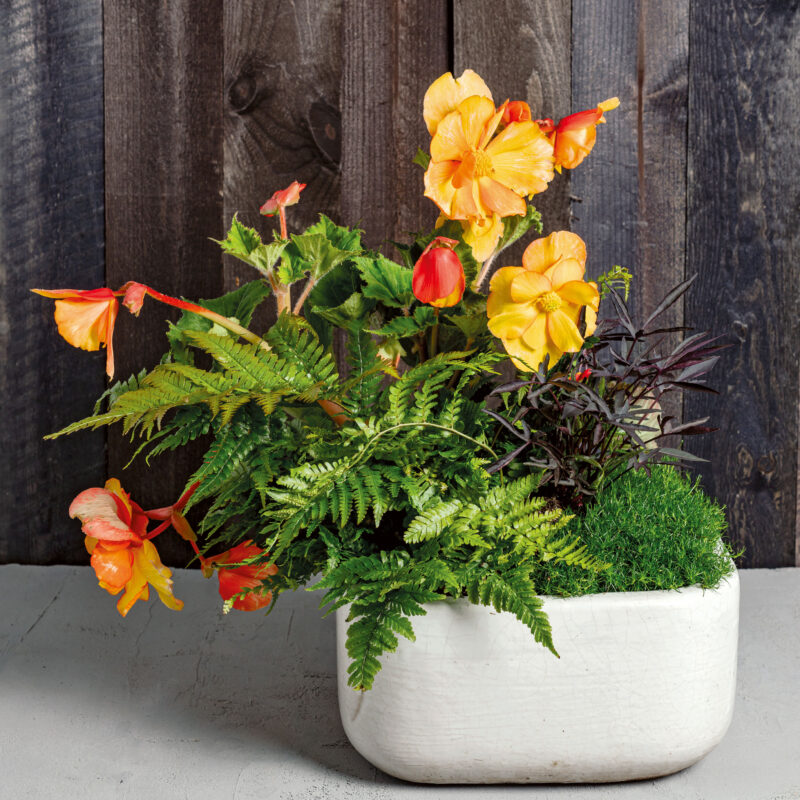
Need color? Sun begonias, petunias, and salvias deliver—but they’ll demand daily water. Want something edible and ornamental? Think dwarf citrus, pomegranates, or even artichokes. Salmeri recently experimented with bitter melon on a trellis: “Stunning through October,” he notes.
Design-Forward Cooling Tricks
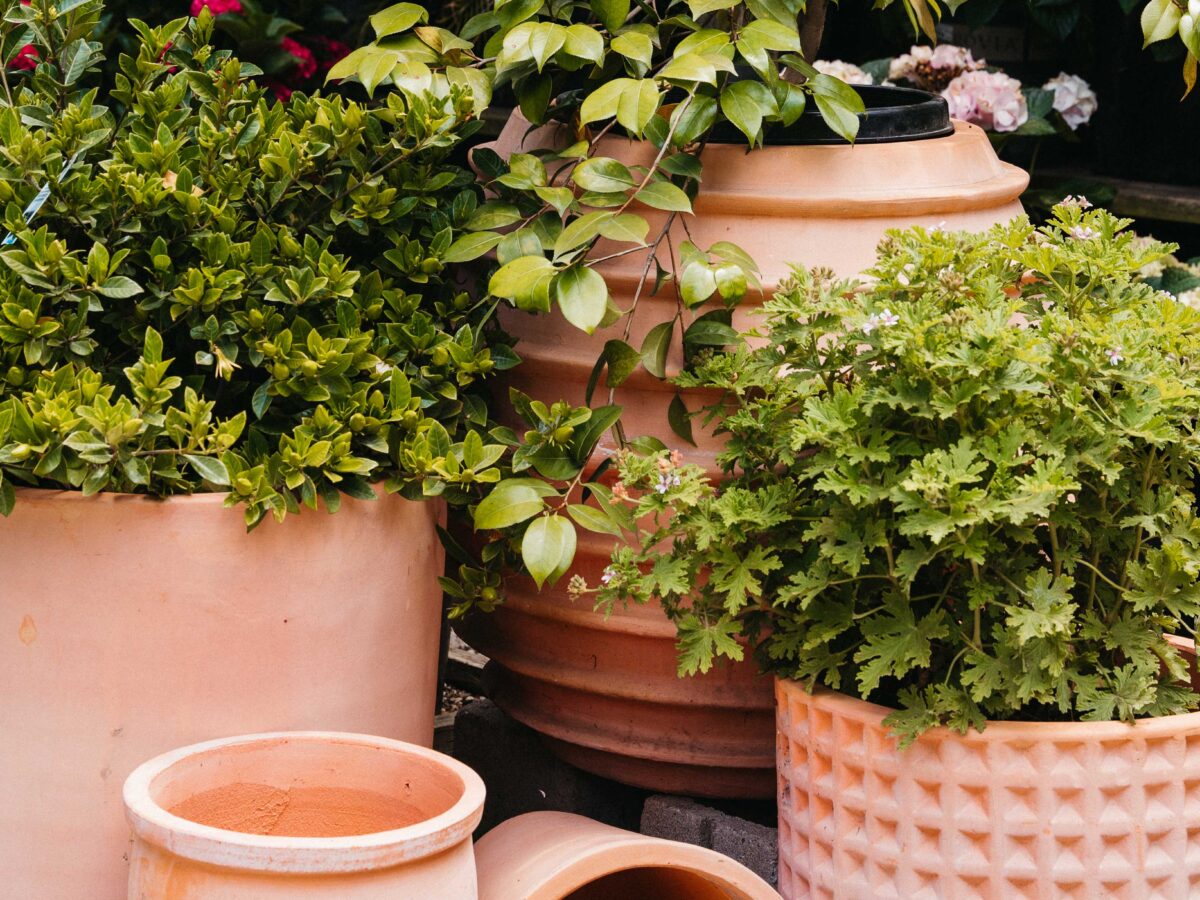
Courtesy of Rolling Greens
Not all heat solutions have to be utilitarian. With a few well-placed containers, some thoughtful material choices, and a touch of design savvy, you can create your own stylish microclimate—no power tools or plastic shade cloths required.
Groupings aren’t just for aesthetics. “Clustered containers buffer one another from heat, wind, and intense sun,” says Williams. “Taller plants or pots can provide partial shade for smaller ones, while trailing plants act like living mulch, insulating the soil.” She recommends positioning heat-sensitive pots near north-facing walls, beneath pergolas, or in dappled tree shade for added relief during peak afternoon sun.
Salmeri takes a similar approach, especially in Mediterranean and desert-inspired designs. “Include one larger shade-providing container, like a 15-gallon olive tree, and place smaller cacti or succulents nearby.” For an extra cooling boost, he suggests placing plant groupings near a water feature: “It helps lower ambient temperature and creates a calming focal point.”
Material also matters. Williams prefers white-painted concrete pots in full sun. “They reflect light, reduce heat absorption, and slow evaporation,” she explains. A modern urn shape elevates roots off hot ground surfaces.
When it comes to built shade, Williams recommends pergolas or umbrellas fitted with shade cloth or climbing vines—versatile solutions that can adapt throughout the day. Salmeri prefers to work with the landscape: “We’d rather position plants under trees or existing overhangs than use mobile shade solutions—they distract from the plants themselves.”
Containers cooling down? Here’s to a second summer wind—and pots that bounce back in style.
Get the Book

Excerpted from “The Container Garden Recipe Book” by Lana Williams (Artisan Books). Copyright © 2024. Photographs by Erin Scott.
We only recommend things we love. If you buy something through our site, we might earn a commission.