
Nepeta x faassenii (catmint)
Catmint Lamiaceae (Labiatae) Deciduous, Perennials
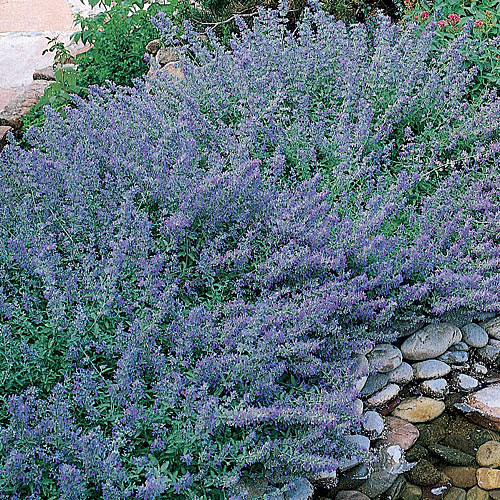
Nepeta x faassenii (catmint)
Vigorous, spreading members of the mint family with aromatic foliage. With the exception of catnip (N. cataria), these plants are valuable for their spikes of two-lipped blue or blue-violet (or sometimes pink, white, or yellow) flowers. As soon as blossoms fade, shear the plants back by half or cut faded flower stems to the ground to encourage rebloom. (Most species seed freely and can become invasive if spent flowers are not removed.)
Plants make attractive, informal low hedges or edgings. In winter or early spring, cut out last year’s growth to make way for new stems. At that time, you can also divide clumps for increase, though it’s easy to start new plants from cuttings (take them before flower buds form). When buying named varieties, be sure to obtain cutting-grown plants; seedlings vary in flower color and habit. In cold-winter climates, nepetas are occasionally used as a substitute for lavender (Lavandula) in borders and edgings. Most species resent heat combined with high humidity. In desert Zones 12 and 13, most are best treated as winter annuals. They tolerate regular moisture if the soil is well drained.