We Bet You’ve Never Thought of Preserving Flowers Like This Before
From sage leaves to dahlias, learn this meditative technique.
Taken from Casting Flowers© Copyright 2025 by Rachel Dein, photographs by Éva Németh. Published by Timber Press, Portland, OR. Used by permission of the publisher. All rights reserved.
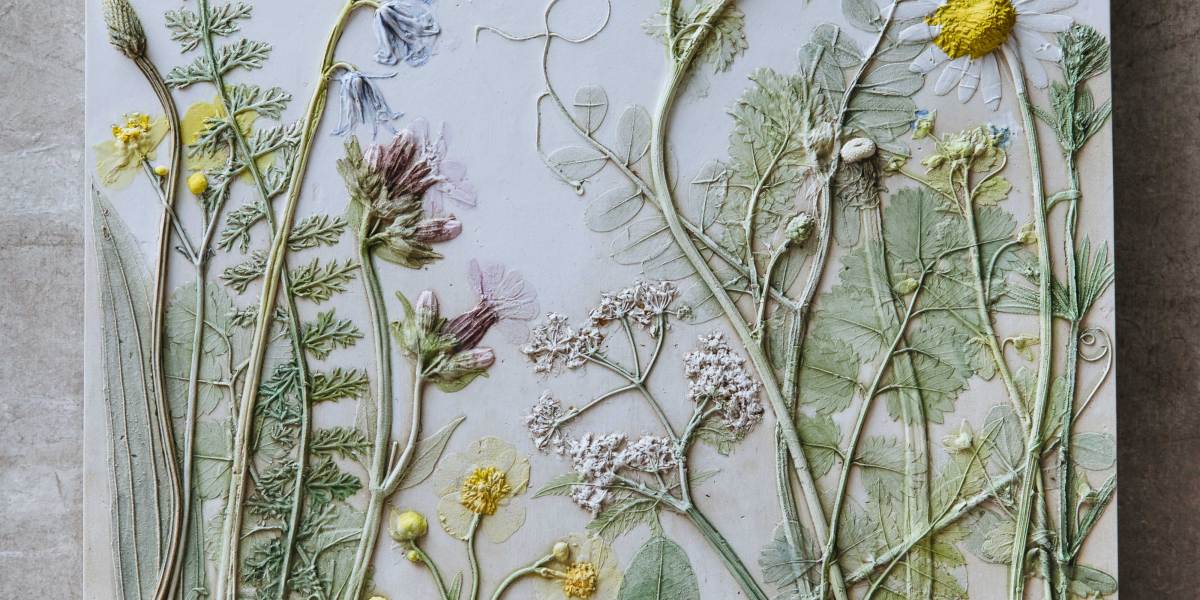
As the final flush of summer color brightens West Coast gardens—think dahlias, cosmos, salvias, and sunflowers—it’s hard not to wish the season would linger a little longer. While pressed flowers and dried bouquets offer one way to hold onto those fleeting moments, London-based artist Rachel Dein has perfected another: botanical bas-relief, a process of casting plants in plaster or concrete so their delicate details are immortalized forever.
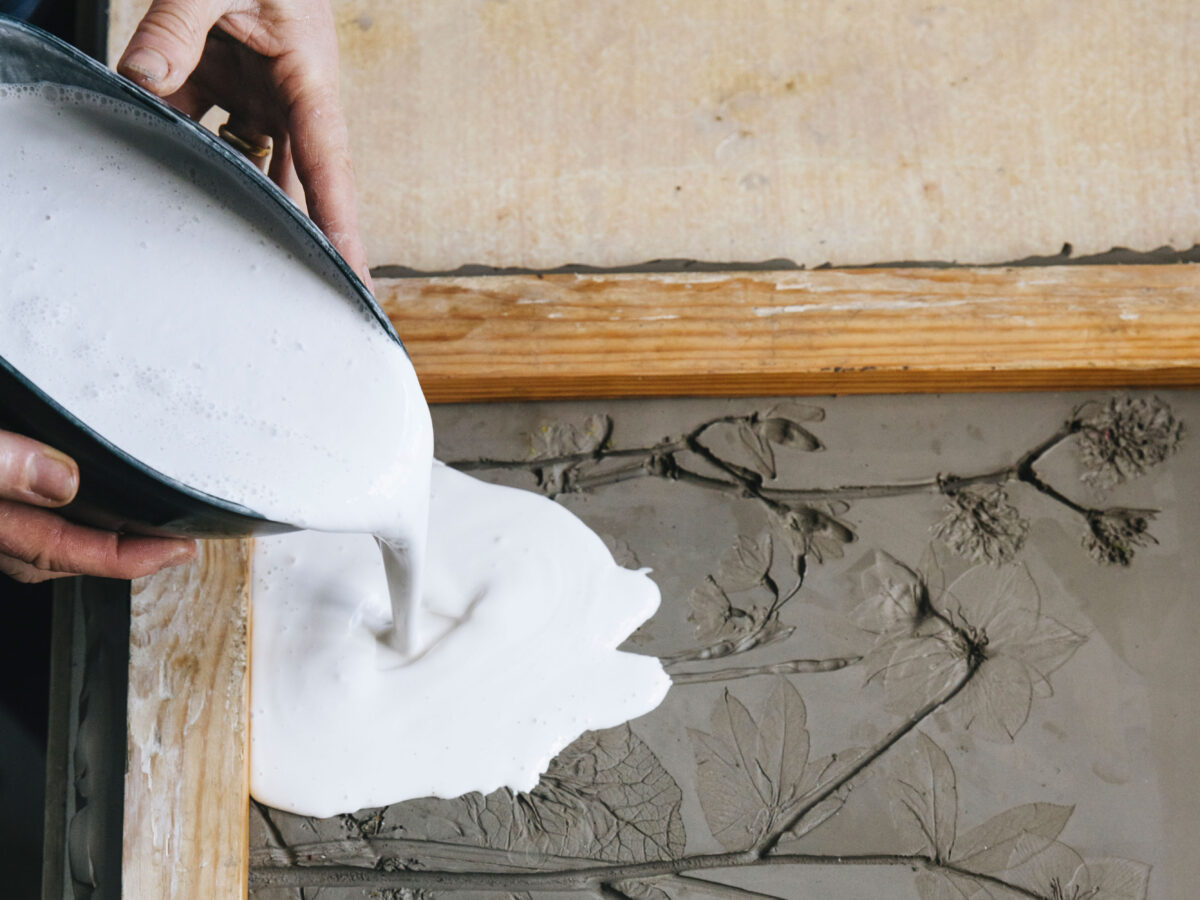
Dein’s new book, Casting Flowers: A Step-by-Step Guide to Creating Beautiful Botanical Art, is both an invitation and a manual for gardeners, crafters, and artists alike to preserve the garden in sculptural form. Her method is simple: Press flowers or foliage into clay, pour plaster, and after drying, reveal a fossil-like impression that captures every vein, bud, or petal curve. Whether it’s a single stem or a bouquet of blooms, these results are a lasting record of a season in your garden.
Finding Inspiration in the Garden
Taken from “Casting Flowers”© Copyright 2025 by Rachel Dein, photographs by Éva Németh. Published by Timber Press, Portland, OR. Used by permission of the publisher. All rights reserved.
Over the past decade, Dein has deliberately chosen plants for her own garden knowing how they will translate into her art. “I planted mahonia ‘Soft Caress’ for its beautifully shaped leaves,” she says. She also treasures poppies, passed on by a neighbor, noting that “the leaves in particular were very effective when cast.”
She admits that some plants have surprised her. “Forget-me-nots have been surprising. I’d dismissed them as not very interesting but actually the leaves have a rough texture and on closer observation the way the buds are curled up is pretty and reminds me of comfrey,” she says. Others, like roses, are more challenging—unless they’re open-spray varieties where the stamens are visible.
For Western gardeners, this is the perfect time to preserve peak-season flowers. Sturdy blooms such as cosmos, rudbeckia, zinnias, or Japanese anemone cast beautifully, as do herbs like sage, lavender, or rosemary. Even seedpods and ferns offer intricate detail, especially when combined with flowers in compositions.
Capturing a Season
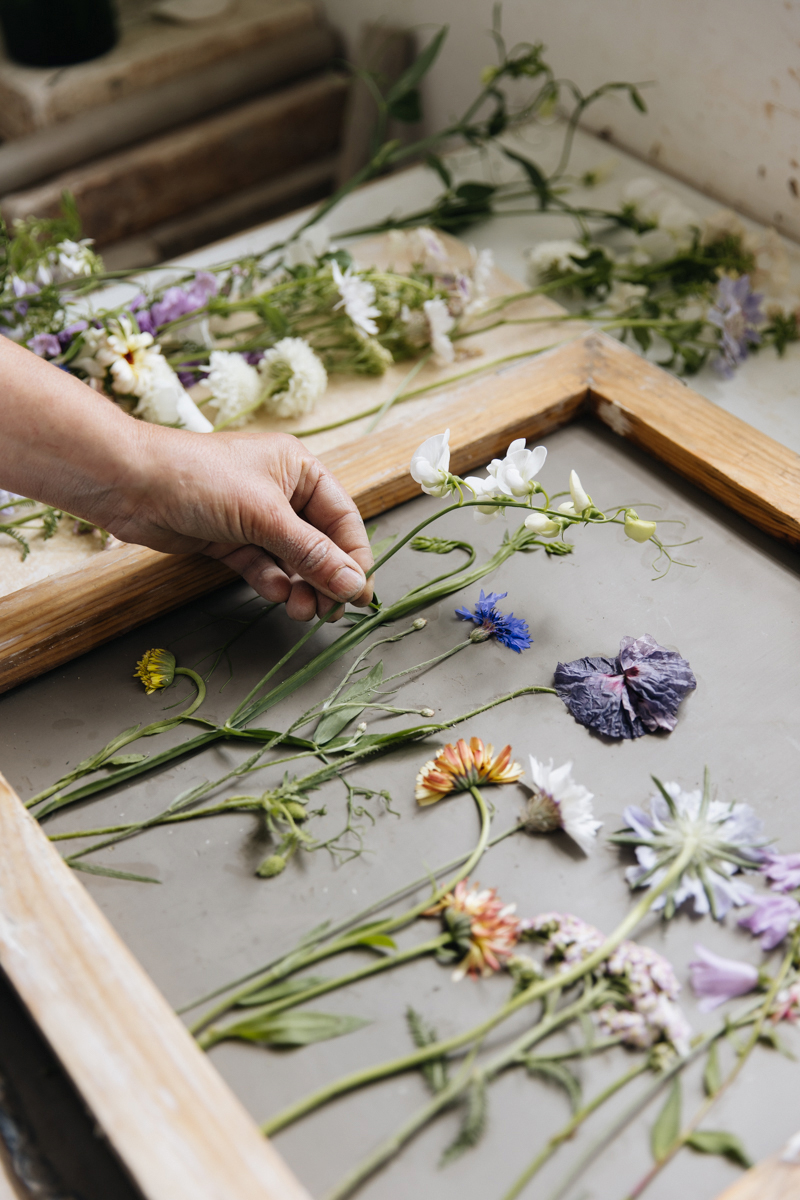
Taken from “Casting Flowers”© Copyright 2025 by Rachel Dein, photographs by Éva Németh. Published by Timber Press, Portland, OR. Used by permission of the publisher. All rights reserved.
The ephemeral nature of gardening is what makes botanical casting so meaningful. Dein embraces the seasonality of her work: “It’s inevitable that one can only cast what is in season. This trains me to enjoy the moment and comfort myself that they will return.”
For West Coast gardeners, that could mean casting fiery dahlias in late August, a final bouquet of cosmos in September, or even fragrant sage leaves as the first rains arrive. Dein is equally fond of foliage as flowers: “I think I use an equal number of leaves (if not more leaves than flowers) as that’s how nature presents itself. The flowers are like the jewels in a necklace.”
These pieces can also become memory keepers. Dein recalls casting flowers from her mother’s garden, preserving wedding bouquets, and even capturing a clematis Montana the day before her father died. Each piece becomes a tangible reminder of a moment, a person, or a place.
The Process
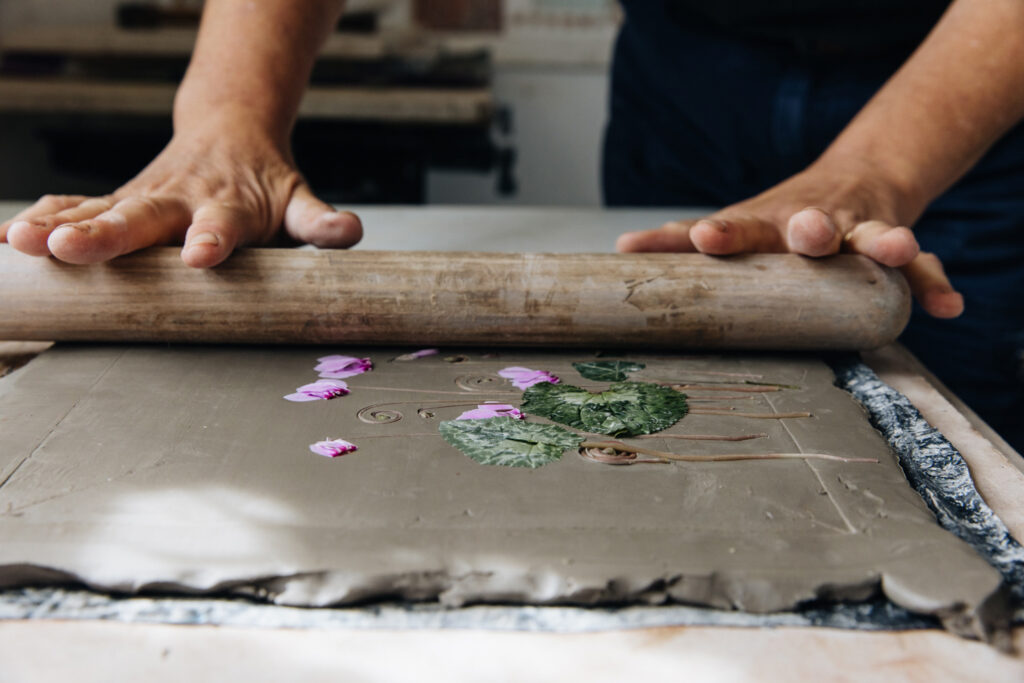
Taken from “Casting Flowers”© Copyright 2025 by Rachel Dein, photographs by Éva Németh. Published by Timber Press, Portland, OR. Used by permission of the publisher. All rights reserved.
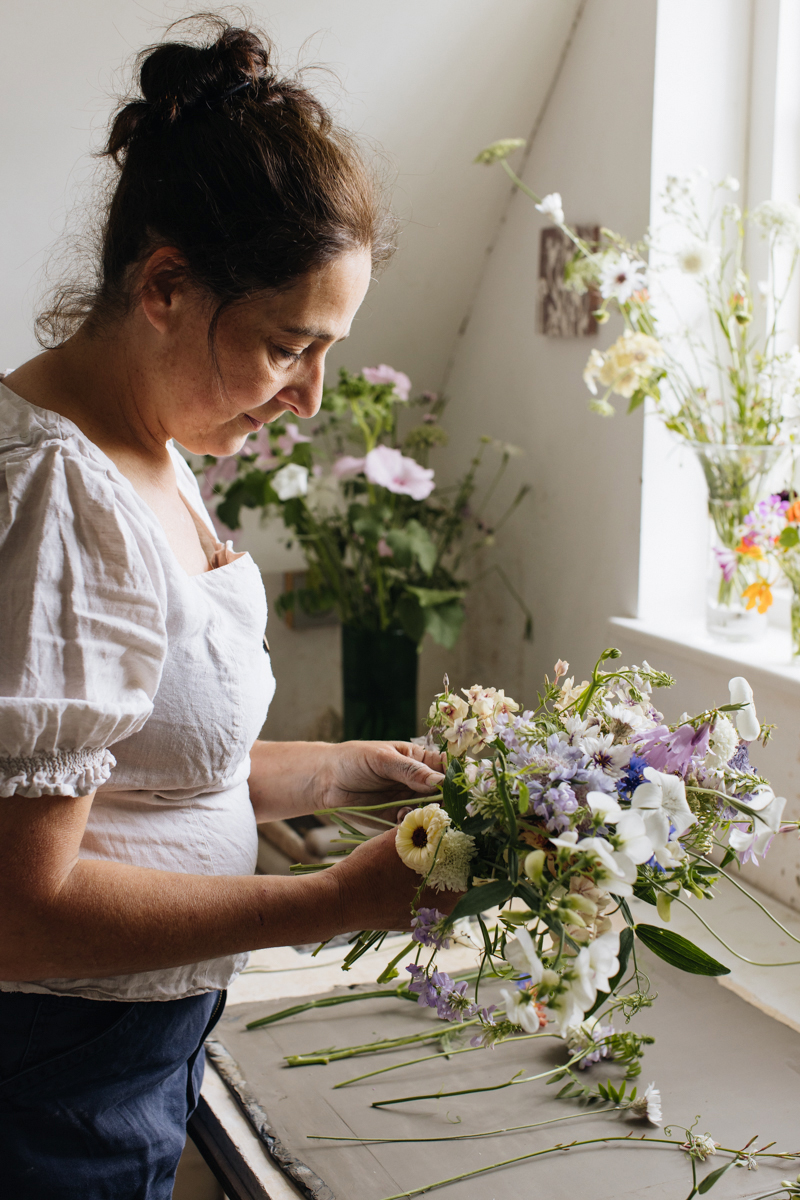
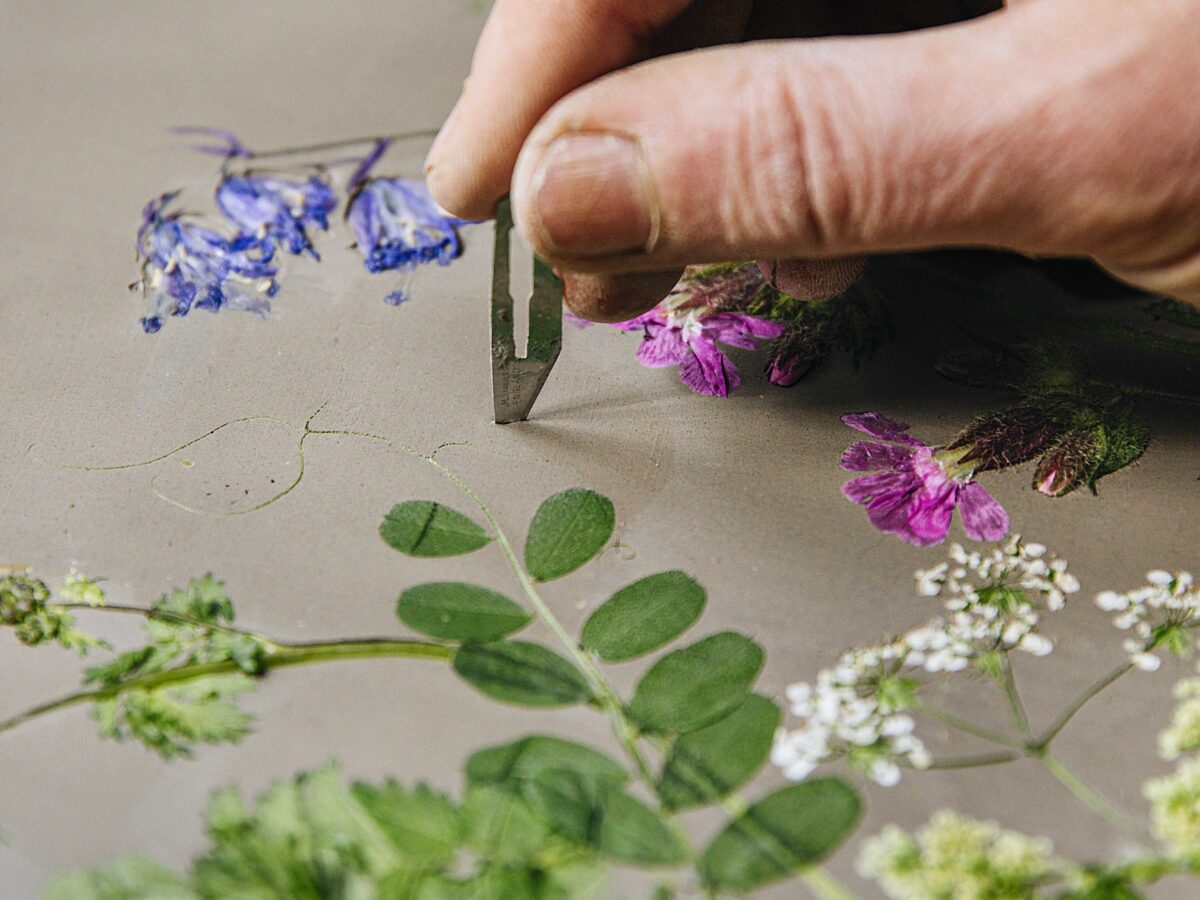
Though her finished pieces look intricate, the process is accessible to beginners. “The small pieces that people will start with are easy and immediately satisfying,” she says. She describes the act as calming and meditative: “Preparing the clay, getting it flat and smooth helps me to get ready mentally. The process of removing the flowers and foliage is mechanical but you have to focus. I get into a zone where I can be perfectly in tune.”
The beauty of this method is that it encourages close observation. Even imperfections—a petal nibbled by insects, a bent stem—add to the uniqueness of the final cast. As Dein puts it: “There is also a beauty there to be appreciated.”
Ideas for Display
Taken from “Casting Flowers”© Copyright 2025 by Rachel Dein, photographs by Éva Németh. Published by Timber Press, Portland, OR. Used by permission of the publisher. All rights reserved.
Once complete, botanical casts can live anywhere:
- Small plaster tiles make an elegant shelf or windowsill decor.
- Wall panels turn a seasonal moment into art.
- Garden markers or outdoor panels connect the artwork back to the landscape.
- Keepsakes from milestone events—like a wedding bouquet—carry personal meaning.
Some artists leave the plaster raw and white, others experiment with washes of color. Dein encourages experimentation: “It’s impossible to create identical casts as the plants used each time are unique. In essence every time a cast is made it’s an experiment, a new creation.”
A Beginner’s Flower
Taken from “Casting Flowers”© Copyright 2025 by Rachel Dein, photographs by Éva Németh. Published by Timber Press, Portland, OR. Used by permission of the publisher. All rights reserved.
For those just starting out, Dein recommends keeping it simple. “A daisy perhaps! Any flower with a center e.g. cosmos, Japanese anemone, or daisy. But my favorite beginner’s plant to cast is a sage leaf… it casts beautifully.” The added bonus? Sage is a staple in many West Coast gardens, and each impression reveals intricate textures unchanged since Leonardo da Vinci himself experimented with nature printing centuries ago.
Inside the Book
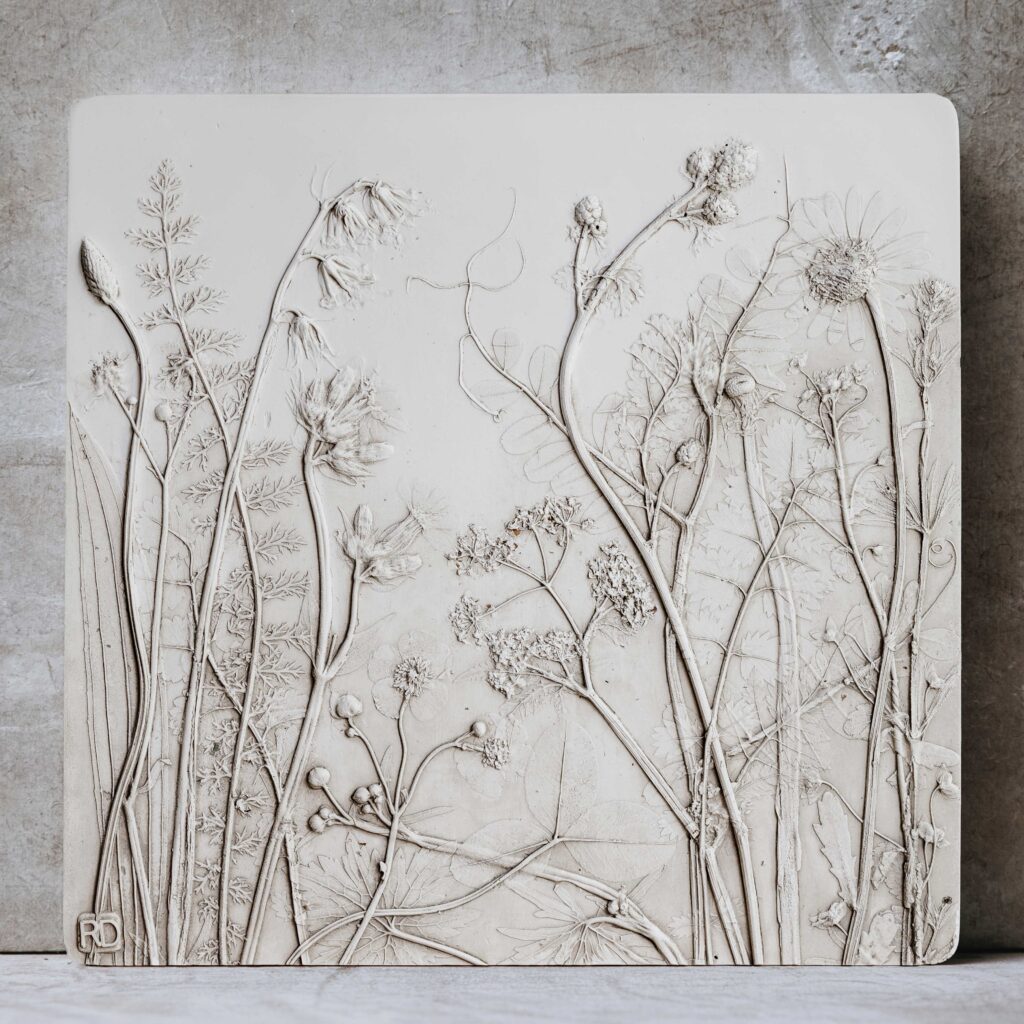
Taken from “Casting Flowers”© Copyright 2025 by Rachel Dein, photographs by Éva Németh. Published by Timber Press, Portland, OR. Used by permission of the publisher. All rights reserved.
In Casting Flowers, Dein shares her journey with botanical bas-relief while offering clear, approachable instructions. “I hope readers will discover a hobby to enjoy, a bit of history about nature printing, and my story too,” she says. Beginners can start small, working with 12- to 15-centimeter tiles. “A single flower for the smallest tile, and a grouping of flowers for the larger 15-centimeter piece. These look great either hung on a wall or balanced on your shelf or windowsill.”
The book also includes projects for larger compositions and painted finishes, with plenty of room for personal creativity. “Each time the results will get better,” Dein notes. “Even a bit of aromatherapy [can be] included—if using aromatic plants!”
We only recommend things we love. If you buy something through our site, we might earn a commission.
Keep Reading:
The Latest