
Iain Bagwell
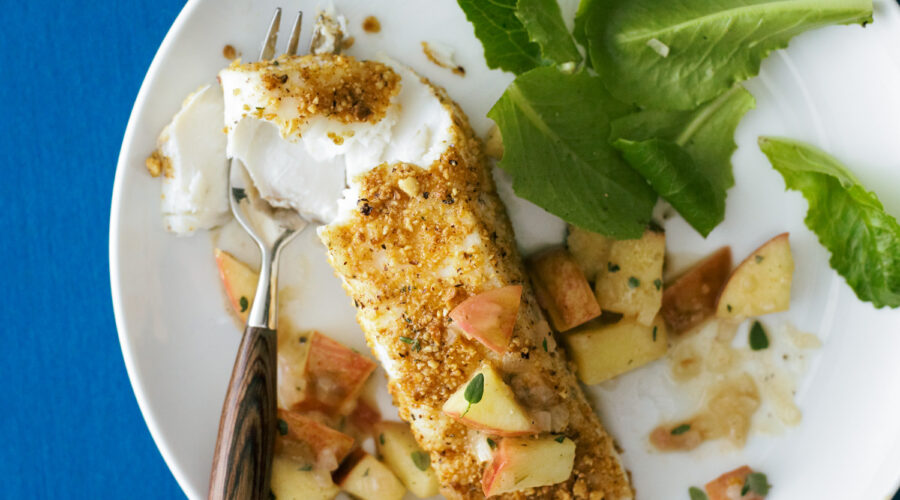
What’s more fall than a salsa made of apples? The apples are seared slightly alongside chopped shallots before being tossed in a dressing of lemon juice, dijon mustard, and fresh herbs. The texture plays nicely alongside the hazelnut crust on a soft white fish like halibut.
This recipe, and others like it, can be found in the article “The Recipes You Should Be Cooking This November.”
Preheat oven to 425°. Make crust: Whirl ingredients in a food processor until nuts are finely chopped.
Make fish: Brush halibut with butter, pat nut mixture all over fish, and set on a greased baking sheet. Cook just until fish is opaque in center, 10 to 15 minutes.
Make salsa: Heat oil in a medium frying pan over medium-low heat, add shallots and apple, and cook until slightly softened, about 2 minutes; remove from heat. In a small bowl, whisk together lemon juice and remaining ingredients; stir into apple mixture. Serve halibut with apple salsa and sprinkle with a little more thyme.
Note: Nutritional analysis is per serving.
0 servings
* The % Daily Value (DV) tells you how much a nutrient in a serving of food contributes to a daily diet. 2,000 calories a day is used for general nutrition advice.