
Photo: Annabelle Breakey
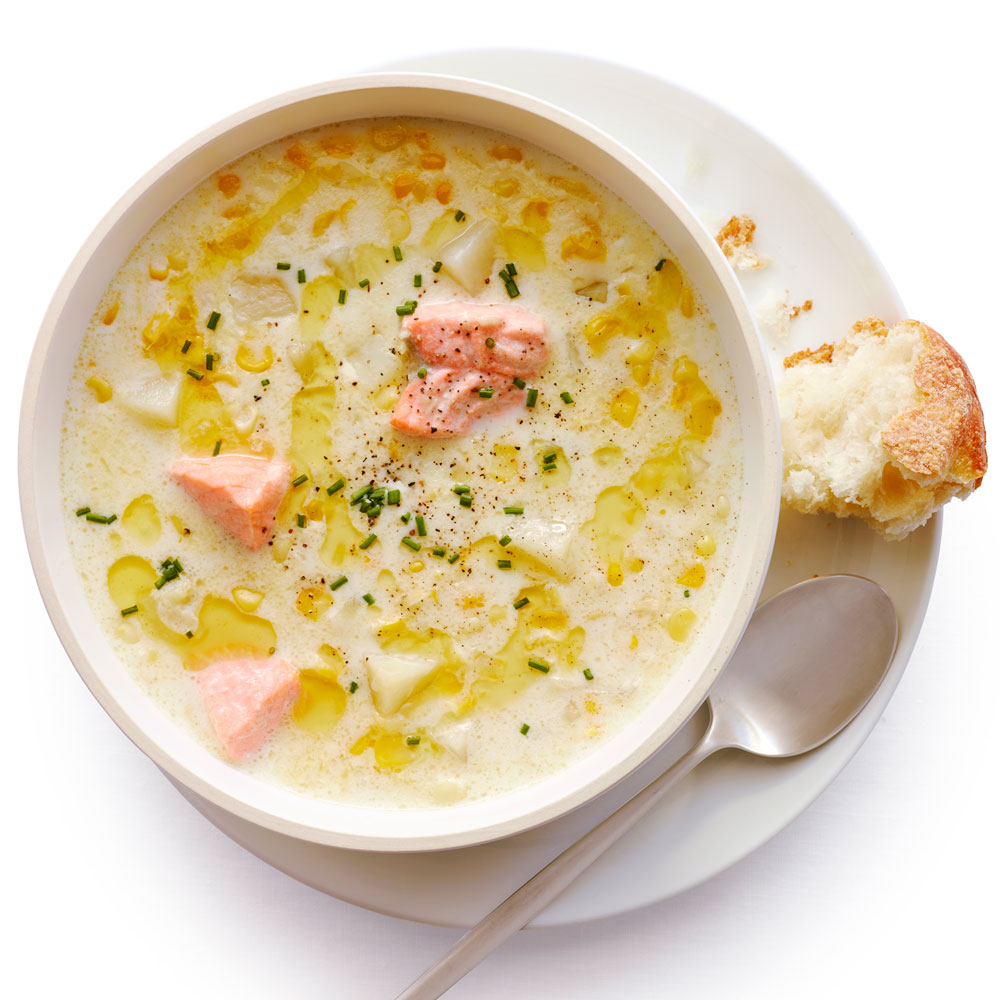
The secret to this hearty soup is its flavorful broth, made with the corncobs. The kernels add extra corn flavor and crunch.
This recipe, and others like it, can be found in the article “These Salmon Recipes Are Perfect for Nights When You Don’t Know What to Cook.”
Photo: Annabelle Breakey
Shuck corn, then stand each ear on its fat end in a deep bowl and slice kernels off ears into bowl. Set aside.
Cut cobs in half and put in a medium saucepan. Add 2 cups water and bring to a boil over medium-high heat. Boil, uncovered, while you prepare the chowder.
Melt butter in a large saucepan over medium heat. Add shallot, potato, and garlic and cook, stirring constantly, until shallots soften, about 2 minutes. Add flour and cook until flour is no longer raw, 2 minutes.
Slowly whisk 1 cup of the corncob water (discard the rest) into pan, then whisk until mixture is free of lumps. Add milk and half-and-half, corn kernels, salt, and pepper and bring to a simmer over medium heat. Cook, stirring, until mixture thickens slightly and potatoes are soft, about 5 minutes.
Meanwhile, cut salmon into 1-in. dice. Add to chowder and cook until salmon is just cooked through, 2 to 3 minutes.
Pour soup into four bowls and sprinkle each with some chives.
0 servings
* The % Daily Value (DV) tells you how much a nutrient in a serving of food contributes to a daily diet. 2,000 calories a day is used for general nutrition advice.