
Upcycled shipping containers are the new trend in prefab architecture. Take a peek at 8 of the West's most innovative applications
Architect Paul Rudolph once called the mobile home the 20th century brick; the shipping container may well be taking its place in the twenty-first. Like heavy Legos, shipping containers made of steel or aluminum can be used as an inexpensive, and stronger than average, building block. Resistant to such forces as hurricanes, tornadoes and earthquakes, containers are naturally suited to such humanitarian projects as post-disaster housing and community centers but their versatility has also captured the imagination of designers and architects worldwide who’ve used them for everything from highrises to rustic cabins. In fact, there are enough cool container structures around to constitute a movement: some call it Cargotecture.
Leger Wanaselia Architecture
Berkeley, CA
“There is so much high-quality waste in our society.” says Cate Leger, principal of Leger Wanaselja Architects, a firm which
has long been fascinated with reuse. “Shipping containers are an excellent example.“ Using them as a building material is
a cost effective way to build a house with a very low environmental footprint—this light-filled residence in Berkeley, CA
is one great example.
Office of Mobile Design
Los Angeles, CA
When life gives you lemons, make lemonade, right? That’s what designer Jennifer Siegal did when a client asked her to build
on the site of a former junkyard in downtown Los Angeles. Where most would have carted everything away, Siegal salvaged containers
and other materials from the site, then integrated them seamlessly into this bold, modern home.
HyBrid Architecture
Aberdeen, WA
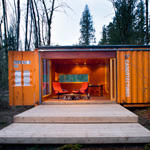
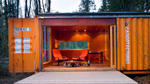
HyBrid Architecture has a crush on the container, using it for everything from backyard studios to Cargotown, a design scheme
they’ve proposed for Seattle’s new waterfront. The c320 Studio was commissioned in 2005 by the owner of an organic farm in
the Pacific Northwest. HyBrid designed this 320-square-foot retreat for the property’s most scenic corner, providing a sort
of escape without leaving town. The architects thought the installation would take about ten hours, says HyBrid principal
Robert Humble, but “it actually took about three hours, and then everyone had lunch and enjoyed the new home around us!”
Lisa Lee Benjamin & John Little (Urban Hedgerow)
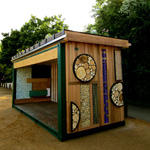
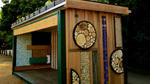
A collaboration between San Francisco’s Lisa Lee Benjamin and “a team of inventive, kooky Brits,” Green Roof Shelters explores
what is possible to create from our existing resources. This prototype is one of a planned series of designed habitats made
expressly for insects and birds.
Office of Mobile Design
Venice, CA
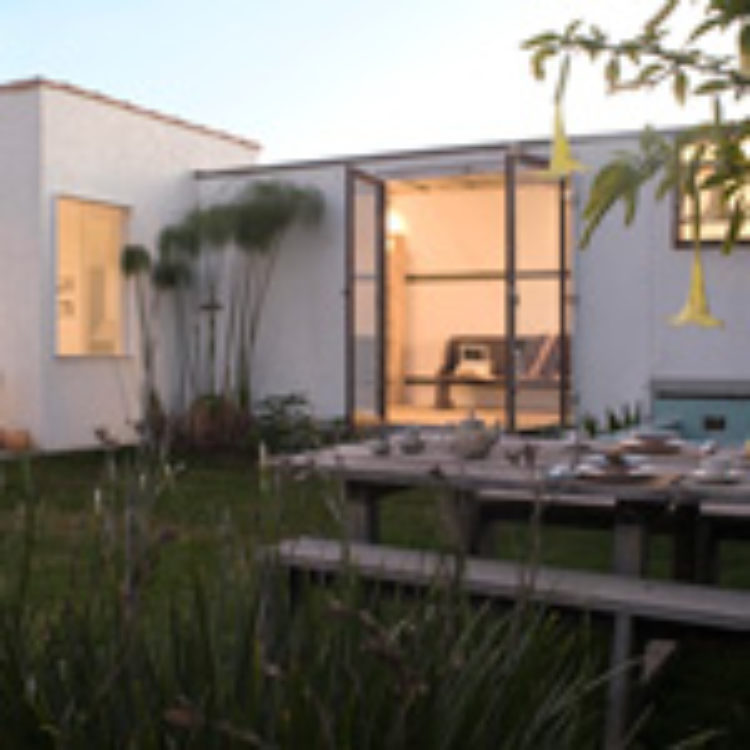
It’s fitting that the author of Mobile and More Mobile would embrace trailers and shipping containers in her work. Designer Jennifer Siegal, well-known for her inventive prefab
and portable structures, craned a drop-frame trailer into her Venice backyard to create this beautiful backyard addition.
”Their mass production quality,” she explains, “can easily be customized to endless situations.”
Gensler Architects
Catalina Island, CA
As reliable as a troop of Boy Scouts, shipping containers were the perfect building block for the eco-cabins Gensler designed
for them. As architect Richard Hammond explains, “What we liked about containers we kept, what we didn’t like we changed.”
Cheap, readily available and incredibly sustainable, Gensler’s cabins lay lightly on the land and are a fun and comfy teaching
tool for the scouts they stylishly shelter.
Eco Tech
Joshua Tree, CA
A proponent of green design since the early days of the solar movement, architect Walter Scott Perry has always incorporated
the idea of reusing and repurposing materials into his design philosophy. The container, says Perry, “represents a great opportunity
to create sustainable, low-cost and aesthetically attractive housing that can be shipped easily and quickly anywhere in the
world.” This dramatic residence in Joshua Tree, the first repurposed container home permitted and built in the Mojave Desert,
is one great example.
building Lab inc
Oakland, CA
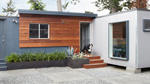
Stephen Shoup’s sleek backyard office is all about reuse. In addition to the metal shipping container that once sat at the
Port of Oakland, the resourceful architect also used a discarded freezer, a door acquired from a salvage yard, and made a
window from a former sliding door. The interior embraces sustainability as well with such green features interior walls clad
with reclaimed fir and a rooftop solar hot-water system to heat the space.

Printed from:
http://www.sunset.com/home/architecture-design/cargotecture-movement-00418000072338/
Copyright © 2013 Sunset Publishing Corporation. All Rights Reserved. Use of this site constitutes acceptance of our Terms of Use and Privacy Policy ( Your California Privacy Rights). Ad Choices