
Lawns and the alternatives
Traditional lawn, synthetic lawn, native grasses, and drought-tolerant blends ― the pros and cons
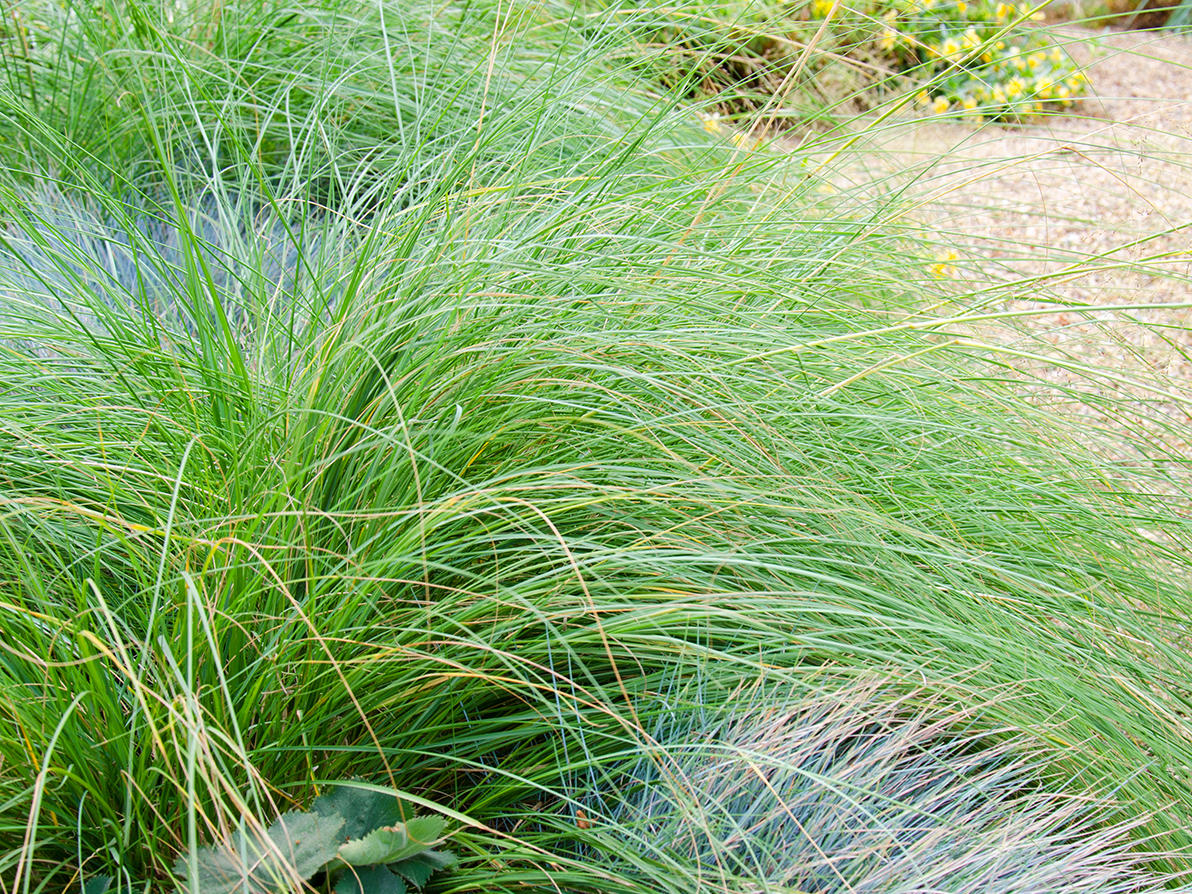
Many grasses—both native and non-native—are incredibly successful in a drought. Shown here: Festuca 'Idaho Blue', Sporobulus aeiroides, and Carex testacea. (Andrea Hurd)
WATER USE
Traditional lawn (Kentucky bluegrass, fescue, Bermuda grass) The amount of water needed to keep our lawns green is seriously impacting Western water supplies. In Denver, for example, 55% of all residential water is used on landscaping.
Synthetic lawn This is the best part: Synthetic lawns require no water except an occasional spray to clean them.
Native grasses (Buffalo grass, hair grass, etc.) Once established, locally adapted types should thrive on the area’s average rainfall. During especially dry years, they may need some watering.
New drought-tolerant blends (Wildflower Farm’s Eco-Lawn, for example ― 5 lbs. of seed, $33) Very low-water landscape once they’re established. Next: Loungeability LOUNGEABILITYTraditional lawn Hard to beat. There are few things that feel better under bare feet than fresh, cool grass.
Synthetic lawn Looks good but has a distinctive plastic crinkle sound. Plus, unlike the real stuff, it can get hot in the sun.Native grasses Many native grasses tend to grow in clumps. They are tough enough to withstand some foot traffic but aren’t as picnic-friendly as traditional lawns.
New drought-tolerant blends When mown, they have the look and feel of a “real” lawn. You can also go au naturel for a meadow effect. Next: Environmental concernsENVIRONMENTAL CONCERNS
Traditional lawn Gas-powered push mowers produce 11 times more air pollution per hour than a car, though push-reel mowers are blame-free. Pesticide and herbicide runoff seriously affects plant and animal life in waterways.
Synthetic lawn Made from petrochemical plastics. They’re non-biodegradable, provide no air-clearing photosynthesis, and some environmentalists are concerned they leach heavy metals from “tire crumb” substrates into soil. Native grasses None. New drought-tolerant blends None ― but only if you forgo mowing and let the grasses grow as a meadow.Next: Upkeep
UPKEEP Traditional lawn As any lawn owner will tell you, maintaining a lush carpet of green takes a lot of time and attention. Synthetic lawn None to speak of, except for pulling it up and disposing of it if you decide to try something else. Native grasses Require very little maintenance and no fertilizers once they’re established. New drought-tolerant blends Practically none if you leave them unmown. More: Kick the water habit