What to plant
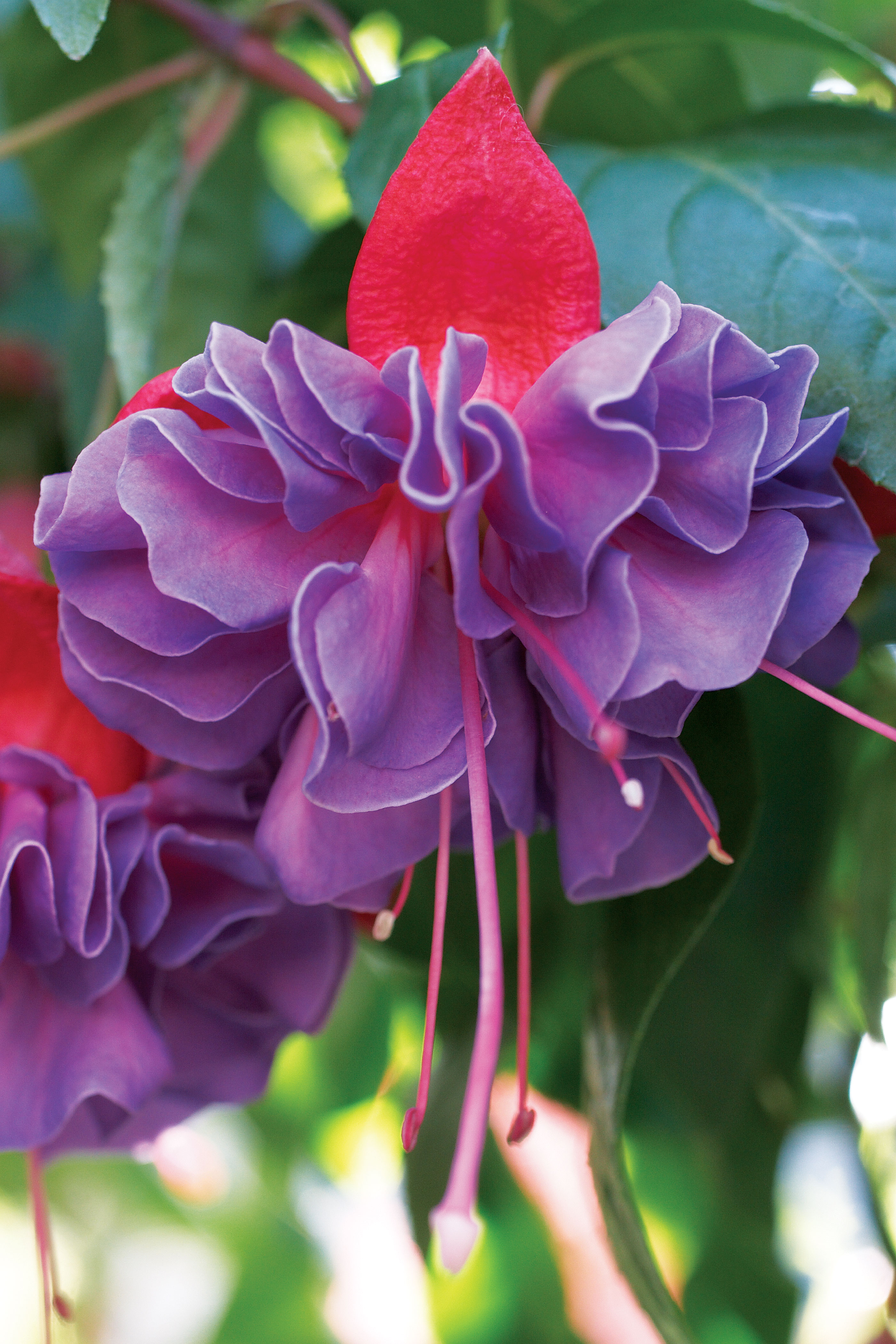
Fuchsia x hybrida
Ruffled petals swirl about like a flamenco dancer’s skirt. Part shade inland, full sun near the coast. Sunset climate zones 4–6 with protection, 15–17, 22–24; H1.

New Zealand flax Phormium ‘Jubilee’
Its leaves have cherry-hued margins like its ‘Jester’ parent, only much more vivid—striking in borders and containers. Grows 3 feet tall; colors up best in part shade. Zones 7–9, 14–24; H1, H2.
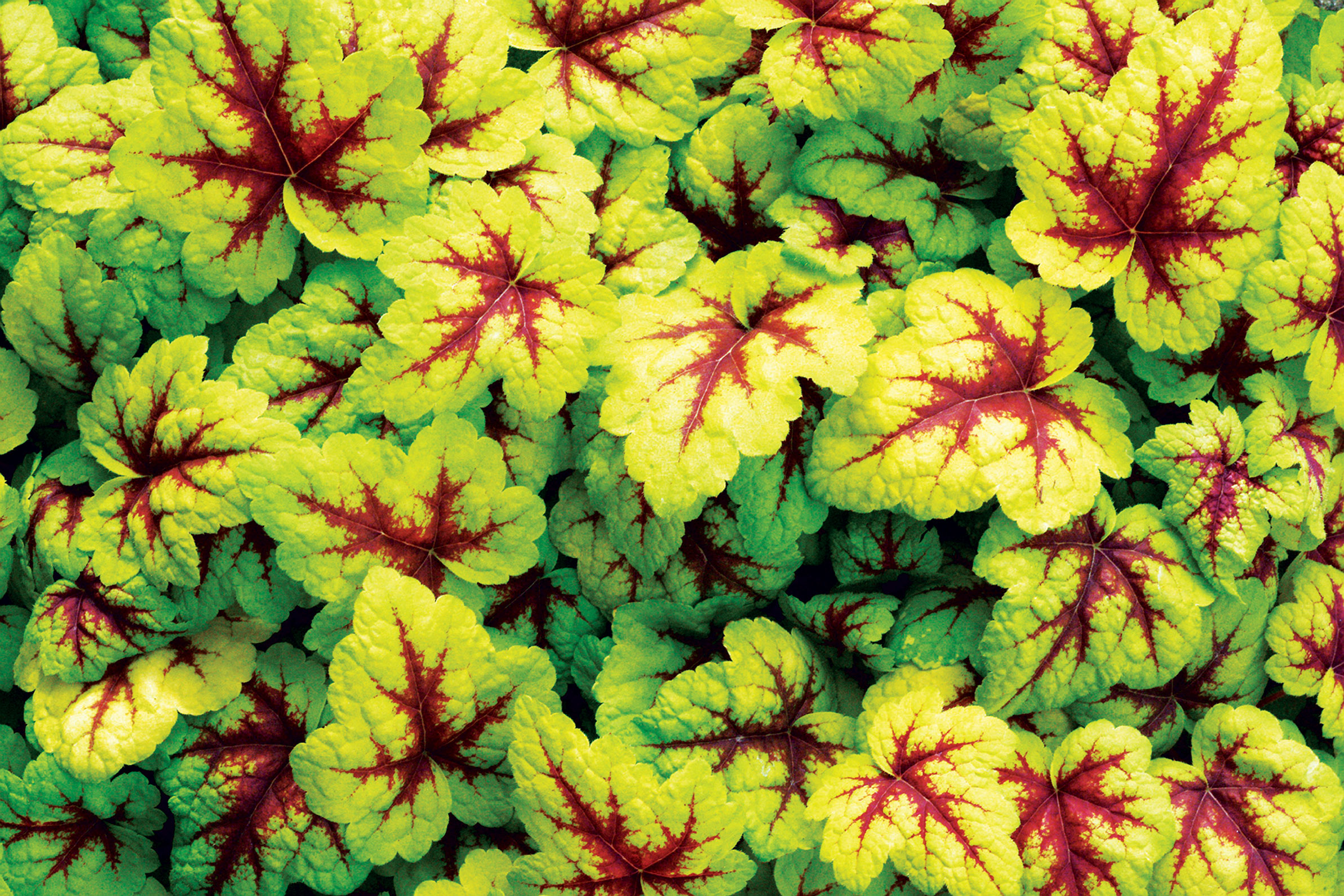
x Heucherella ‘Stoplight’
Nearly glows in light shade; its red-streaked leaves turn lime green in summer. Zones 1–10, 14–24.
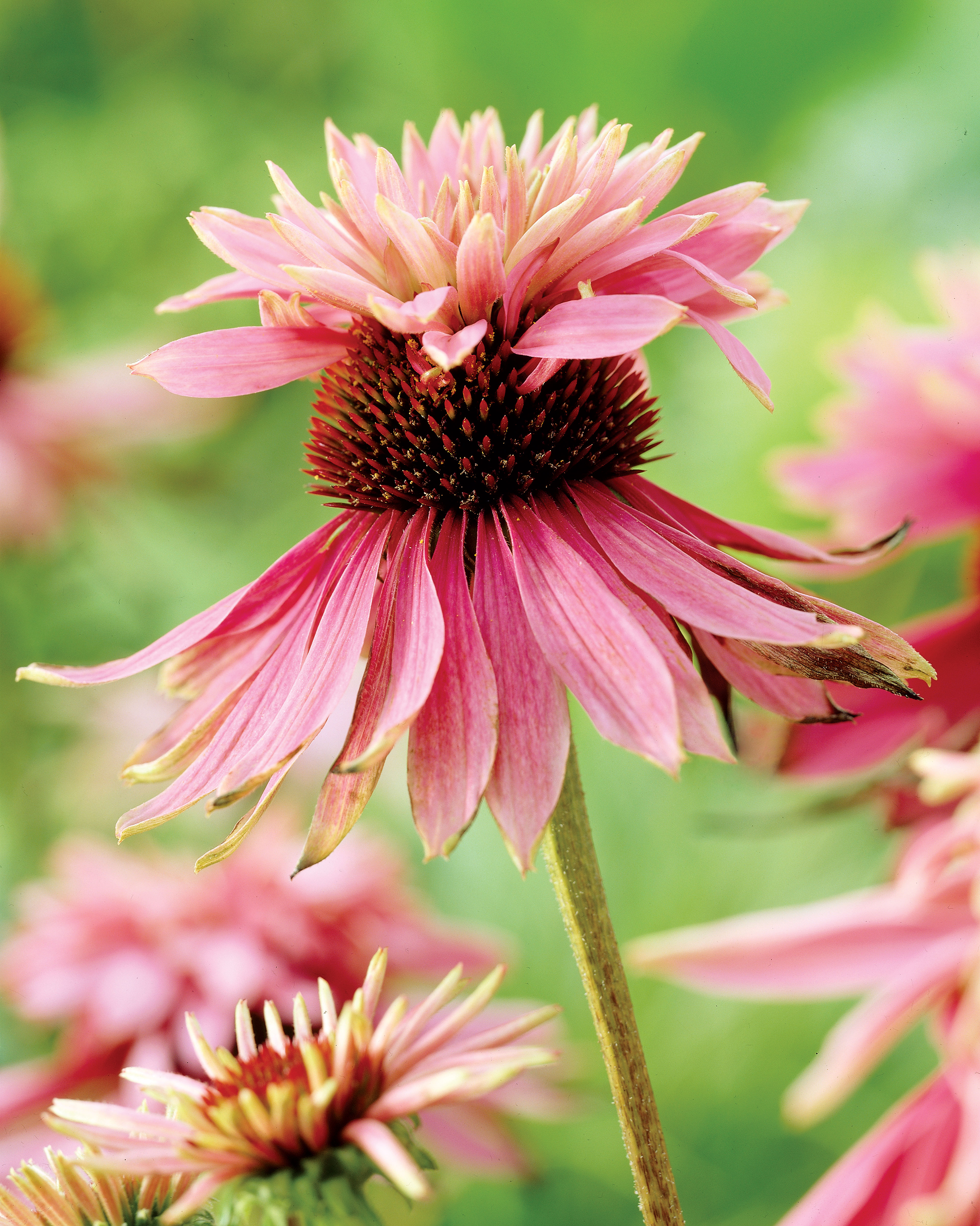
Echinacea purpurea ‘Doubledecker’
Petals top this perennial’s cone like a royal’s feathery fascinator—after the second growing season, that is. Zones A2, A3; 1–24.

‘Poodle Skirt’ dahlia
Wine-colored poufs and flaring hot pink petals add pizzazz to blue and white summer borders. Plant tubers between February and April. Zones 1–24.
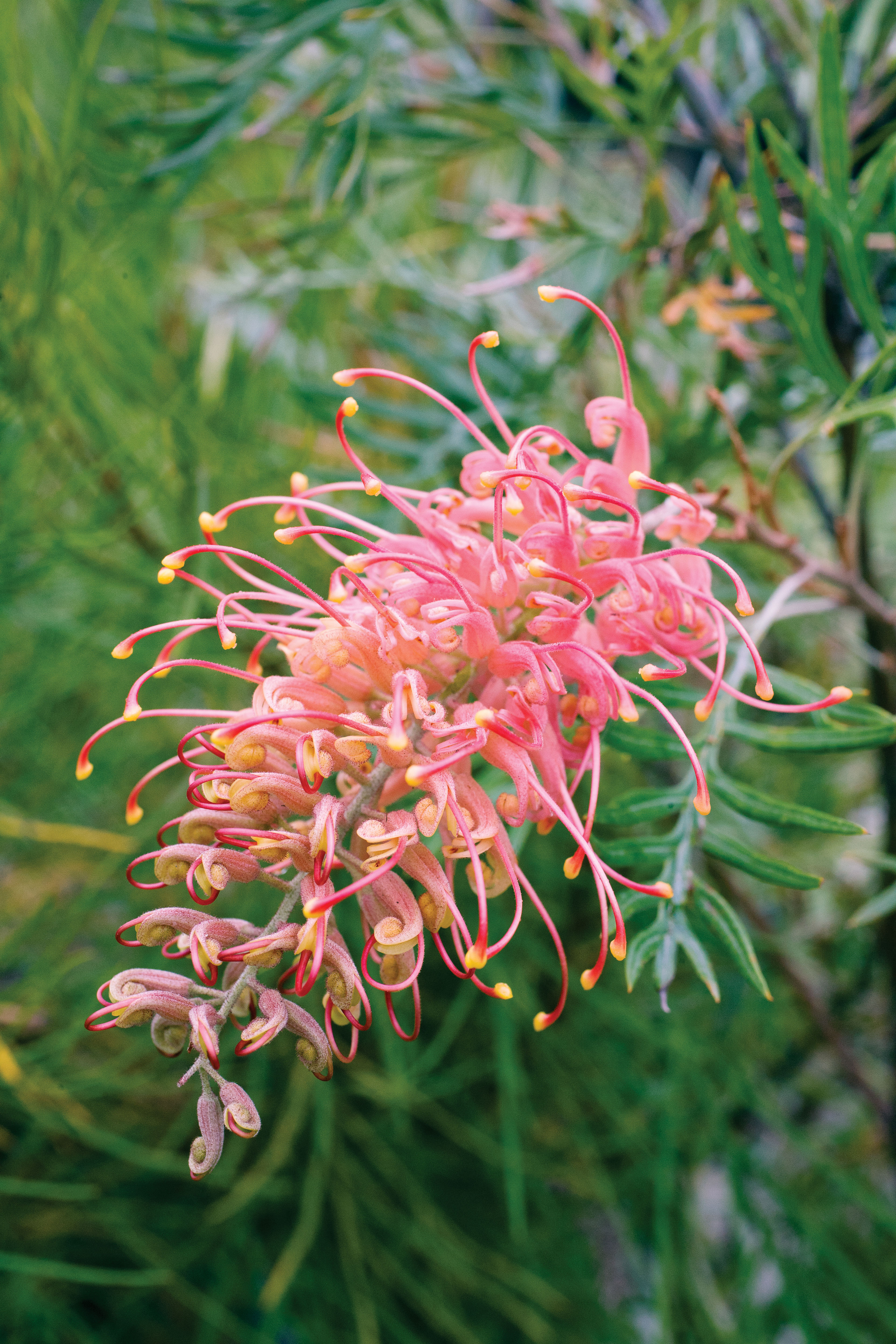
‘Superb’ grevillea
Large apricot orange flowers fleck this unthirsty, 4-foot-tall, 6-foot-wide hybridized Aussie shrub all summer long. Zones 16–24.
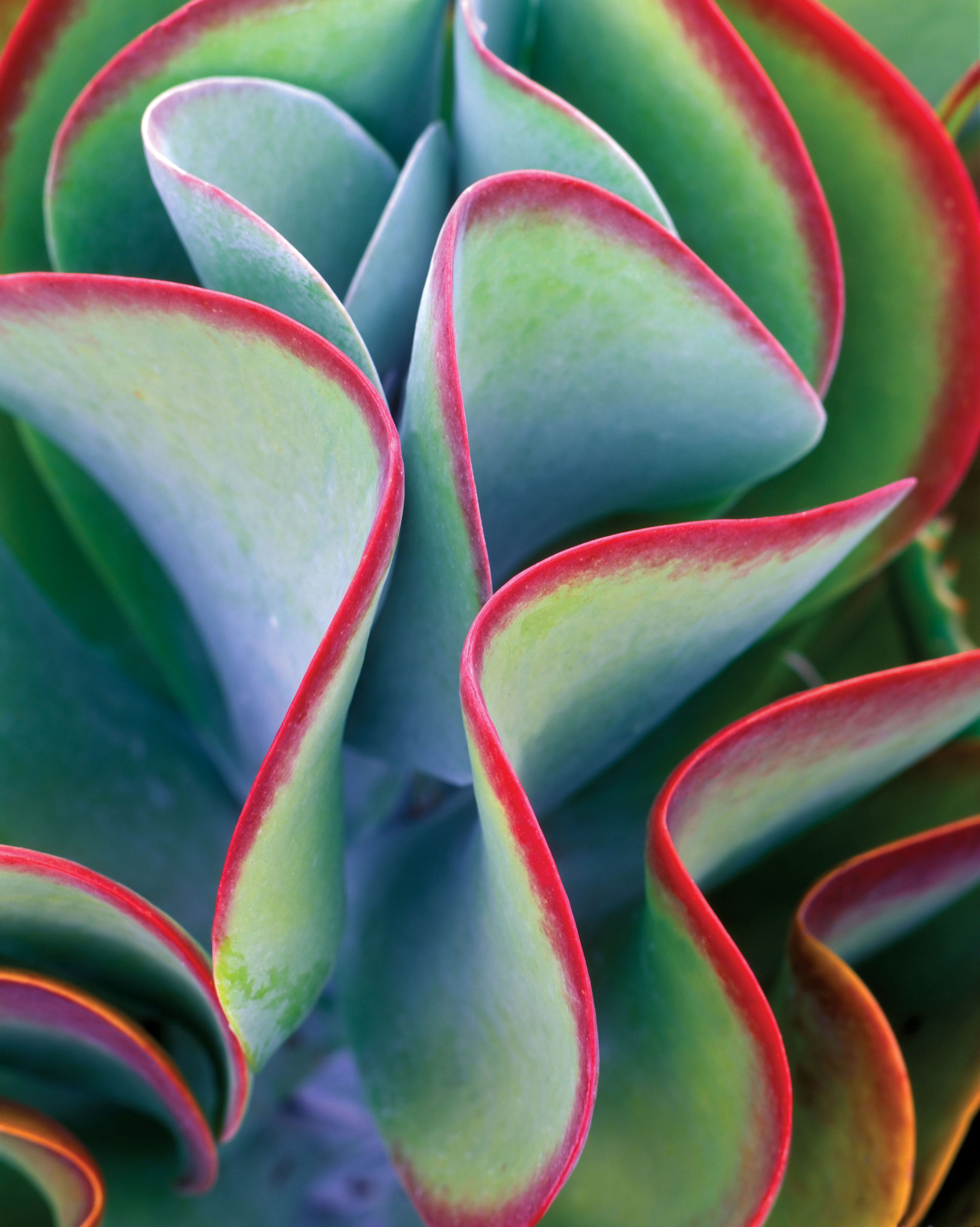
Kalanchoe thyrsiflora
Otherworldly or deep-sea creature? You decide. Either way, this succulent’s chalky green paddles are stunners. Zones 13, 17, 21–24; H1, H2.
Plus: Design tips
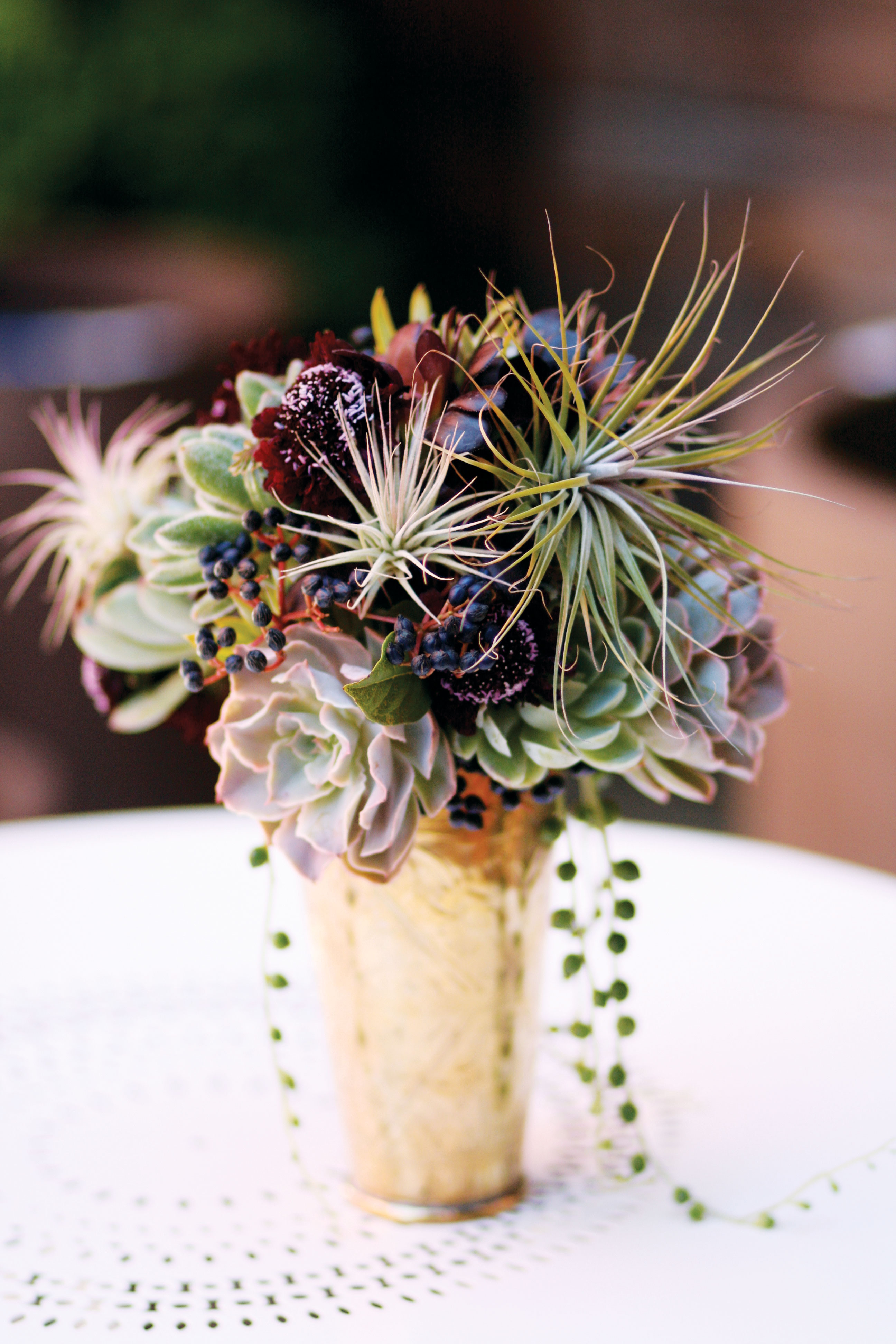
Make a succulent (live) bouquet
For a striking display, arrange echeveria rosettes in vases with other eye-catchers, such as the burgundy-flowered scabiosa, blue viburnum berries, spidery tillandsias, and trailing string of pearls stems pictured here. Afterward, set the rosettes into containers filled with succulent mix to start new plants. Design: Susie Nadler, Flora Grubb Gardens, San Francisco (floragrubb.com)
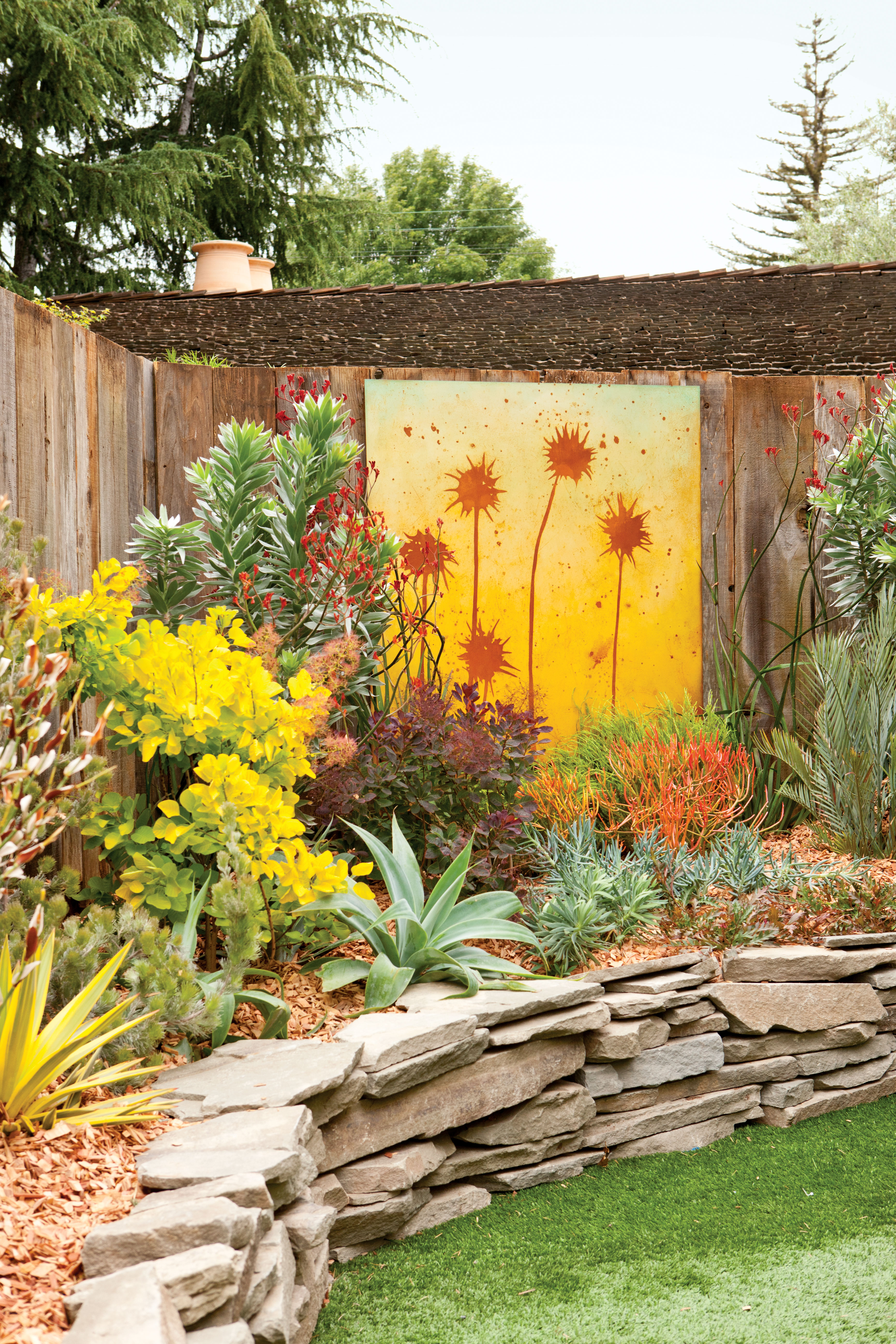
Pair art with plants
Hang an outdoor painting to pick up a garden bed’s bright colors. Here, a fence-mounted metal patina work, by 5 Feet from the Moon (fivefeetfromthemoon.com), adds a pop of vibrant yellow that echoes the golden leaves of Cotinus coggygria ‘Golden Spirit’, while its whimsical orange blooms play off a ‘Big Red’ kangaroo paw, burgundy-leafed C. c. ‘Royal Purple’, and Euphorbia tirucalli ‘Sticks on Fire’. Agave attenuata ‘Nova’ in the foreground and a tall, gray-green silver tree (Leucadendron argenteum) in the rear add cool contrast. Plants and design: DIG Gardens, Santa Cruz, CA (diggardens.com)
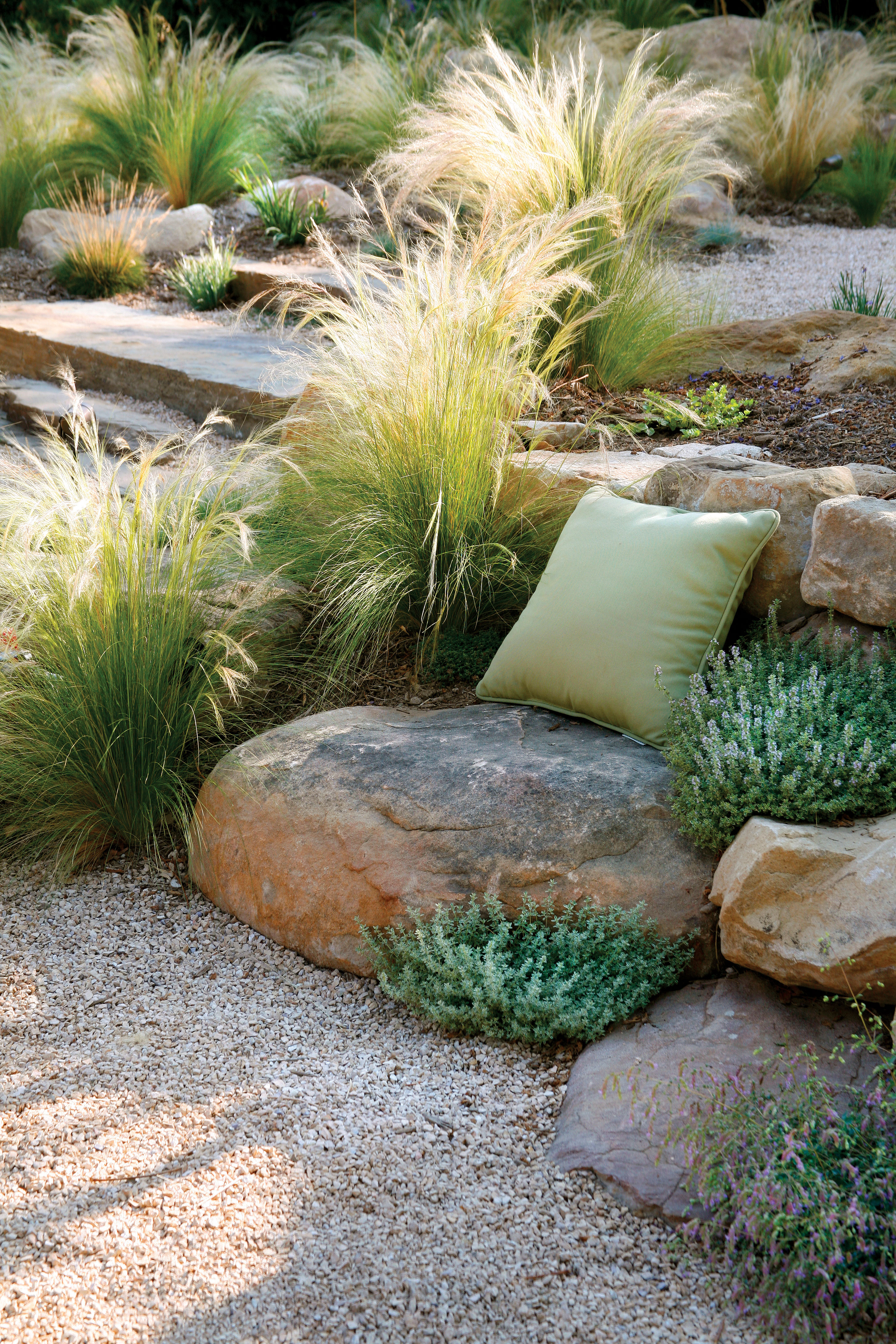
Use boulders for seating
Toss a pillow onto a smooth flat boulder to create a natural outdoor recliner. Framed with wispy Mexican feather grass and thyme and facing a firepit, this seat is set into a low wall of stacked fieldstones that hold back a small slope. Design: Grace Design Associates, Santa Barbara (gracedesignassociates.com)
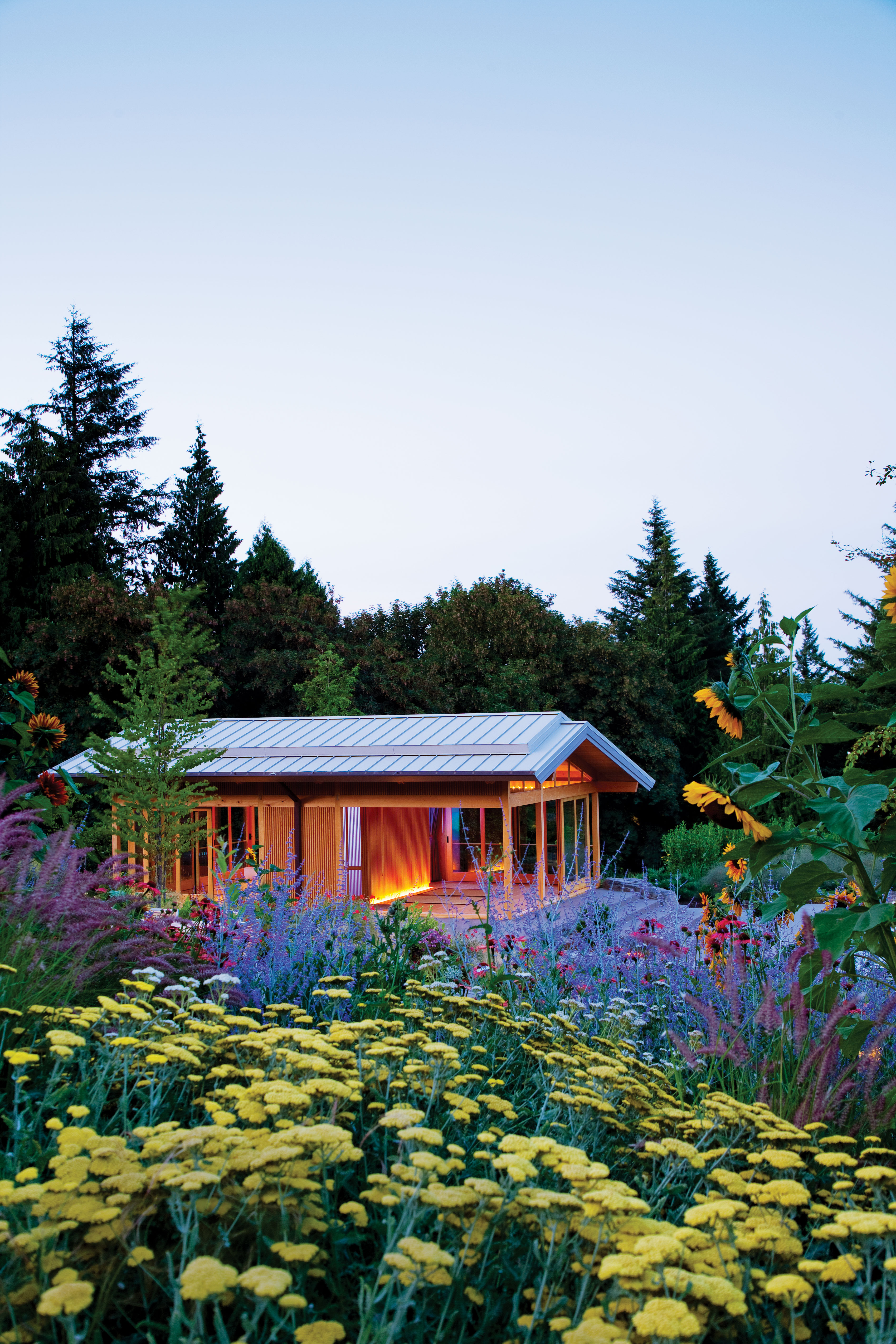
Grow a meadow
Why confine annuals and perennials to tidy borders when you can mix them up for a full-on wildflower effect? Casual drifts of yellow yarrow, blue-violet Russian sage, purple coneflower, and Pennisetum setaceum ‘Rubrum’ in this Portland garden ramble as if they were planted by nature.
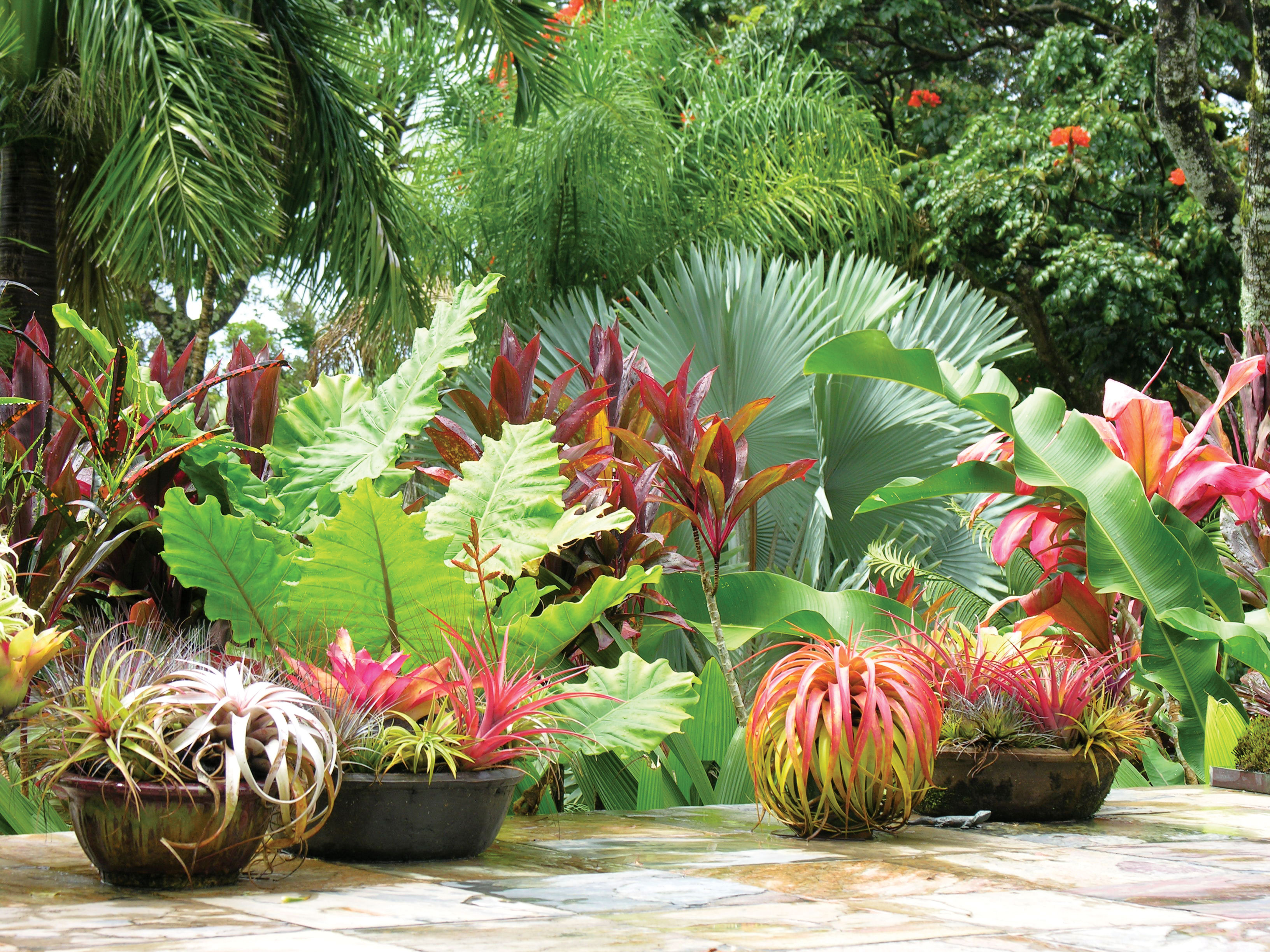
Go wild with foliage
To make an all-foliage vignette really come alive, combine plants of various leaf sizes, shapes, colors, and textures. In this Hawaii garden, the smooth, coffee- and apricot-hued leaves of ti plants (Cordyline fruticosa) contrast with a blue fan palm’s corrugated fronds and elephant’s ear’s wavy green leaves. Mounded red and green tillandsias add punch in the foreground. Design: Davis Dalbok, Living Green, San Francisco (livinggreen.com)
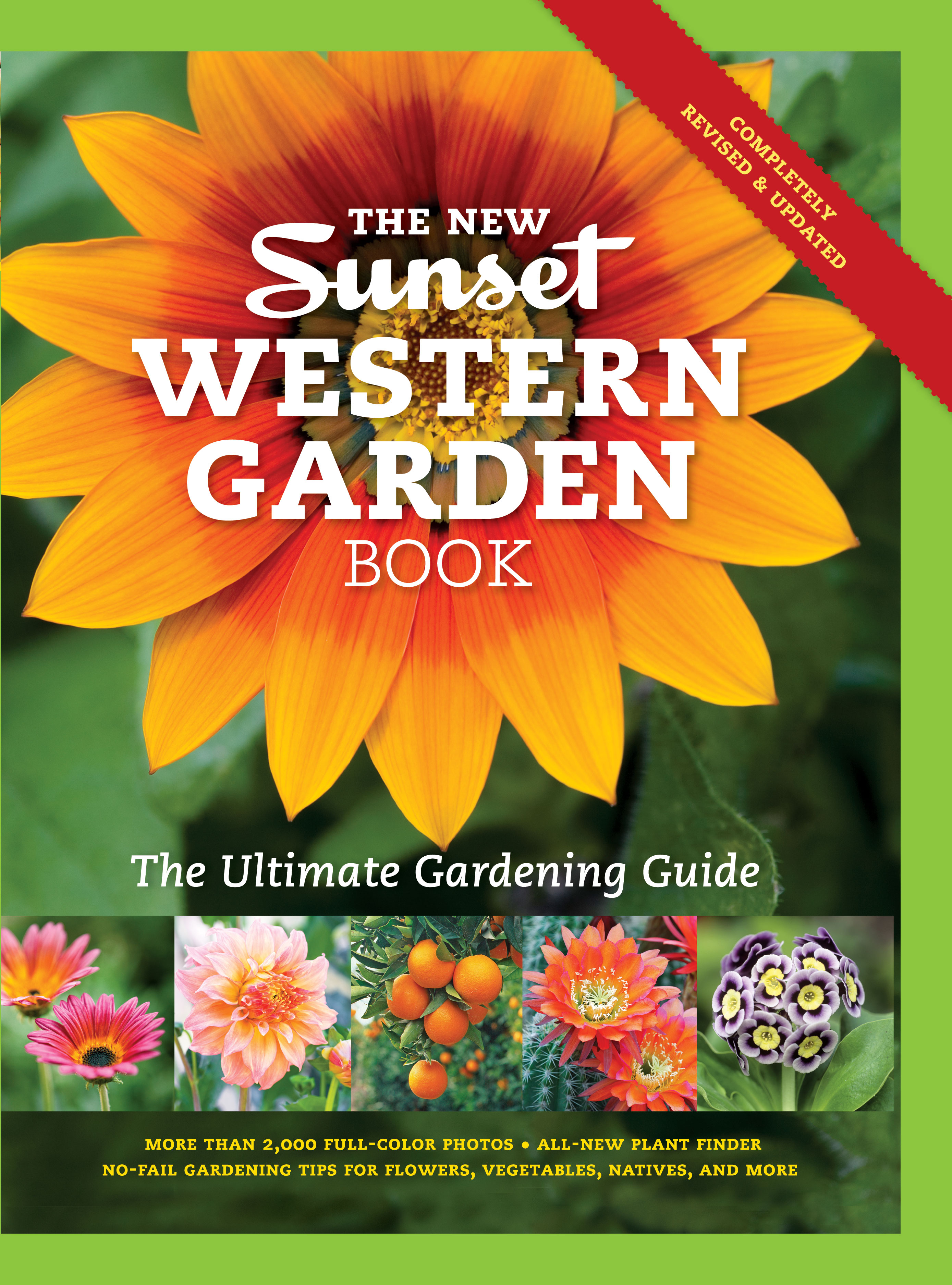
Get the ultimate gardening guide
Order a copy of The New Sunset Western Garden Book at sunset.com/wgb