
Sunset's One-block Feast

Join our experiment as we learn to eat almost entirely from the land around us ― and how you can, too

The secrets to perfect compost

A master composter shows how to cook up some power food for your soil
  • Share
  • Yahoo BuzzFacebookTwitterDigg
  • |
  • Print
  • |
  • Email
  • |
  • Add Comment
  • |
Text size:AAA

Blue House Farm

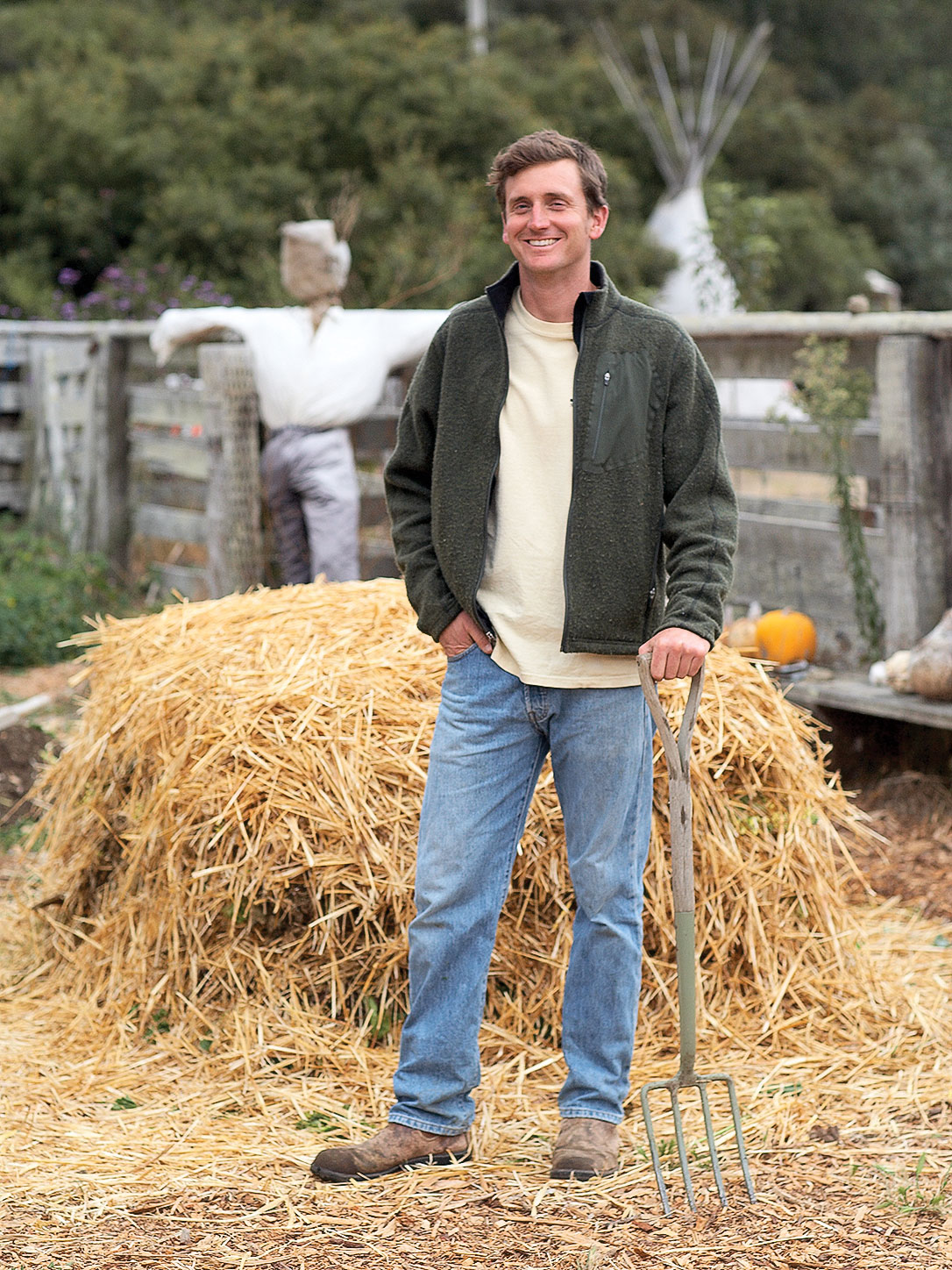
Ned Conwell pauses in front of his straw-covered compost pile at Blue House Farm.

Photo: Rob D. Brodman

Click to Enlarge

Healthy gardens start with healthy soil. And there's no better ingredient than compost, whether you till it into beds or use it as mulch.

Ned Conwell is up to his elbows in the stuff, both as a farmer and as a teacher: He uses as much as he can make at Blue House Farm, a produce and flower farm he co-owns in Pescadero, California, and he also teaches composting at the Regenerative Design Institute, located up the coast in Bolinas.

"Once it's in the soil, compost increases fertility; adds both micro- and macronutrients; buffers pH; and improves soil structure," Conwell says. Below is his foolproof method for making compost.

COMPOST DOS AND DON'TS

Do compost
Nearly any plant material, including the following:

Brown matter
Dried leaves, hay, straw, sawdust, wood chips, and shrub and tree prunings. Ned Conwell collects his brown matter, but you can also use straw from a feed store. He puts branches and anything thorny in a separate slow-roast pile in the corner, where it breaks down over a much longer period of time. To hasten composting, chop or mow prunings into pieces 2 inches or smaller.

Green matter
Green weeds, fruit and vegetable scraps, cover-crop remains, and fresh grass clippings. Also coffee grounds, tea bags, and uncomposted manure from cows, goats, horses, or poultry. Pine needles take longer to break down, while compounds in black walnut and eucalyptus leaves can inhibit growth in other plants; compost those greens only if you combine them with lots of other vegetative waste.

Don't compost
Animal products (bones, meat scraps, dairy products); plants with fungal diseases such as fire blight or verticillium; or seedy or rhizomatous weeds like purslane, Bermuda grass, or bindweed.

Do turn the pile often
After the first two temperature-based turns, the more often you turn your pile, the quicker it will break down into compost.

Do heat it up
The smaller the pieces, the faster they'll compost. (Run the lawn mower over big, leathery leaves before adding them to the pile.) To check the pile's temperature, Conwell uses a 20-inch-long compost thermometer, available at some nurseries and garden centers and from Peaceful Valley Farm & Garden Supply (from $12; 888/784-1722).

More earth-friendly garden ideas


Jim McCausland

PAGE:1


Add your comment

The rules: Keep it clean, and stay on the subject or we might delete your comment. If you see inappropriate language, e-mail us. An asterisk * indicates a required field.

500 characters remaining

Sunset > To Go
  • Subscribe
  • Give a Gift
  • Newsletters
  • Wine Club
Add Sunset to:
My Yahoo! My Google My MSN My AOL

Advertisement


Most Popular > Sunset
1
10 easy slow-cooker dinners

These easy slow-cooker dinner recipes make hearty meals. Set your slow cooker in the morning and come home to inspired stews, succulent pork, and more.

Hearty slow cooker meal of beef stew with mushrooms served over mashed potatoes.