Growing forward
In a world where rock stars and Hollywood celebs grab daily headlines, there are unsung heroes among us quietly changing the way we live. They are landscape architects, environmentalists, urban farmers, soil scientists, and horticultural visionaries who have turned their personal passions into pursuits that collectively reshape our homes, gardens, neighborhoods, and public spaces.
You don’t have to be a gardener to feel the impact of their efforts. You’ll experience it in restaurants that offer never-before-tasted vegetables, and in supermarkets, where you can now buy sustainably grown cut flowers. You’ll see it on formerly sun-baked city streets where today trees grow lush and green, and in the new “wilderness parks” that bring nature to ever-sprawling downtowns. Meet 10 visionaries and the trends they've spearheaded that show us what it means to make a difference in the West through gardening.
Urban parklets
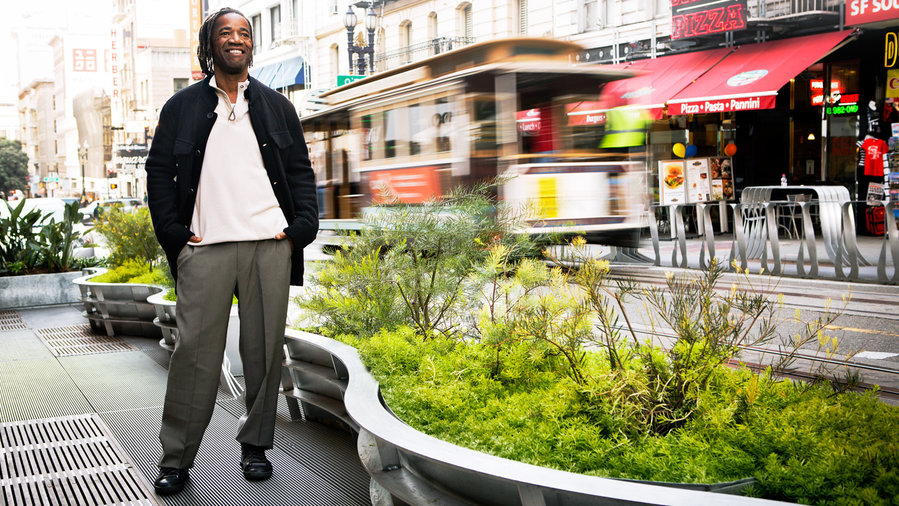
Powell Street in downtown San Francisco is the type of corridor where, on any given weekday, hordes of workers, shoppers, and tourists hurry along past sidewalk bongo players and rattling cable cars, on their way to somewhere else. Amid the hubbub, though, something else is happening along a stretch between the St. Francis Hotel and a Skechers store: People are stopping. Some sit on the built-in benches, perhaps admiring the birds of paradise or asparagus fern in shiny modern raised beds that rise behind them. These people may not know it, but the Powell Street Promenade, opened in 2011, is quietly directing them to find tranquility amid the chaos.
Walter Hood, the man behind this inviting patch of green, designed it precisely this way, with wavy metal edges that suggest gentle motion, like ripples across water, and wider sidewalks that encourage people to stop for a chat, out of the way of the hurrying throngs.
“I like to work where people are,” says the Oakland-based Hood, who also teaches landscape architecture at University of California, Berkeley. His green oases come in unlikely places, such as under Interstate 580 in Oakland. There, his Splashpad Park invites pedestrians to stroll its paths or to sit beside the fountain and enjoy the city views.
Hood’s landscapes are boldly contemporary in style and material but highly functional. The grassy sculpture garden he designed for the modernist remodel of San Francisco’s de Young Museum includes giant ceramic apples, which beckon children to clamber on them. To create Lafayette Square Park in Oakland, Hood added a barbecue area and lawn berms angled to catch the sun.
The important thing, he says, is to design spaces that “listen to different voices and connect with people across cultures—the way hip-hop music has.” He tells his students: “Design for people and who they are today”—that is, busy people headed somewhere else who, thanks to Hood, are pausing along the way.

Nurseries made cool
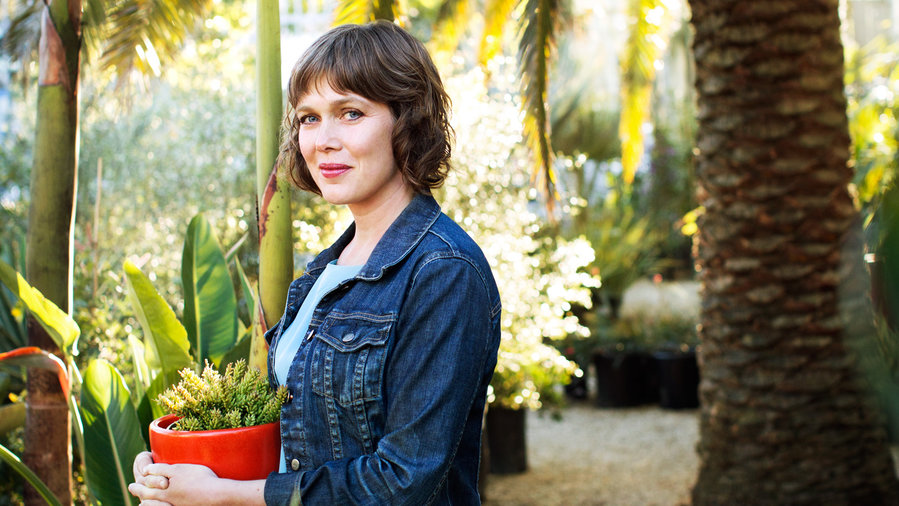
Even if you know nothing about plants, Flora Grubb Gardens store—tucked into an industrial neighborhood in San Francisco—will captivate you. There are no clinically neat stalls of seedlings lined up for sale. Instead, Grubb and her staff treat plants like artist’s paints, using them with colorful pots, holders, and design accents to create unique natural vignettes.
Visitors wander among lush bamboos, past displays of rare palms from India and the high elevations of Hawaii, and lounge on locally made furniture for sale while sipping Ritual Roasters coffee from the mini shop inside. They stop, spellbound, in the room dotted with “aeriums,” small, soil-less terrariums filled with air plants and moss that perch on tables or are suspended from the ceiling like tiny creatures from another world. This place isn’t just a garden store—it’s an experience.
“My goal is always to provide a fascinating encounter with the natural world,” says Grubb. By doing so, she has created a new kind of nursery that beckons all visitors—even seasoned gardeners—to explore and dream. “I want people to leave more peaceful, connected, relaxed, and inspired than when they arrived.”

Locaflorism
All Amy Stewart wanted were some fat blue delphiniums.
At a farmers’ market in Arcata, California, she lamented to the farmer selling the giant cut flowers that she couldn’t seem to grow them on her own. “Oh, you don’t do this in the garden,” the woman answered, indulgently. “You do this in a greenhouse.”
The idea that those gorgeously perfect blooms came not from a sunny field but from carefully controlled temperatures under glass sent the writer exploring where our cut flowers come from, and ultimately exposing growers who sometimes drench the blooms in chemicals, and then peddle them as gifts of romance and love.
From high-tech facilities in Southern California to plastic-tarp hoop houses in Ecuador, she walked, keen-eyed, through the indoor fields of plenty. “I was touring one of the ‘best’ flower farms in Ecuador,” Stewart recalls, describing an iconic scene from her 2007 best-selling book Flower Confidential, in which bouquets were being prepared to head to the U.S. market. “The guy taking us around says, ‘And here’s where we dip the flowers into fungicide to prevent botrytis.’ We watched bunches of roses be completely submerged, pulled out dripping wet, and shaken off,” she says. “It wasn’t a secret!”
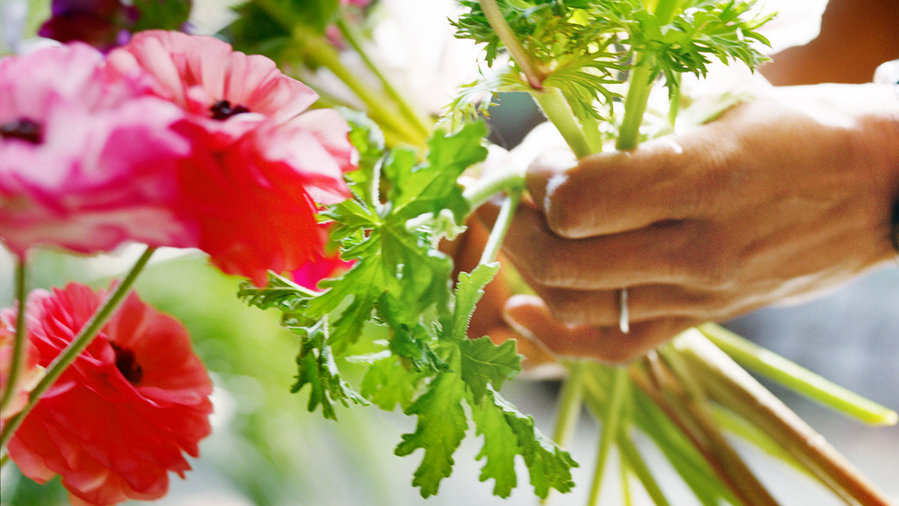
Maybe it was no secret within the industry, but Stewart’s page-turner opened flower-lovers’ eyes to the shocking truths about plane-hopping, industrially grown blossoms with huge carbon footprints. And through her story comes her advice: Buy blooms in season (not forced), purchase from local florists who can fill you in on their sourcing, and look for the flower trade’s Veriflora label, which identifies blooms as sustainably grown.
While Stewart didn’t start the floral-sustainability movement, she has helped inspire a new generation of small-scale organic-flower growers—and informed a public eager to support them.
Succulent mania
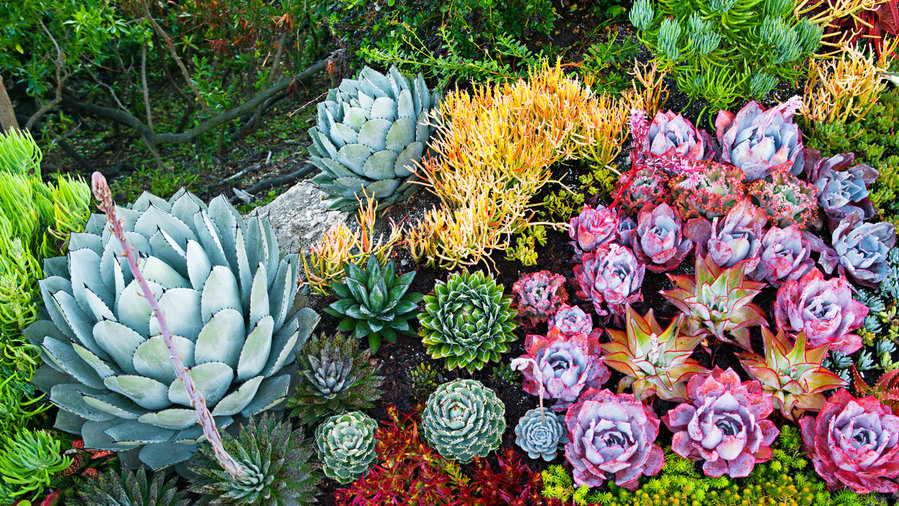
“Succulents latched onto me,” says Robin Stockwell, owner of Succulent Gardens nursery, just north of Castroville, California. “It’s like they saw something in me and took me on.”
The otherworldly plants first cast their spell on him as a college kid, when he happened upon a hilltop cactus farm near Castroville with an eclectic collection, many in bloom. “I was fascinated by the flowers,” he recalls. He bought the whole lot on the spot.
Eager to work near the coast where he could surf during his off-hours, Stockwell started a nursery with a friend, selling those cactus and other kinds of succulents amid an array of houseplants. Gradually, he began to specialize in the sculptural, low-water plants, which at the time were sleepers at other nurseries. “They’re beautiful and low maintenance—important in today’s environment,” he says.
He began arranging succulents in creative vertical gardens and in enticing displays as if they were collectibles, with the plants’ jewel-like rosettes not just in colorful containers, but also in unusual formats—as living roofs atop birdhouses, for example. Home gardeners and landscape designers, in the wake of periodic droughts, began seeking out his nursery for water-wise solutions and fresh ideas.
At Succulent Gardens, Stockwell now feeds succulent mania with 700 varieties. And every September, he hosts his Succulent Extravaganza, now in its third year, when some 1,500 visitors fill wagons with potted succulents or line up to purchase finds that they hug close like treasures. Thanks to Stockwell, succulents have latched onto all of us.
Community trees
When Brent Green wanted to buy a home just a block away from Interstate 10 in mid-city L.A. back in 2003, his wife, Cheryl—looking at the barred windows and patchy lawns—was leery. “Trust me,” said Brent.
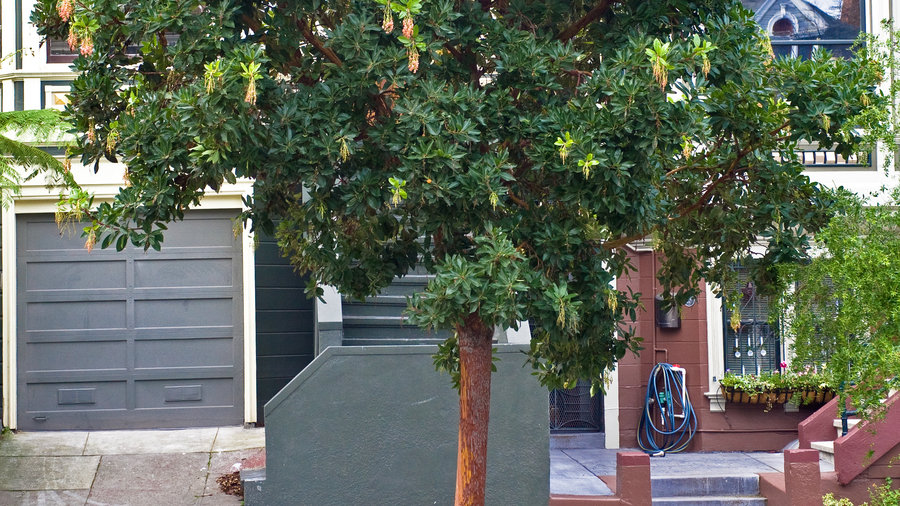
She did, the Greens moved in, and Brent, a landscape designer (his firm is GreenArt Landscape Design), went to work lavishing love on his garden. And when he was done, he moved on to his neighbors’, seeking permission to plant street trees and paying for them out of his own pocket. He put in 35 that first year, which he thought fitting—one for every year he’d been on the planet.
The next year, he kept the tradition going, moving on to adjacent streets. Ten years later, Green has planted 398 trees—including native California sycamores. He maintains them all, making sure they’re watered.
The trees have changed everything, says Green, who was given a Certificate of Recognition from the city of Los Angeles for his efforts. Trees filter out freeway pollution, dampen traffic sounds, provide shade, attract birds, and generally soften every aspect of urban living. “The people who used to be nervous about parking in front of my house after dark are now trying to move in,” he says. “But more than anything, the trees show that the people who live here care.”

Upcycling public spaces
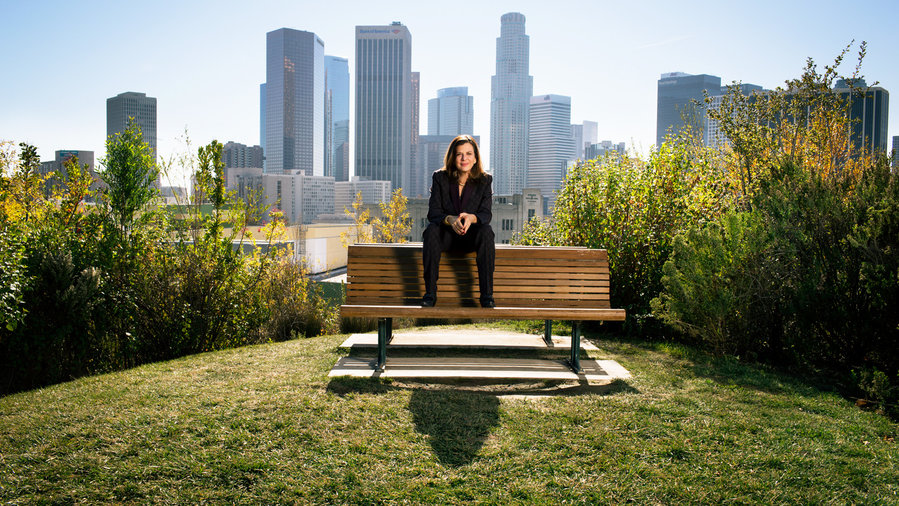
When you hear the delighted squeals of children splashing in the trickling streams of Vista Hermosa Natural Park, see families picnicking on a lawn, or inhale the aromatic scents of white sage and coyote bush while strolling trails that feel like they’re in the foothills, you soon realize: In the great battle of L.A. sprawl versus livable green space, landscape architect Mia Lehrer is gaining serious ground.
For much of her career, Lehrer and her firm, Mia Lehrer + Associates, have worked to turn the city’s underutilized industrial and commercial properties into neighborhood parks. Recent successes include Vista Hermosa, in downtown L.A. Once an abandoned oil field, this 9.5-acre park—which, when it opened in 2008, was the first new park built downtown in a century—was designed to look and feel as natural as Santa Monica Mountains habitat. Angelenos who live nearby have easy access to the park’s walking trails, picnic spots, and children’s “adventure” area, with its giant snake and turtle sculptures built with the help of movie-industry prop artists.
In 2012, South Los Angeles Wetlands Park opened on a derelict 7.3-acre parcel that was once an MTA bus yard. And opening in 2013: the Natural History Museum North Campus, 3.5 acres of urban “wilderness” on what was formerly a parking lot.
Perhaps most significant will be the gradual conversion of the concrete-lined Los Angeles River—a setting made famous by a car race in the 1978 film Grease—into a continuous greenway as part of the Los Angeles River Revitalization Master Plan. It will transform the way L.A. looks and operates, says Lehrer. “People could live, work, and play all in the same area.” Construction of a bridge for equestrians, bicyclists, and pedestrians from North Atwater Park to Griffith Park has already begun. “Rather than separating communities, it will connect them. That’s what the river should be doing.”
Prizing native plants
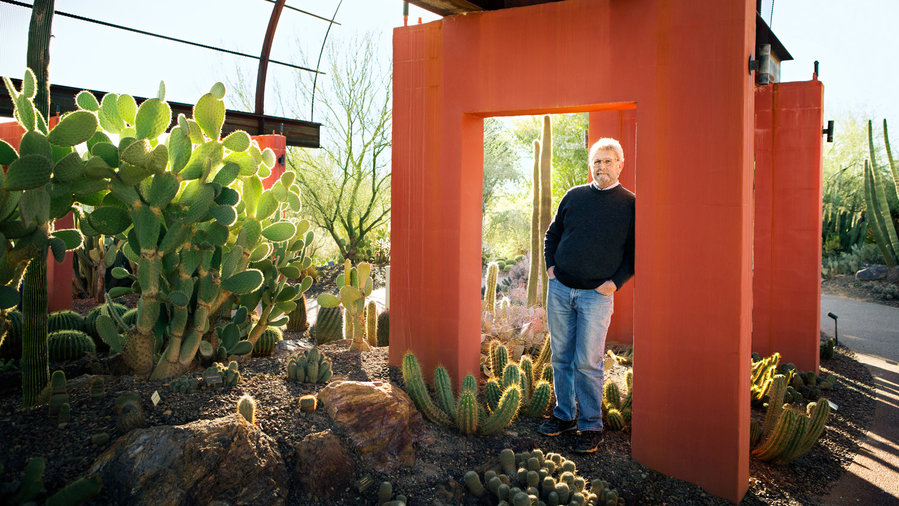
It seems like common sense now: Plants native to a particular habitat will thrive in gardens that mimic those same wild conditions. But when Phoenix landscape architect Steve Martino started out, back in the ’70s, thirsty lawns, flowers, and orange trees dominated desert gardens. To Martino, trying to make such alien plants look good in the desert sun, with only 6 inches of annual rainfall, was like nursing “terminally ill patients on life support,” he says.
Martino first became captivated with the untamed desert as a teenager, when he led horseback rides outside a ranch for at-risk boys. The gnarly opuntias, towering saguaros, and sprays of delicate wildflowers he and his little band trotted through were all growing strong in the harsh sun and attracting the predators and pollinators that fed on them. “Desert plants are iconic,” he says. And like native plants everywhere, they “represent the state of the art of evolution of a place.”
Martino started his career as a laborer for Ron Gass, founder of Mountain States Wholesale Nursery, who would scour the Sonoran Desert collecting seed. “He was the first person who could identify the native plants I brought him,” says Martino. In his designs, he ultimately began using the plants that Gass grew.
Today, the first thing to catch your eye in a Steve Martino project might be a vivid orange wall framing a mountain view, or a concrete water channel that recalls a canyon. But these hardscape elements are mostly backdrops for the native plants that anchor his designs. “It’s a regenerative system, not just a garden,” he says. That wouldn’t seem so obvious if not for him.
Urban homesteading
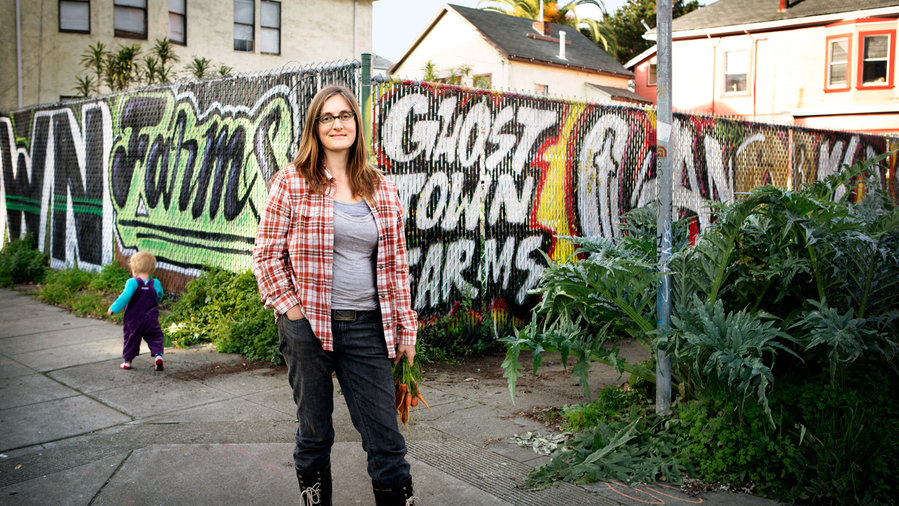
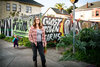
“I used to think, If we could just grow enough organic kale for everyone, we’d all be okay,” says Novella Carpenter, whose 2009 best-selling memoir, Farm City: The Education of an Urban Farmer, chronicled her adventures and misadventures in guerrilla gardening on a vacant lot adjacent to her home, dumpster diving for pig feed, and axing her first turkey—all in the name of subsistence farming. “Now I think that more than vegetables, here in Oakland we need jobs. Urban farming offers entrepreneurial options: Keep bees, sell honey.”
Half the humor—and revelation—in her book is that, due to overly strict zoning codes, many of the inner-city farm activities she undertook were illegal. In 2011, the city of Oakland cited her for growing and selling vegetables from the vacant lot without a permit.
Since that time, some ordinances have changed, but battles remain around backyard livestock—not just chickens but also rabbits, goats, turkeys, and bees, which have been growing in popularity in no small part because of Carpenter’s book. The author now wants to protect the rights of omnivorous urban farmers. “I’m not some kind of suave political operator,” she says. But “my farm and the use permit that I got are templates for the new livestock laws taking shape in Oakland now.”
Edible gardening zeitgeist
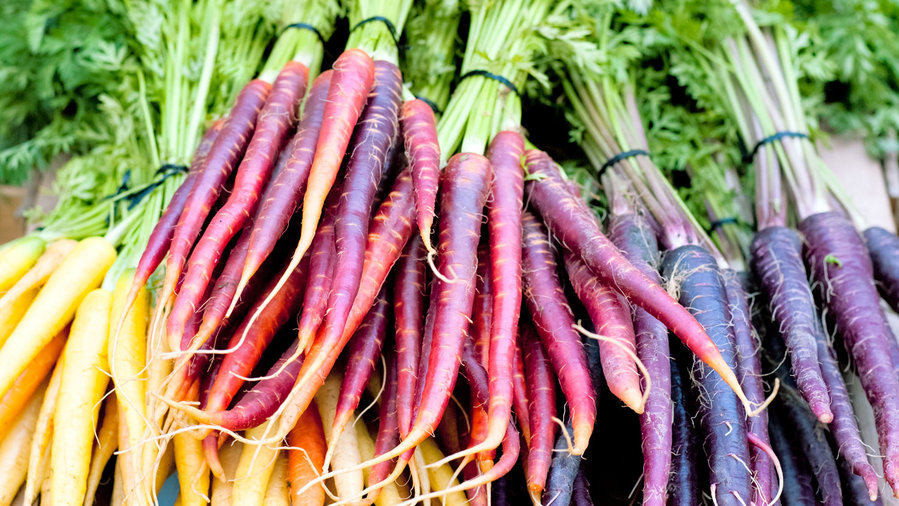
What will be the next new taste to capture the hearts of restaurant chefs and home cooks alike? It could be heirloom root vegetables, says Renee Shepherd. Or perhaps peppers from the Czech Republic, “giant heart-shaped fruits that are really, really sweet.” Maybe Portuguese kale. “It looks like a cross between kale and collards, and it’s sweeter than any kale I’ve ever eaten.” Or small, early-ripening watermelons from Vietnam that come in different colors.
Shepherd has shaped our taste for produce ever since a trip abroad in the late 1980s, when she found a colorful mesclun mix at a produce market in Italy—“the leaves tasted buttery, spicy, nutty, crunchy, fabulous,” she says. She brought the seeds back to the United States, to be grown by small, local farmers for pioneering chefs like Alice Waters. Arugula followed, then chioggia beets, dinosaur kale, and many other varieties now familiar to backyard gardeners.
“We take for granted that we can grow crops from any cuisine,” says Shepherd. And one reason is that she’s made it so easy with her line of packaged seeds.
Shepherd’s discoveries keep on coming— broadening our palette of edible plants. “There’s still a whole untapped world of varieties,” she says. “I’m working with seed suppliers from France and China and Israel. We are just scratching the surface.”
Preserving healthy soil
University of Washington geomorphologist David R. Montgomery is typically a big-picture guy. In his seminal book, Dirt: The Erosion of Civilizations, Montgomery examines how modern agriculture is stripping the Earth of high-quality topsoil, and how the depletion throughout history of these few inches—“the skin of the Earth,” he calls it—has led to the collapse of civilizations.
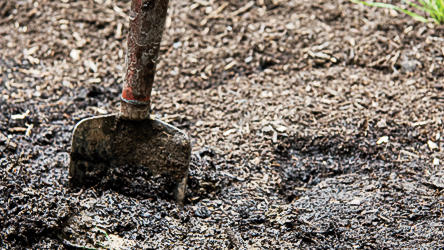
During his grim research for the book, he noticed his wife, Anne Biklé, working to restore the poor glacial garden soil in the couple’s Seattle backyard. She worked in loads of wood chips, fallen leaves, and coffee grounds to improve it, then experimented with adding mulch, compost, and soil soup (a home brew made from worm castings). Over several years, the precious topsoil came back. “It’s shocking how much food she grows,” he says. Their backyard restoration has inspired him to think small-picture for his next book, a collaboration with Biklé about how all of us can take part in restoring healthy topsoil. It turns out that what you do in your own backyard has an impact on the larger world, says Montgomery. “The dots are pretty far apart, but they actually do connect.”