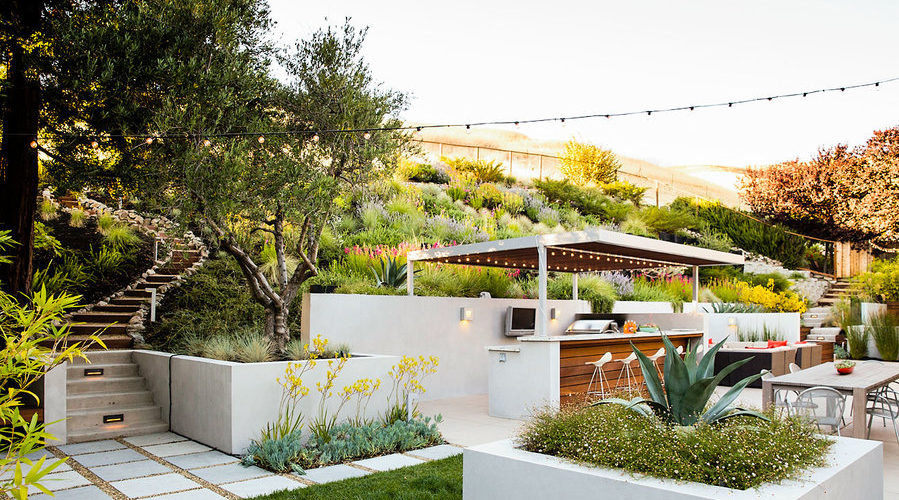
Get ideas for your own welcoming walkway from some of the West's best garden designs
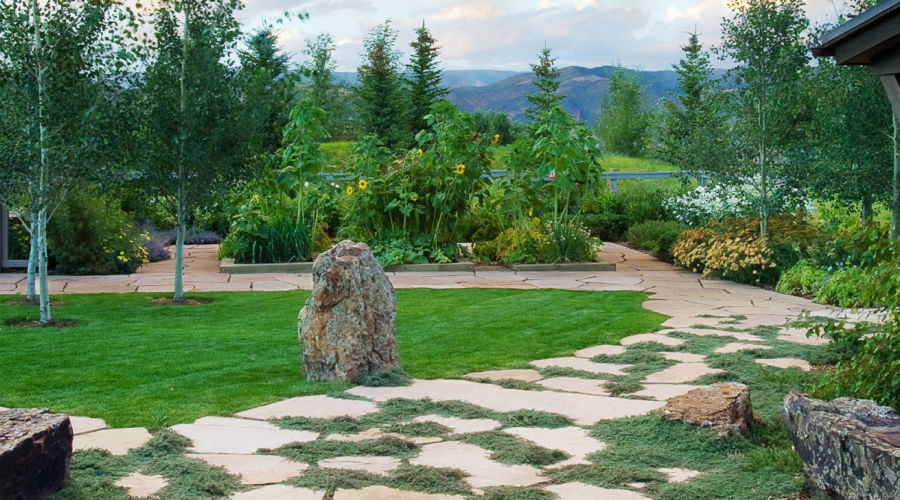
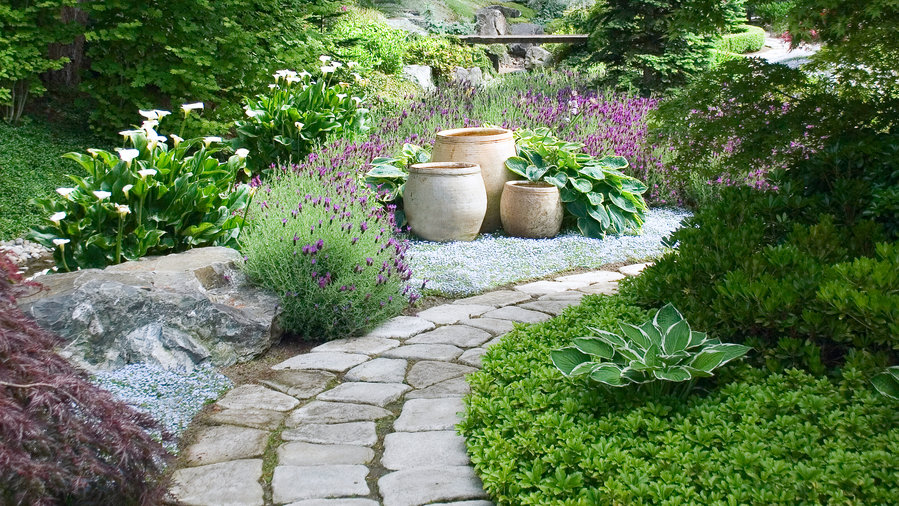
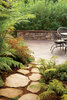
Creeping thyme (Thymus praecox arcticus) grows from 2- to 3-inch gaps between sandstone pavers in this garden in Old Snowmass, Colorado; in summer, it’s covered
with small pink flowers. The path, whose pavers are set on a 4-inch layer of compacted sand, leads to a kitchen garden. A
standing stone and boulder benches—made of Comanche Moss sandstone and flanking the path—echo the shape of the distant Elk
Mountains.
Design: Richard Shaw, Design Workshop, Aspen, CO (designworkshop.com)
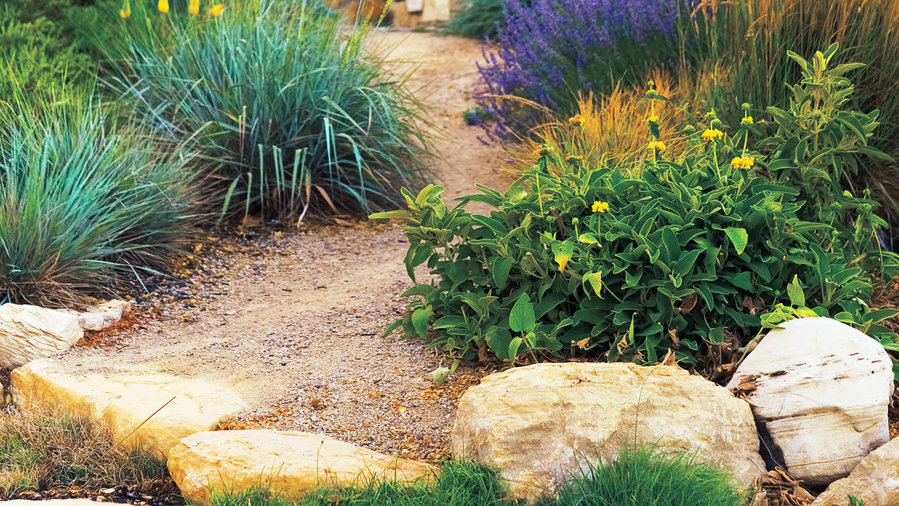
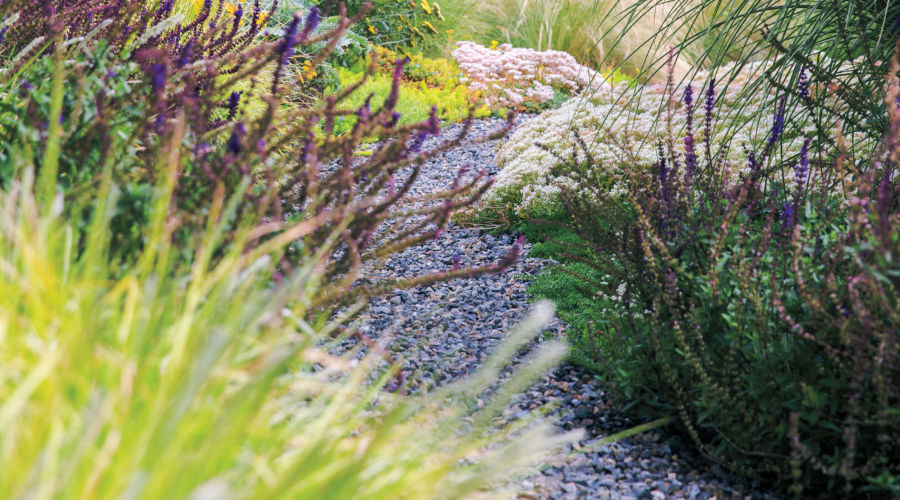
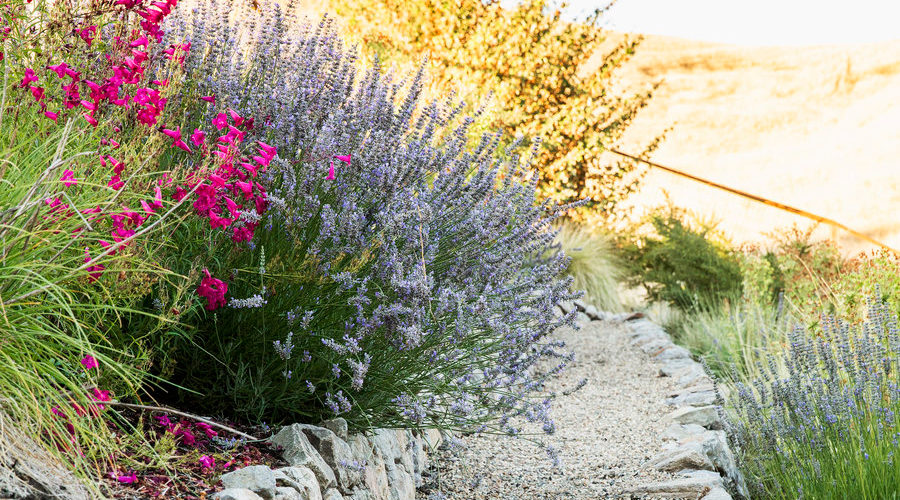
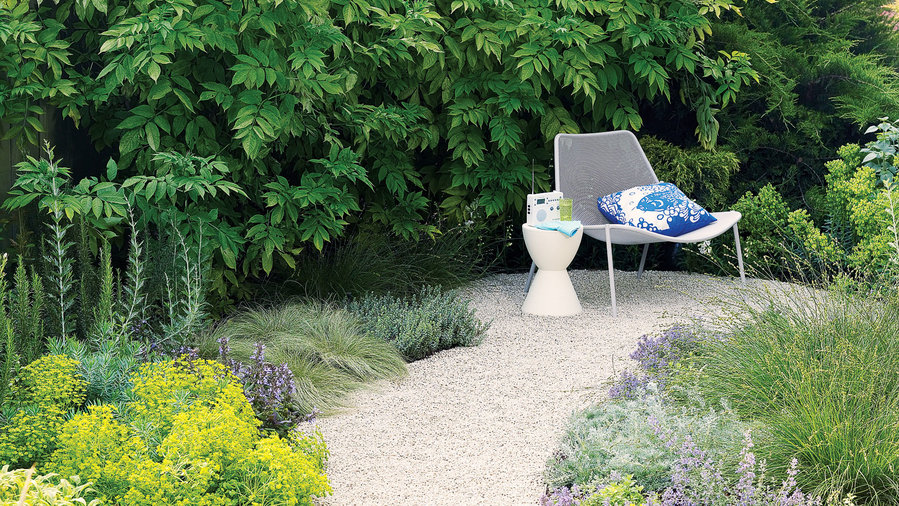
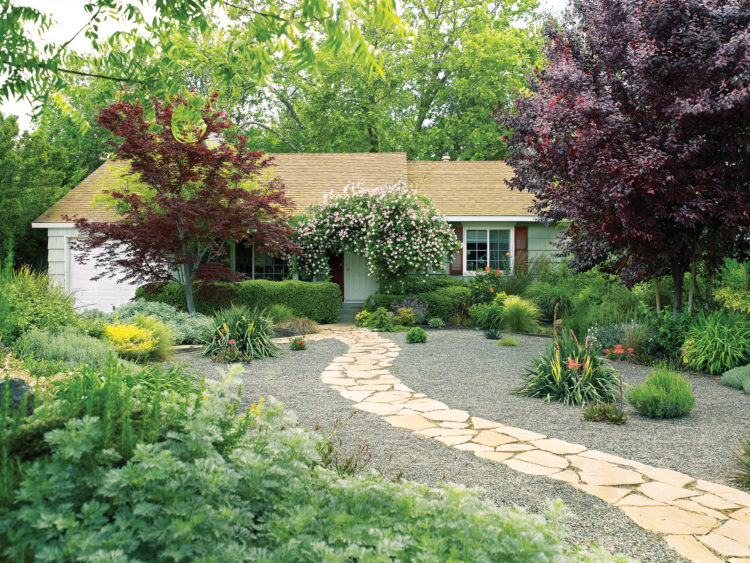
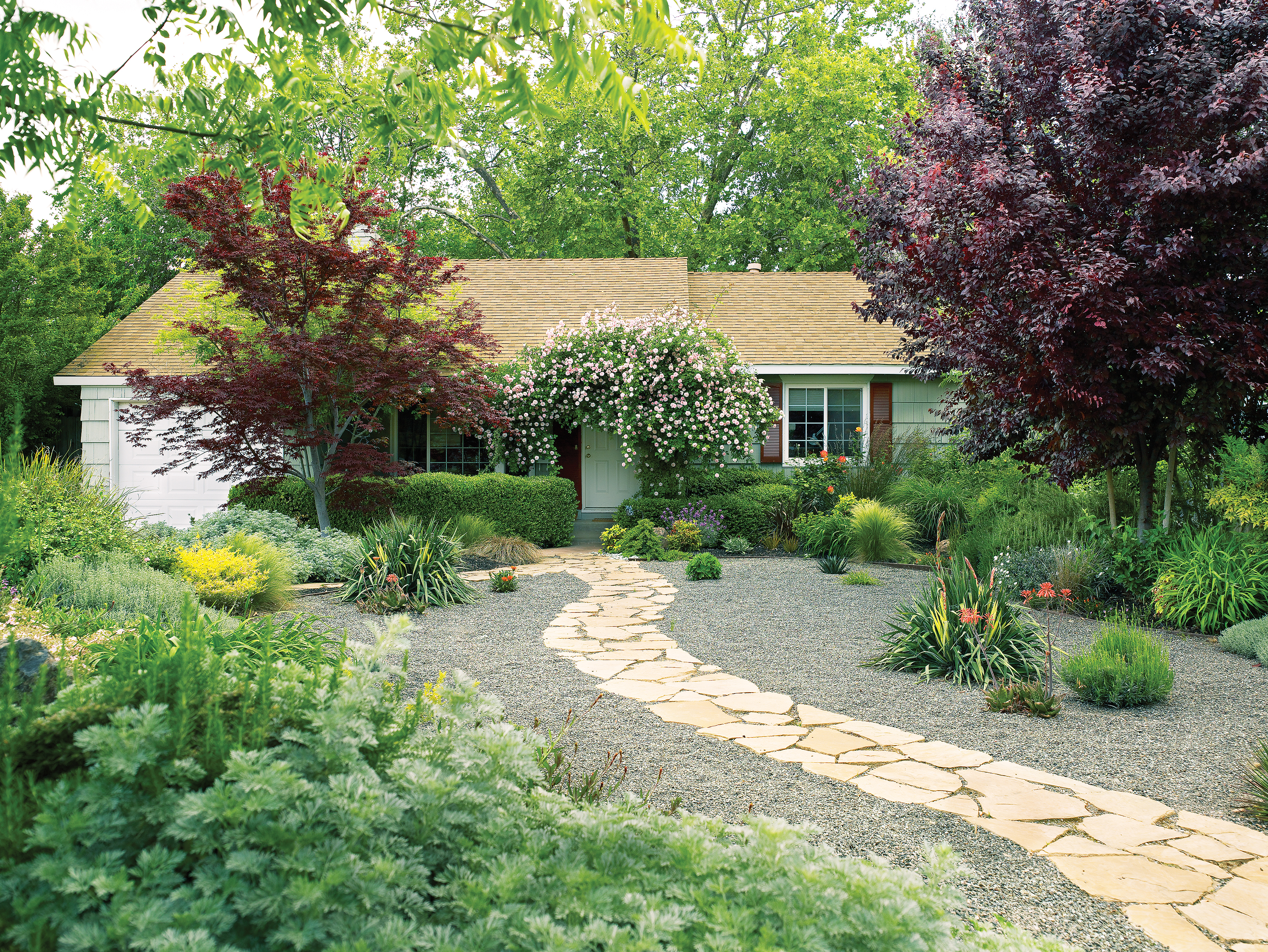
Billowy grasses and dry-climate perennials give this pebbly path in Paso Robles, CA, a rugged look.
Design: Jeffrey Gordon Smith Landscape Architecture, Los Osos, CA (jgsdesigns.com)
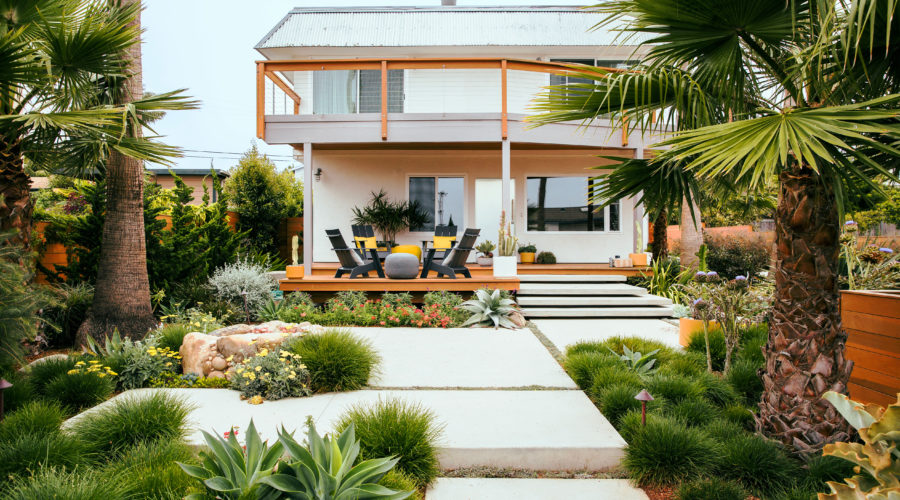
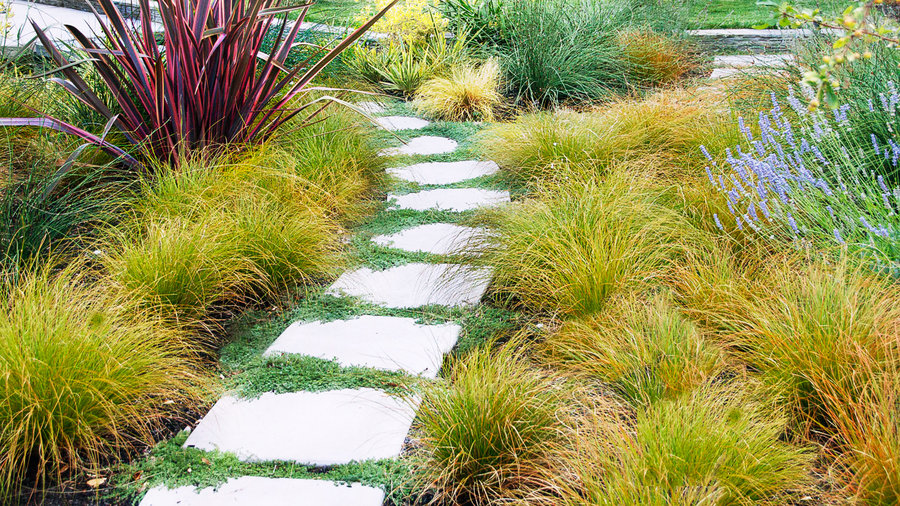
Bands of thyme running between 2-foot-square sand-washed concrete pavers stripe a winding path in Alamo, California. The bold
look adds structure to the blowsy backyard meadow of tawny Carex testacea grasses, accented with pink ‘Maori Chief’ phormium and yellow kangaroo paw.
Design: Stefan Thuilot, Thuilot Associates, Berkeley (thuilot.com)
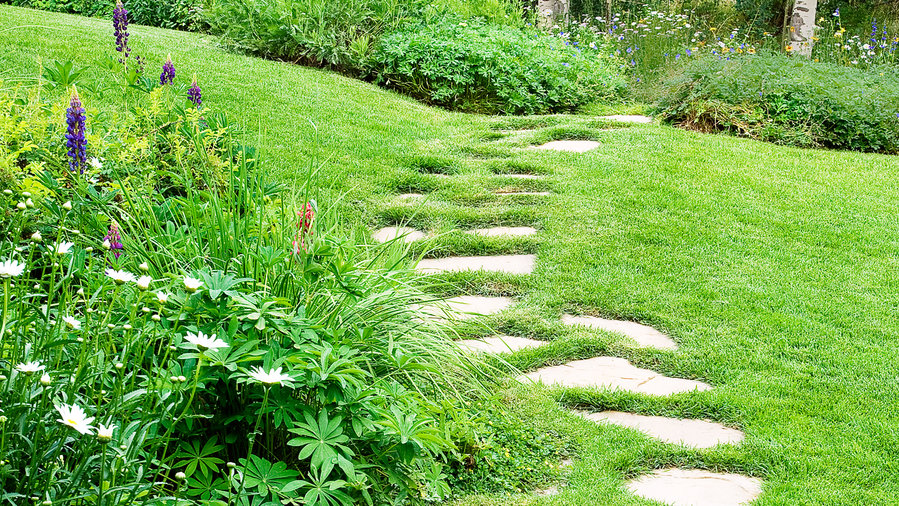
In Aspen, pavers of Colorado buff sandstone form a trail across this Kentucky bluegrass lawn to a grove of aspens. Set low
enough for a mower to pass over them easily, the pavers were placed atop a base of compacted sand. Then the sod was planted
around and between them.
Design: Kurt Culbertson, Design Workshop, Aspen (designworkshop.com)
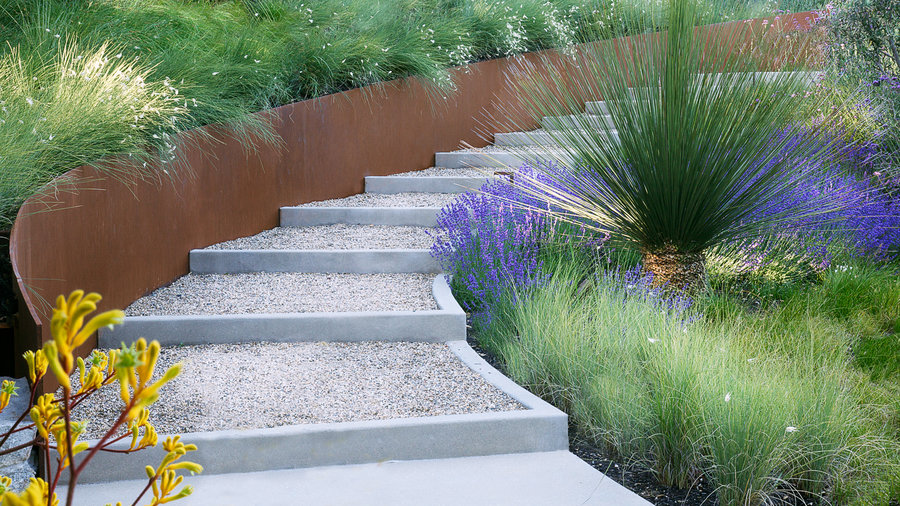
Decomposed-granite steps edged with concrete nudge this path upslope in a backyard in Portola Valley, California. Because
the steps taper from 8 feet wide at the bottom to 3 feet wide at the top, they appear to cover more ground than they do. (A
Cor-Ten steel wall enhances the effect; from a 4 1/2-foot base, it shrinks to 2 feet high at the top.) Dasylirion and dwarf lavender line the path.
Design: Stefan Thuilot, Thuilot Associates, Berkeley (thuilot.com)
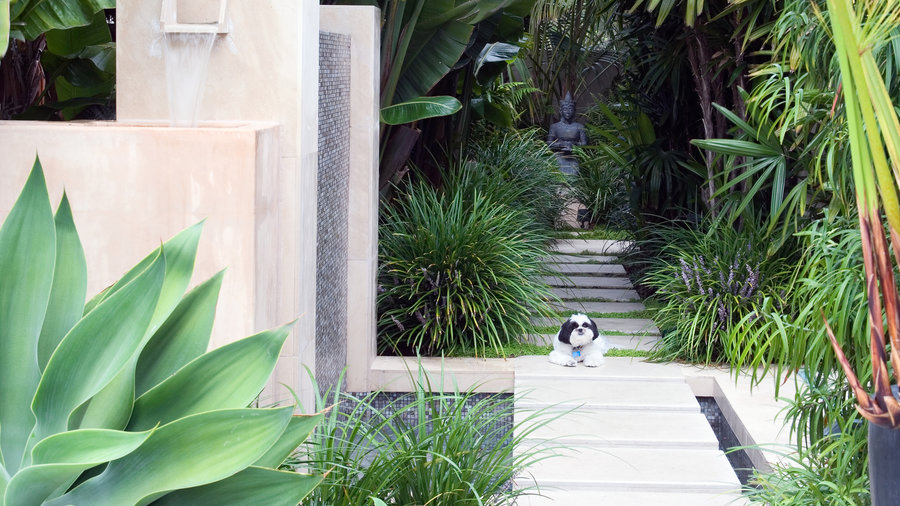
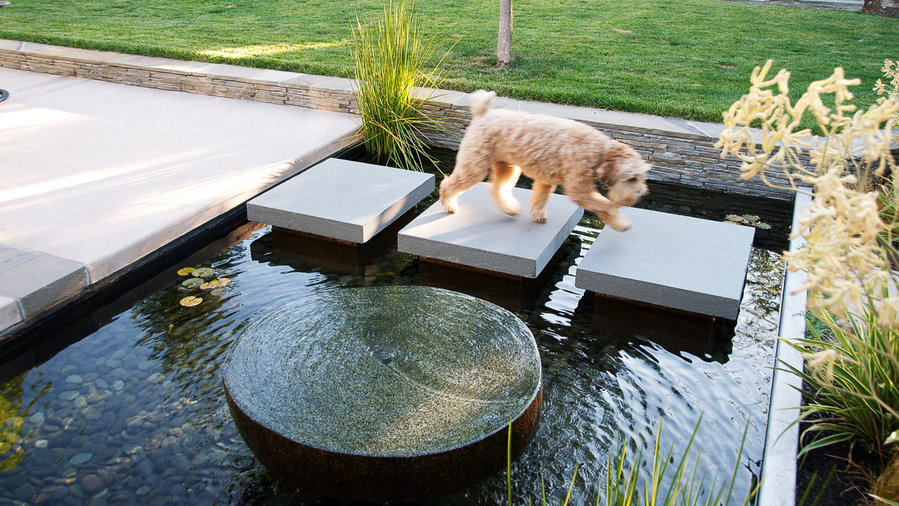
Bluestone pavers traverse this water feature in Alamo. The designer attached them to concrete pillars built into the bottom;
each one is cantilevered 4 inches out from its pillar. The dark Mexican pebbles lining the pool and the dark-hued pillars
make the water more reflective. The fountain in the foreground is made from an old millstone, polished smooth on top.
Design: Stefan Thuilot, Thuilot Associates, Berkeley (thuilot.com)
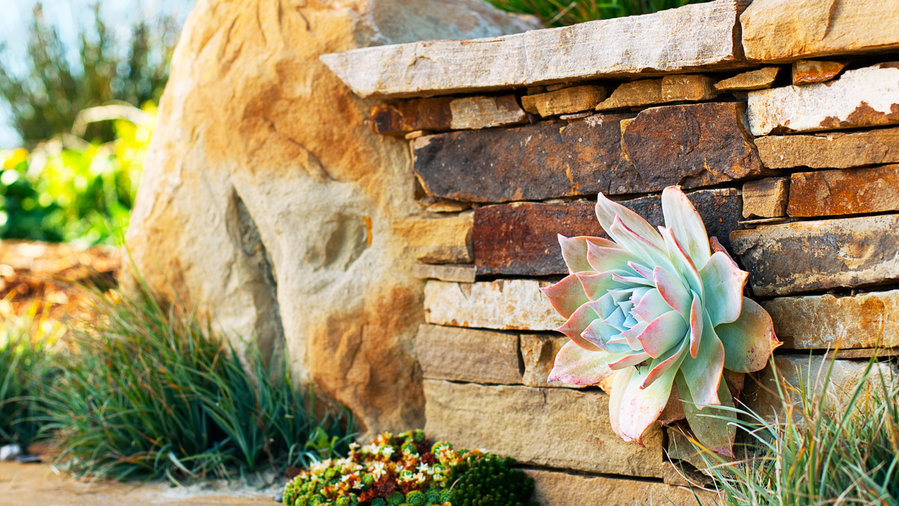
A path is more interesting when there’s something to stop and look at along the way. In this coastal California garden, a
native dudleya pops out from between stones in a low wall; Carex flacca fringes the wall’s base. Other eye-catching options: shapely boulders, a piece of garden art, or a cluster of empty olive
jugs. Add fragrant plants nearby to sweeten the journey.
Design: Jeffrey Gordon Smith Landscape Architecture, Los Osos, CA (jgsdesigns.com)
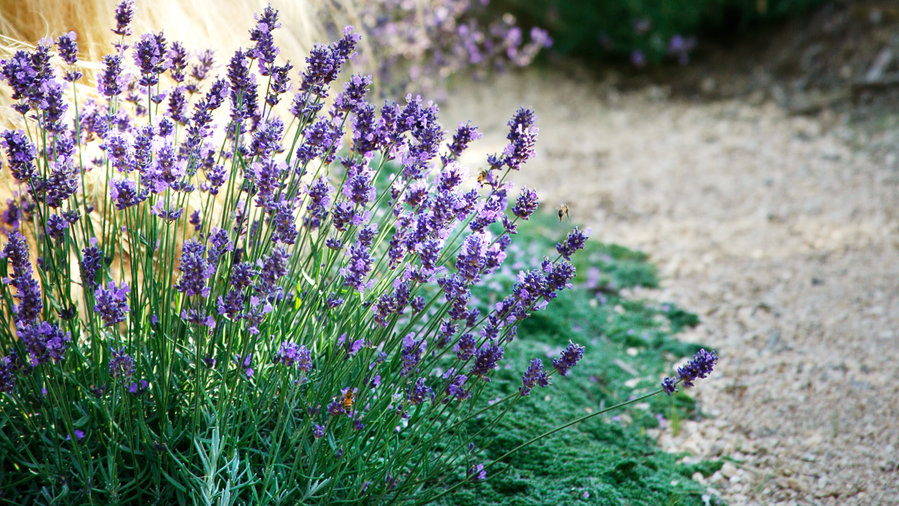
Plant low grasses or perennials along your path. Lavender and golden Mexican feather grass spill onto the gravel walkway
at left, while creeping thyme peeks out from beneath them. Other billowy path edgers include Acorus gramineus ‘Ogon’, blue fescue, Carex albula ‘Frosty Curls’, Japanese forest grass, lamb’s ears, and sage.
Design: Margie Grace Design Associates (gracedesignassociates.com)
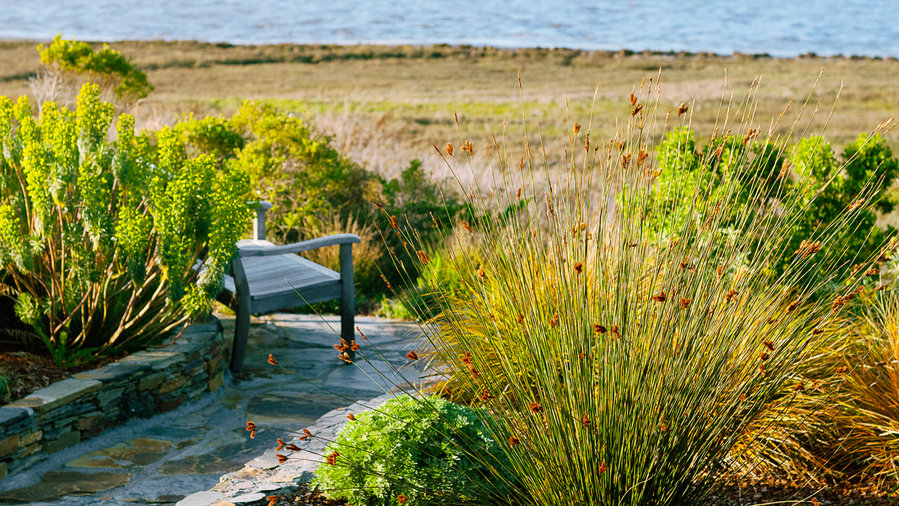
Every path needs a destination, whether it’s a garden shed, a tree-shaded seat, or a patio with a vista. Here, a bench is
positioned to take in the view of a coastal estuary. If your path ends at a fence, set a colorful solid gate in front to suggest
that the journey might continue. If the path leads through an arching grape arbor, put a glazed urn or birdbath at the far
end.
Design: Jeffrey Gordon Smith Landscape Architecture, Los Osos, CA (jgsdesigns.com)
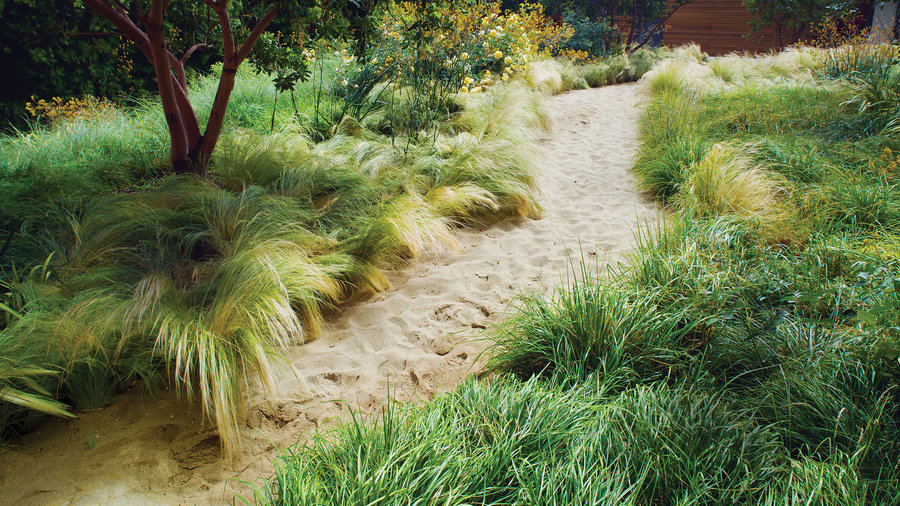
A 6-inch-deep ribbon of fluffy pink sand meanders through beachy grasses (including Sesleria and Muhlenbergia) in this Malibu garden. Arbutus ‘Marina’ trees add shade while pale yellow ‘Graham Thomas’ roses and kangaroo paws fleck the “dunes” with sunny color.
The best part? It's cheap and easy to create: Dig a channel 6 inches deep in the soil, then just pour in the sand. At a building-supply
yard, you’ll pay $52 to $62 for a ton—enough to cover about 43 square feet.
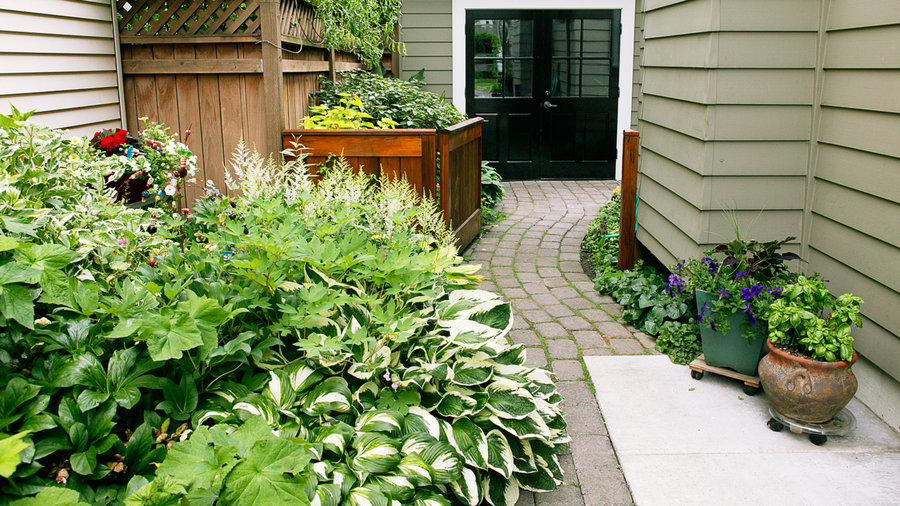
Landscape designer Mary Baum transformed the unused back half of this Portland driveway into a curving path, making room for
a lush garden bed to the side.
More: Reinvent your driveway
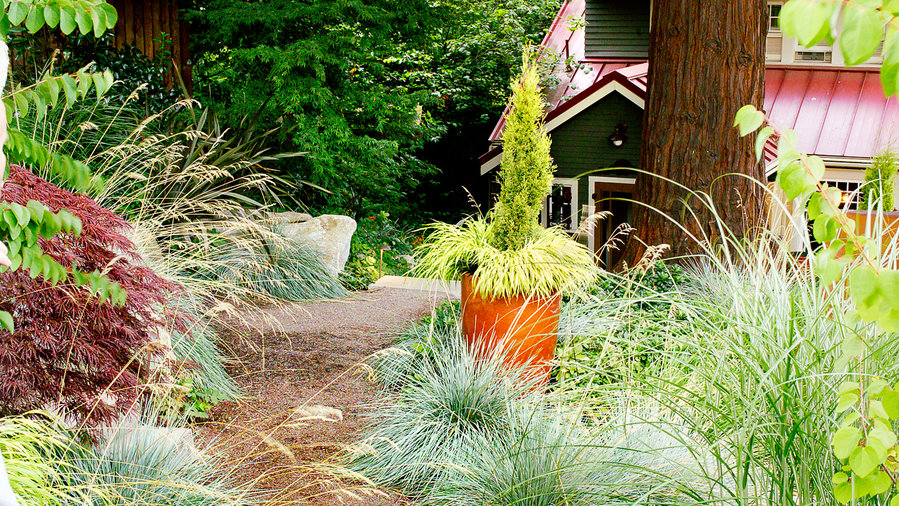
Plant mounding grasses for a modern look. Here, they line a path of crushed basalt in a Seattle garden.
Read more about this mod path
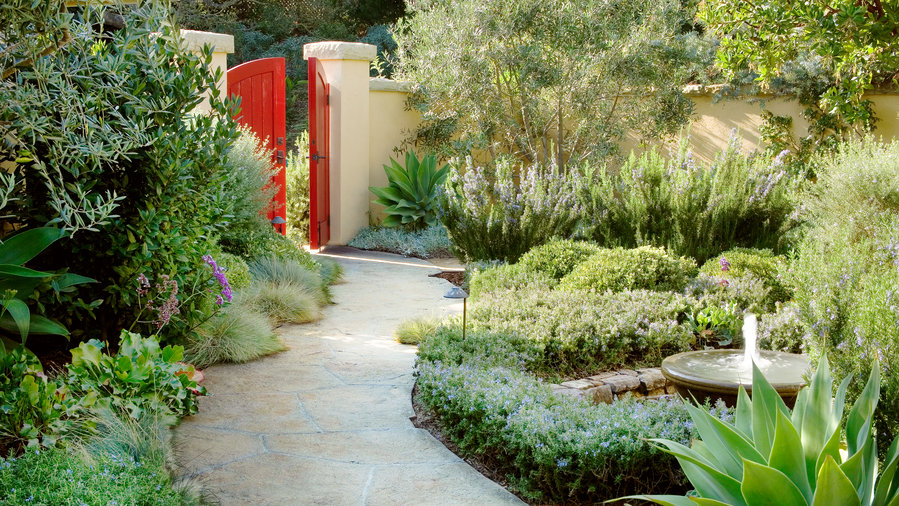
A curved path, high walls, soft greens, and a bubbling fountain make this Southern California garden a soothing escape.
The broad path connects the gate to the front door. The walkway is built of stamped concrete and has a dusting of multicolored
sand for extra texture.
See more of this Southern California courtyard
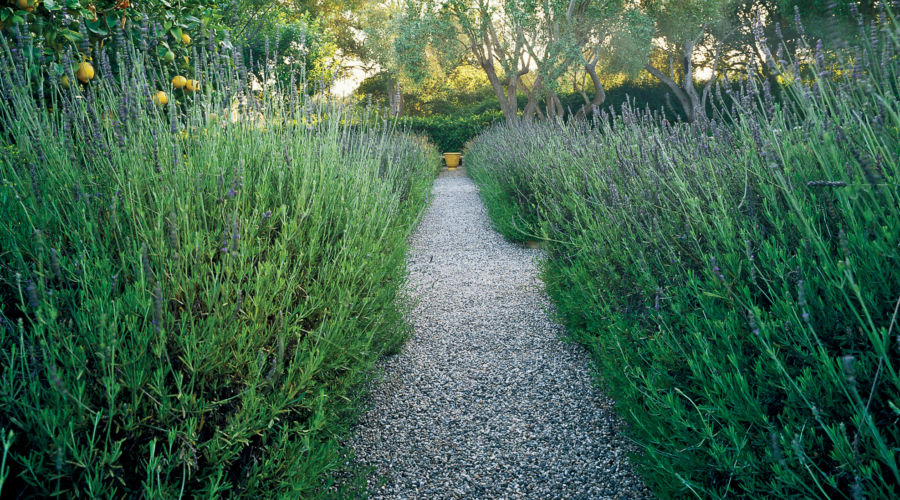
Designers know a great path includes an intriguing destination. Here, a yellow-glazed container catches the eye at the end
of a lavender-edged gravel path.
Design: Lucinda Lester, Lucinda Lester Design, Santa Barbara (805/565-9252).
How to grow lavender
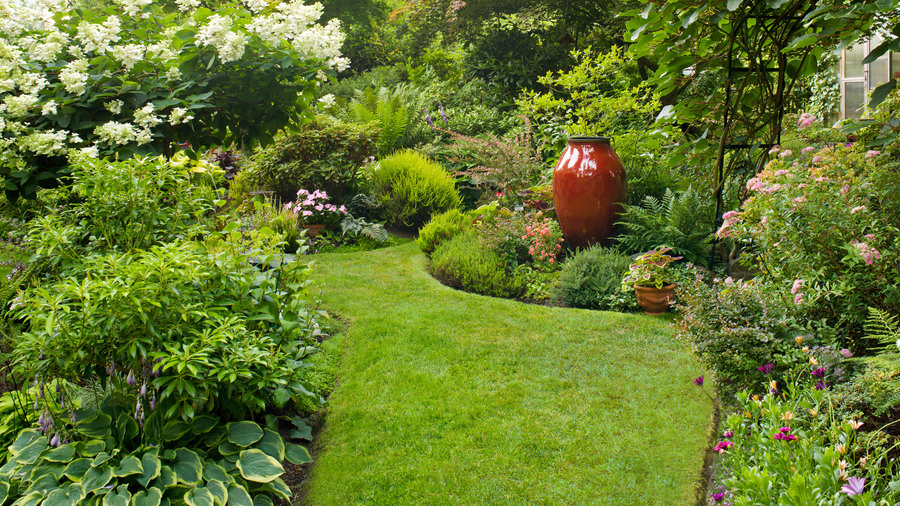
A narrow carpet of grass, all that’s left of a once-expansive (30- by 60-foot) lawn, meanders between curved planting beds.
To make room for the beds, the homeowners removed sod around the turf’s edges bit by bit as they discovered new plants they
wanted to try.
See more of this Northwest garden
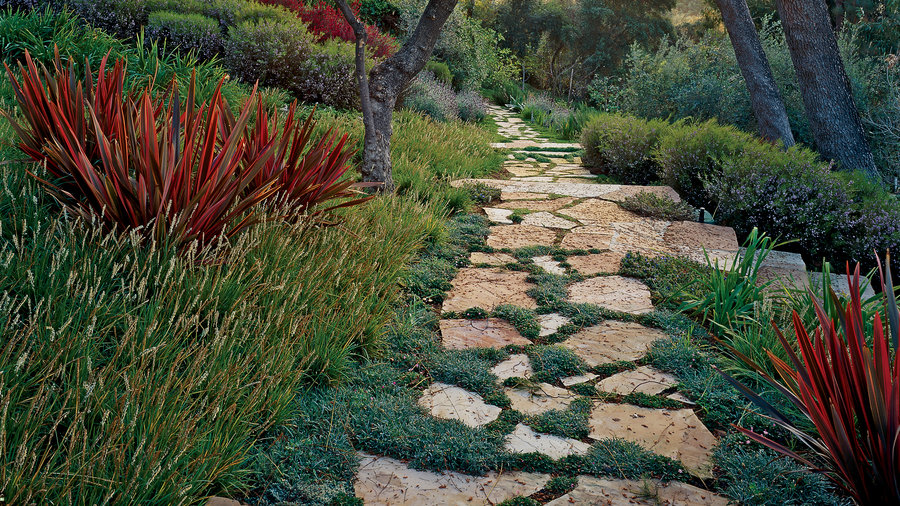
A flagstone path in Pasadena leads through a garden underplanted with New Zealand flax shrubs and grasses.
Blue-leafed groundcovers create a delicate tracery between pavers.
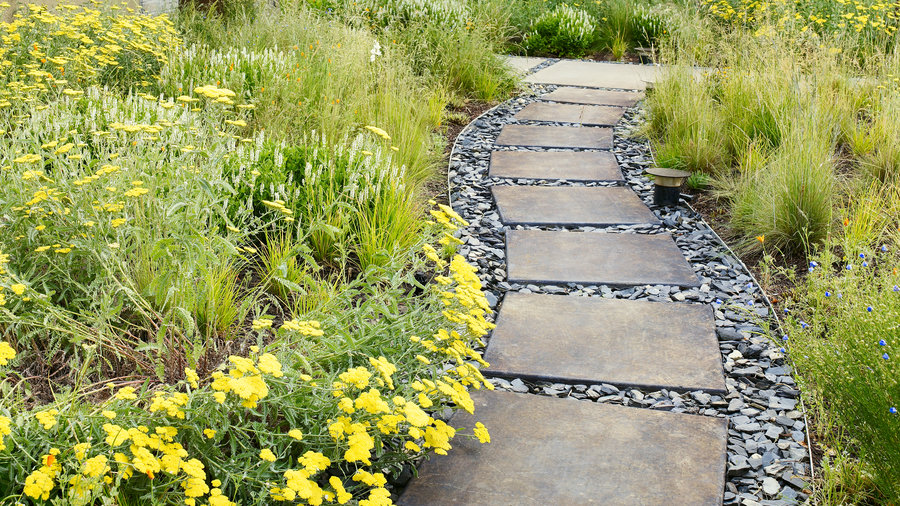
Fractured shale fills gaps between concrete pavers in Dennis and Susan Hourany’s yard in Alamo, CA.
Yarrow and grasses soften the path’s edges.
Design: Mathew Henning and Heather Anderson Oakland (510/531-3095)
Bold furnishings and dense plantings can help you create a getaway in your own backyard, even where gardening can be a challenge.
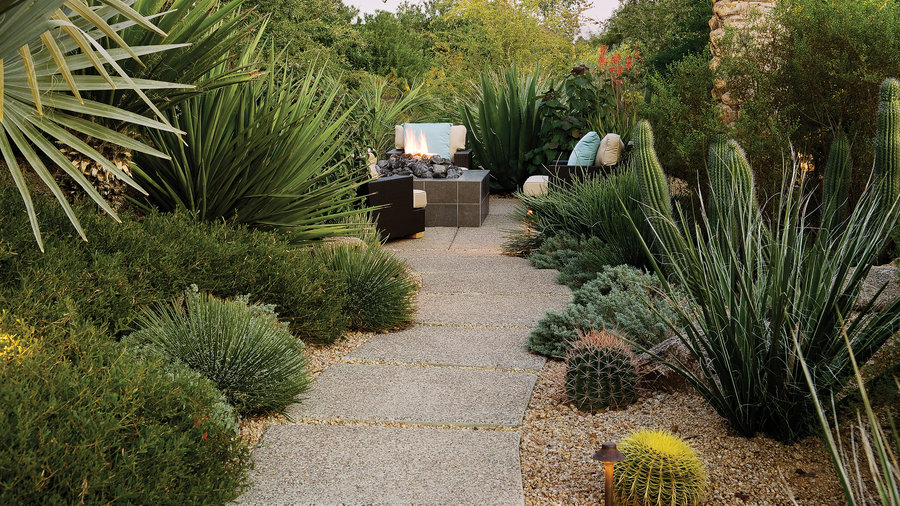
Individual concrete pads create the illusion that they're hovering lightly above the desert floor. Their exposed aggregate
finish blends in with the native soil's stony texture.
See more of this wild desert backyard
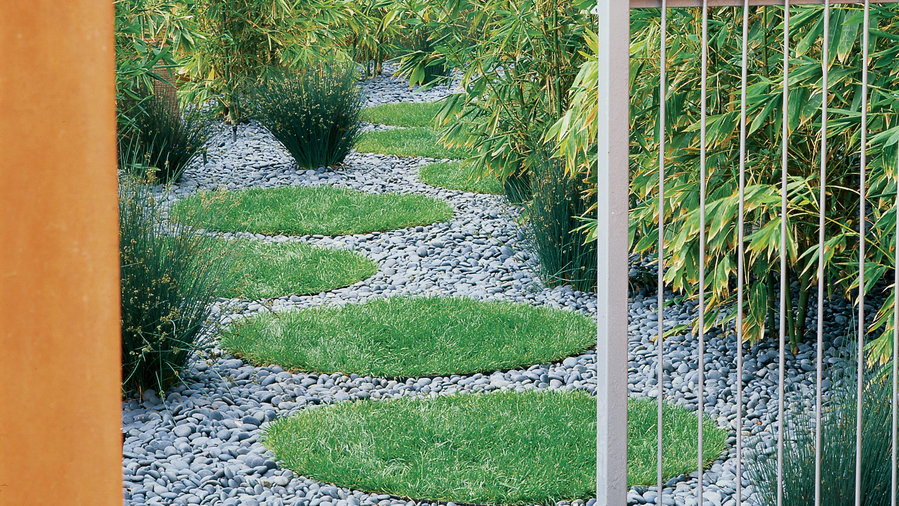
Grass circles appear to float on a river of black pebbles that winds through a grove of bamboo in Malibu, CA.
Design: Mia Lehrer and Associates, Los Angeles (213/384-3844), for Lee and Carmen Ritenour.
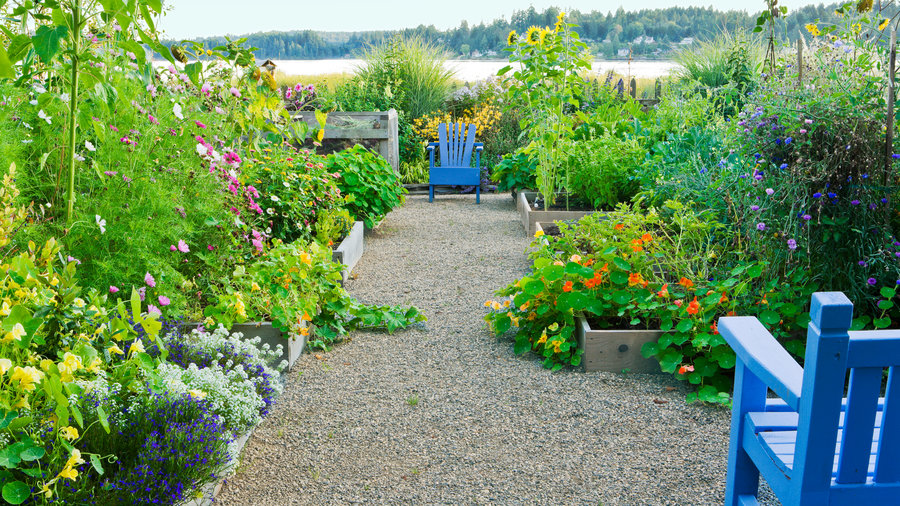
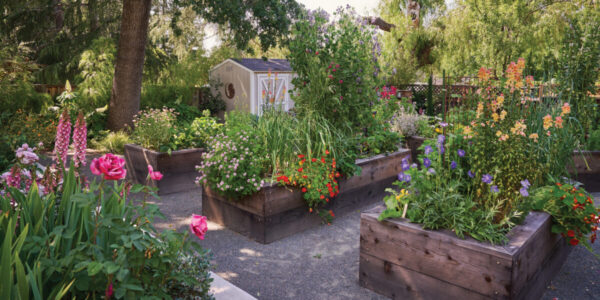
Generous gravel paths between raised vegetable beds give this Washington garden its casual farmer's market style.
Wide enough to accommodate wheelbarrows, the gravel paths ― laid atop landscape fabric ― the paths stay mostly clean and weed-free.
See more of this Northwest vegetable garden
In Newport, CA, geometric steppingstones crossing a small pool give the illusion of walking on water.
A piece of art tucked amid greenery at the end of the path treats visitors to a visual surprise.
Flanked by blue star creeper and Japanese spurge, a concrete "stone" path curves through Dan and Pat Nelson's garden in Gig Harbor, WA.
Design: Scott Junge, Rosedale Gardens, Gig Harbor (253/851-7333)
A meandering path encircles a central planting island. Crunchy pea gravel gives the path texture, and Boral bricks in Savannah Brown are designed to slow the journey.
(Fouquieria splendens)
Native to: Southwest
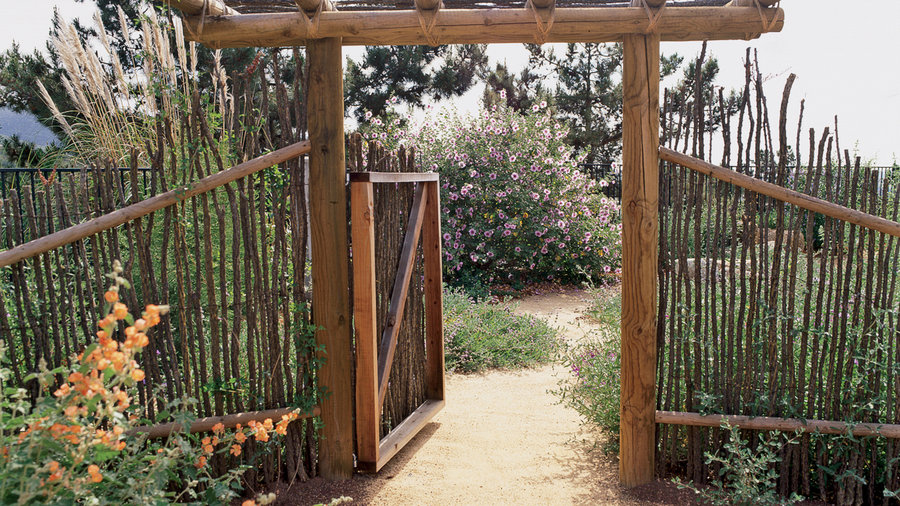
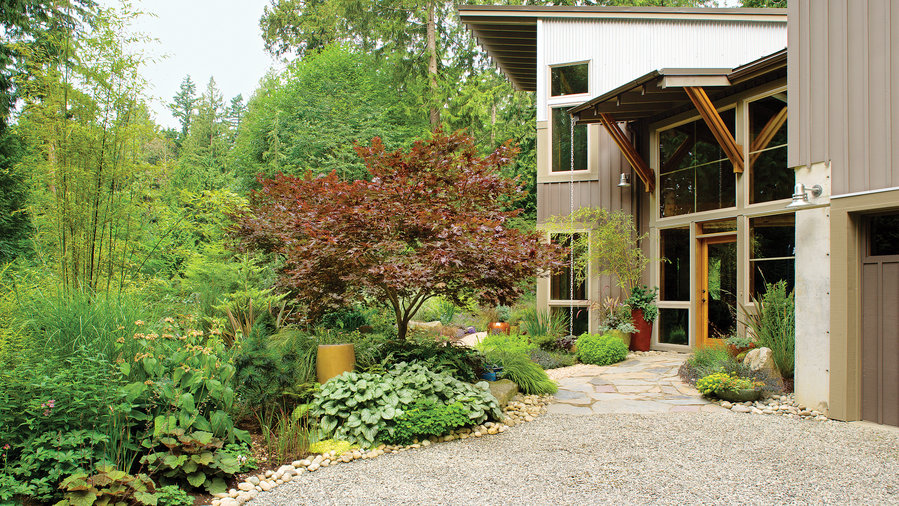
A decomposed granite path passes through a fence and gate made from ocotillo. The winding walkway invites exploration of more
of this casual low-water landscape.
More: All about ocotillo
Both the multicolored flagstones set in sand and the ¾-inch granite gravel allow rainfall to pass through to plant roots.
River rock edges the planting beds.
More ideas from this rain-savvy garden
Morro Bay, CA
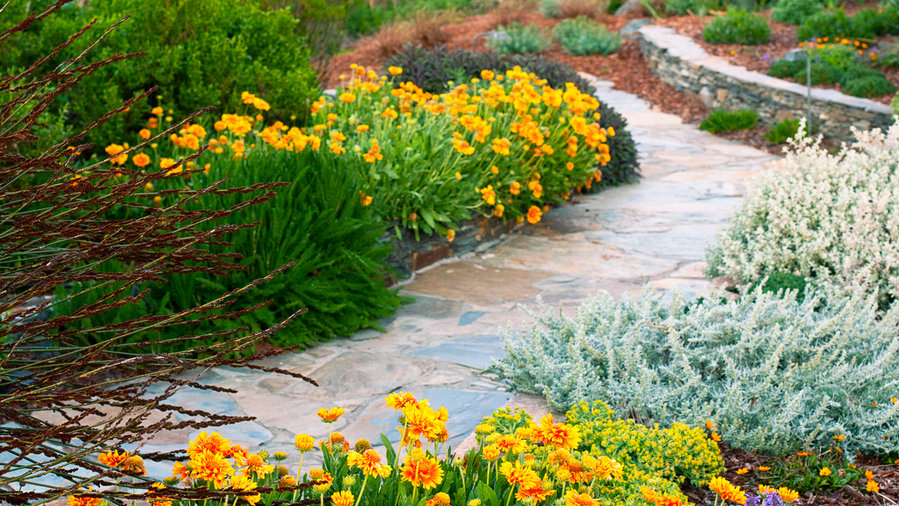
Orange gaillardia brightens the flagstone path and marshlike plantings in this winner from Sunset's Garden Design Awards.
The desert rose color of the fine gravel makes this Southwest garden's path stand out from the coarser gray gravel mulch around
it, inviting you to follow its lazy course.
Small wooden bridges span the path. In summer, the dry creekbed is a river of gold, thanks to the generous daisylike blooms
of Perky Sue (Hymenoxys scaposa).
See more of this New Mexico garden escape
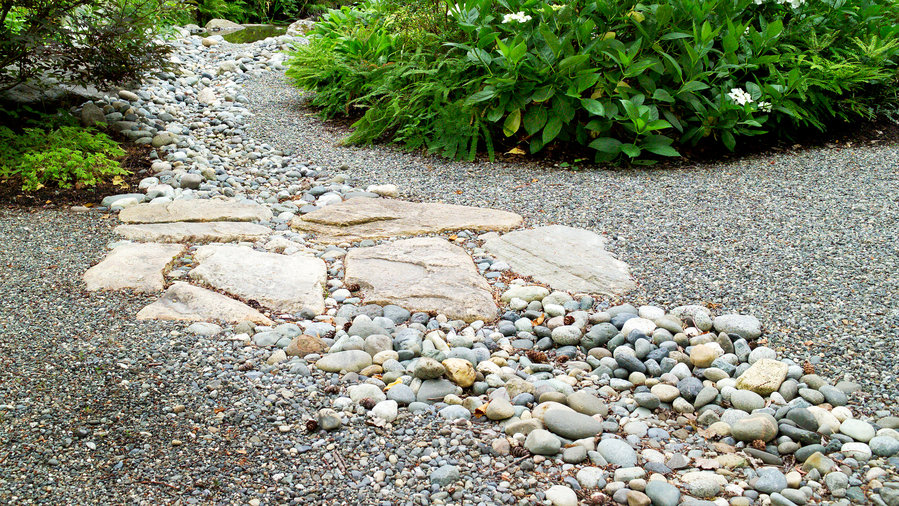
Mix gravel with rocks of varying sizes to add interest in large areas. In the landscaping pictured here, this technique also
solved a drainage problem.
The gravel path, edged on the right with 'Libelle' hydrangea and a bank of maidenhair ferns, straddles a cluster of large, flat stones that creates a bridge over a seasonal runoff channel.
Water runs through a pipe hidden beneath the channel's river rocks to a catchment pond at the far end.
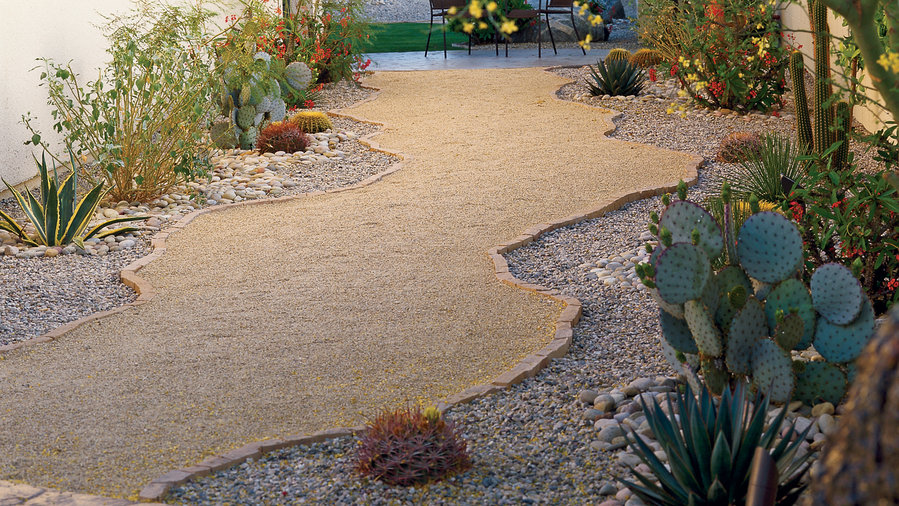
A half-inch of decomposed granite over a compacted base forms a firm clean surface that drains well when summer rains drench
this garden in Rancho Mirage, CA.
The path's irregular shape, edged with pale flagstone, encourages visitors to slow down and enjoy the yellow-flowering palo
verde agaves and opuntia and barrel cactus along the way.
Design: Michael Buccino Associates, Palm Desert CA (760/772-7166) for Paul and Carrie Stone. Installation by Randy Buccino.
This entry path feel more like a nature trail than a garden walk. Thyme grows between steps; boulders, cactus, and rosemary fringe the path’s edges.
Even before guests get to the house, wide steps (made of concrete aggregate) encourage them to slow down and enjoy the garden.
If your yard doesn’t have enough sun for thyme, tuck Corsican mint or Japanese sweet flag between your steps or pavers; both
have scented foliage. Stagger your pavers to slow the “journey.”
See more of this Arizona garden
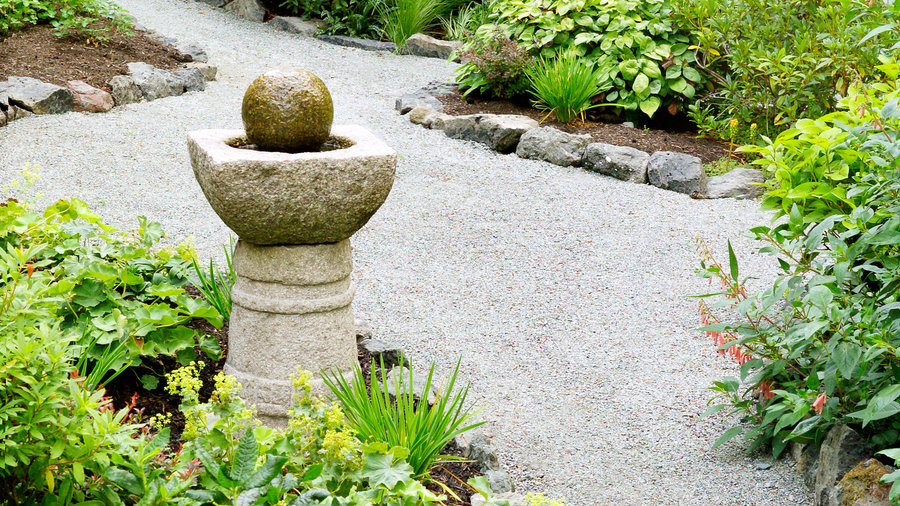
When a gravel path and adjacent planting beds are new, the transition from bare soil to gravel can give the garden an unfinished
look.
One solution: Define the path edges with larger stones. As plants grow, they'll tumble over and hide the rocks.
In this garden, lady's-mantle with chartreuse blooms surrounds the stone fountain in foreground, while cape fuchsia (Phygelius) with orange-pink flowers spills into the path.
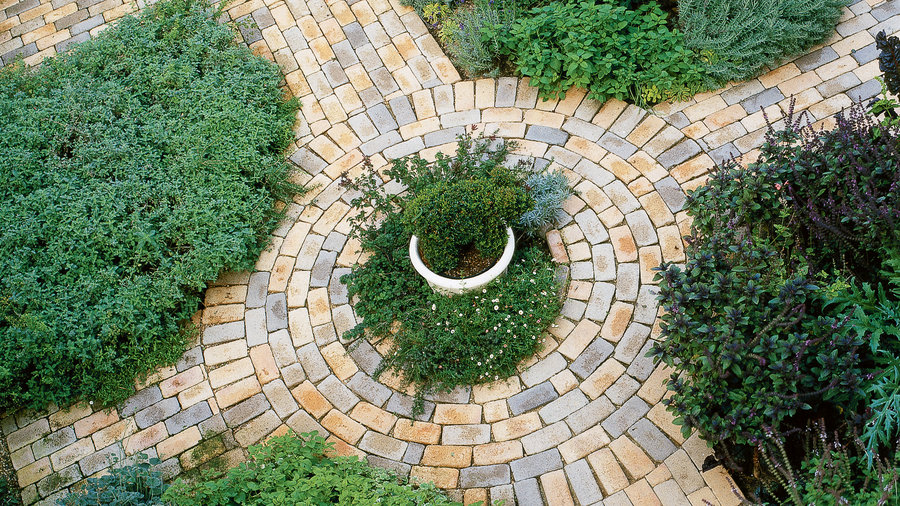
Brick paths help define this kitchen garden designed in the style of a classic potager. Crops grow in small rectangular, square,
and circular beds separated by walkways.
The little plots and generous paths make weeding, watering, harvesting, and other chores accessible. And the geometric patterns
add order.
See this old-world-style kitchen garden
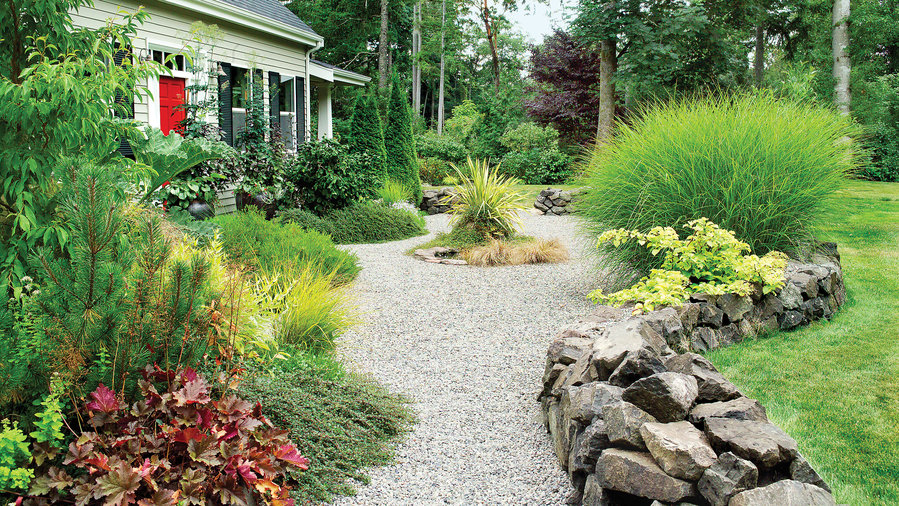
A crunchy gravel entry is a clean casual foil for plant textures and colors.
Japanese silver grass billows over the basalt wall at right beside climbing hydrangea.
'Maori Sunrise' New Zealand flax in a container punctuates the small pond in the middle while 'Palace Purple' heuchera mugho pine and gunnera fill a
bed near the house. Cotoneaster spills onto gravel.
More about landscaping with gravel
You can install this pretty path in about a weekend. (The plantings take a little longer to mature; they'll look like this
in about nine months.)
The gently curving path invites you to stroll among the plants, and leads to a small circular patio.
Instructions and planting plan
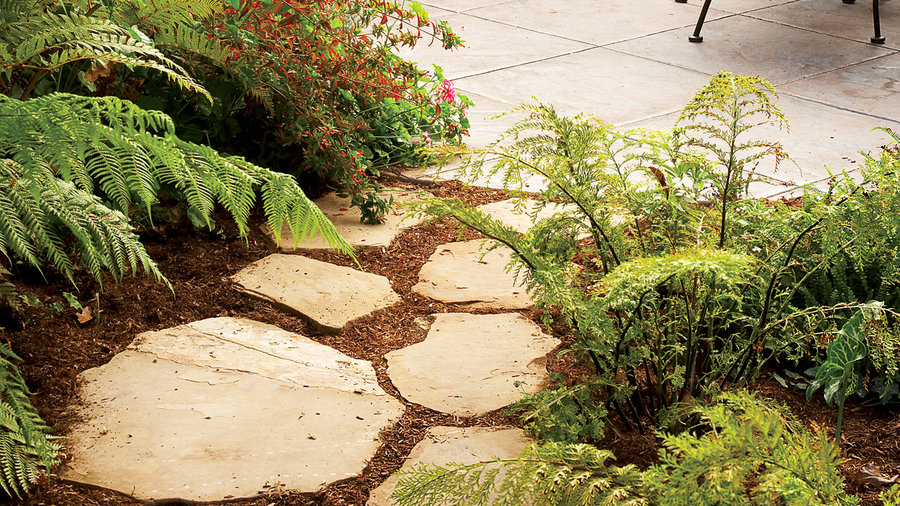
Decorative and functional, a dry-laid flagstone and mulch path leads the way to a patio retreat.
A border of ferns and red-flowered Cuphea ignea creates a leafy entry.
In the back planter, a tall mallow hedge screens a vegetable garden.
How do you access a side-yard utility area with a hedge in the way? A secret path through a hidden opening.
Designer Brenda Gousha planted two 6-foot-long overlapping hedges of Carolina laurel cherries (Prunus caroliniana) and ran a 2-foot-wide path between them.
Gousha says walls of foliage also make the perfect outdoor room. "When my husband and I sit out here, we're just a few feet
from the street. But we have complete privacy."
Full story
Design: Brenda Gousha, Sisters' Specialty Gardens, Rancho Santa Fe (760/473-0234)
Irish moss adds classic charm to an informal path flanked by river birches.
Creeping Jenny, yellow-green Japanese forest grass, campanula, and variegated boxwood mingle in the garden bed.
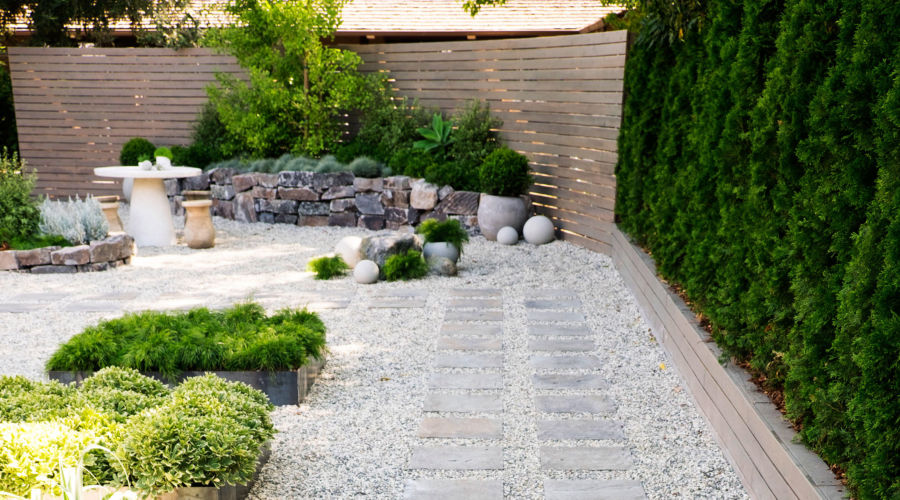
Flagstone paths curve through a low-water front yard. A low berm of soil on either side of the walk adds interest, and weed
cloth topped with permeable pea gravel allows excess water to soak into the earth rather than run off into the street.
More lessons from this front yard
Curving flagstones lead to a dining terrace tucked into a sloped garden.
The lush plantings include fullmoon maple (Acer japonicum), deciduous magnolias, native ferns (Adiantum aleuticum, Blechnum spicant, and Polystichum munitum), hellebores, rhododendrons, Siberian irises, smoke tree, and yew.
More about this garden
A central pathway wraps around this veggie patch, making working the beds a snap.
It's positioned so the opening faces south; the larger plants in back (beans, tomatoes, and sunflowers) won't shade smaller plants.
The gardener tilled the planting areas 8 to 12 inches deep, but didn't till the keyhole (path). As long as the ground there
is packed, weeds will have a hard time sprouting.
Get the planting plan
Creeping thyme isn't strong enough for rough activities like soccer, but it handles ordinary foot traffic with ease. That's why Lynne Blackman
chose it to line the paths of a classical labyrinth at her Del Mar, CA, home.
Like a giant rug laid out on the grass, blue-gray thyme is soft underfoot. River cobbles mark off the path's edges.
Lynne and her husband, Vernon, walk the labyrinth regularly. Children, who don't yet appreciate the rewards of a meditative
pace, race through it.
More about this path
Printed from:
http://www.sunset.com/garden/backyard-projects/great-garden-paths-photos-00400000043327/
Copyright © 2013 Sunset Publishing Corporation. All Rights Reserved. Use of this site constitutes acceptance of our Terms of Use and Privacy Policy ( Your California Privacy Rights). Ad Choices